
Searching for deck builders near Lehi, UT usually starts with inspiration, summer barbecues, mountain views, a better place to unwind, and quickly turns into practical questions about materials, permits, snow loads, and budget. That's where local experience matters. In Lehi and across Utah County, a deck has to do more than look good in July. It has to handle intense UV, freeze-thaw cycles, HOA rules, and real family use. In this guide, we'll walk through what local homeowners should know before hiring a builder, what design options make sense here, and how to compare contractors with confidence.
When homeowners look for deck builders near Lehi, UT, local knowledge should be near the top of the checklist. A contractor who builds regularly along the Wasatch Front understands the details that out-of-area crews often miss: frost depth, city permitting, neighborhood HOA standards, snow load requirements, and how Utah's dry heat affects materials over time.
We've seen how much smoother a project goes when the builder already knows the process in Lehi, Traverse Mountain, and nearby communities like American Fork, Saratoga Springs, and Draper. Local teams can usually move faster through permitting, coordinate inspections more efficiently, and design for the realities of the site instead of using a one-size-fits-all plan.
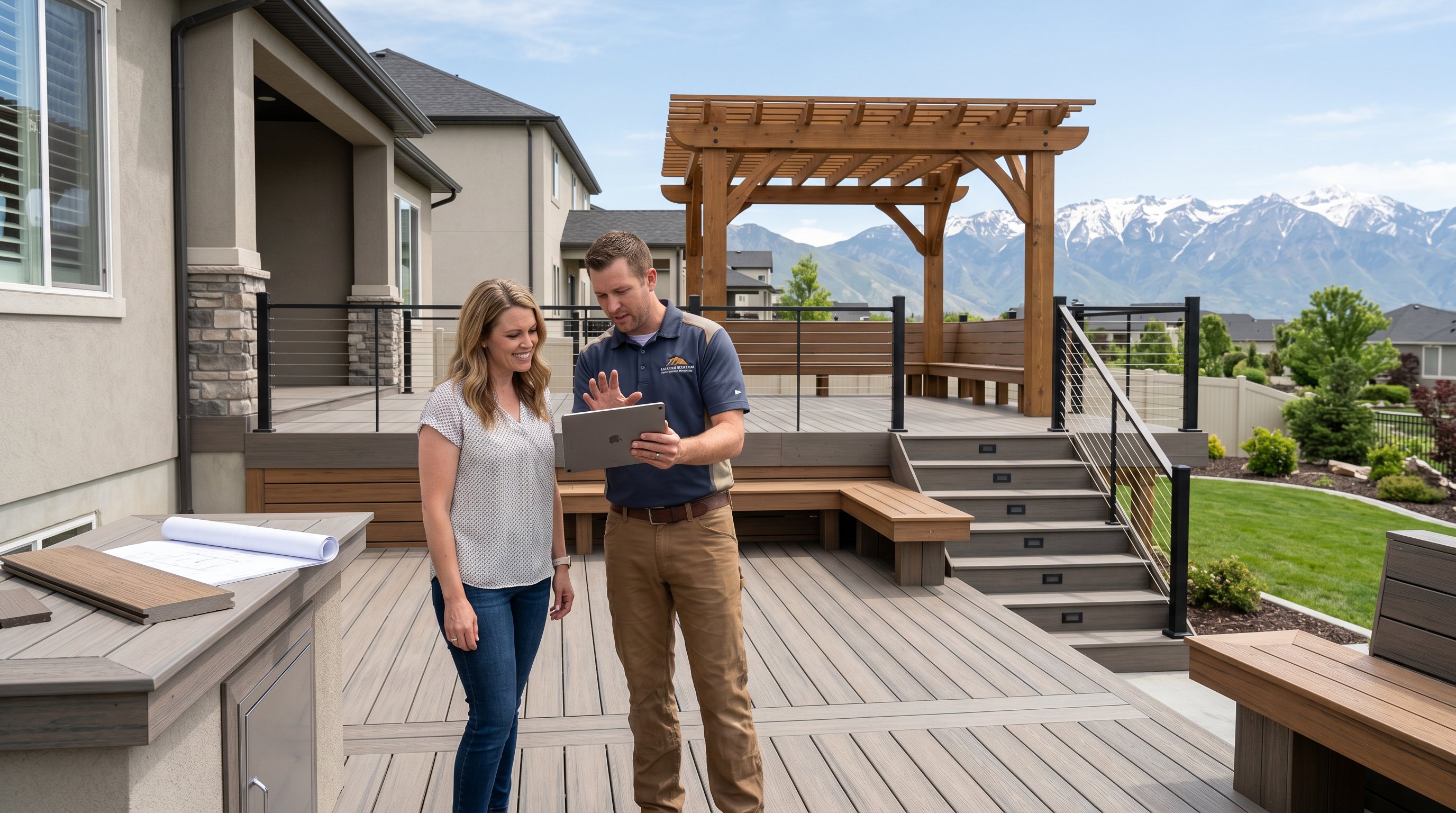
There's also accountability. A local deck builder depends on reputation, referrals, and work that holds up year after year. At 3sixty Industries, that means licensed and insured construction, free in-home estimates, 3D mockups, and builds tailored to how each family actually uses their yard, not cookie-cutter decks that look fine on day one and start showing problems a few seasons later.
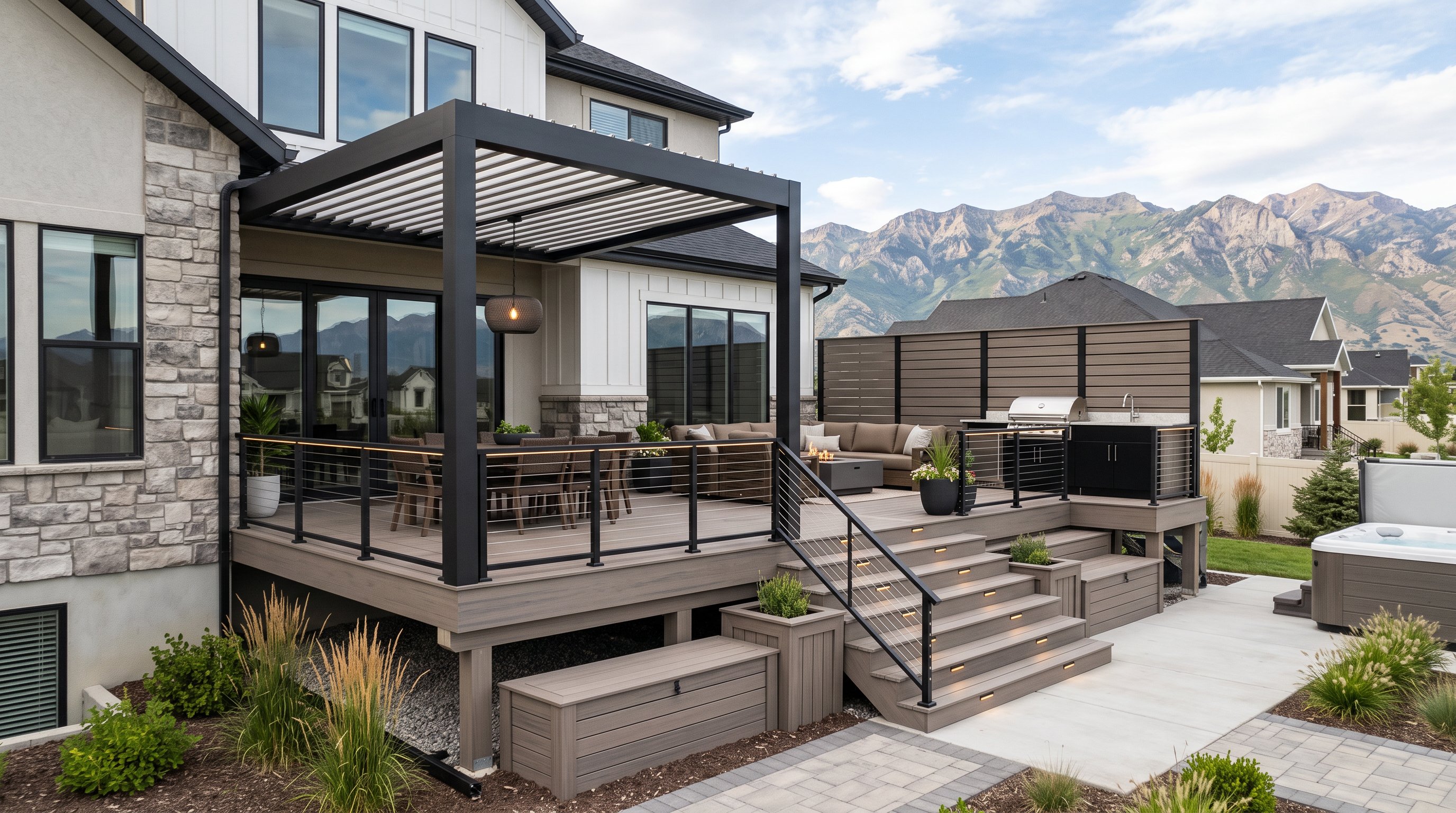
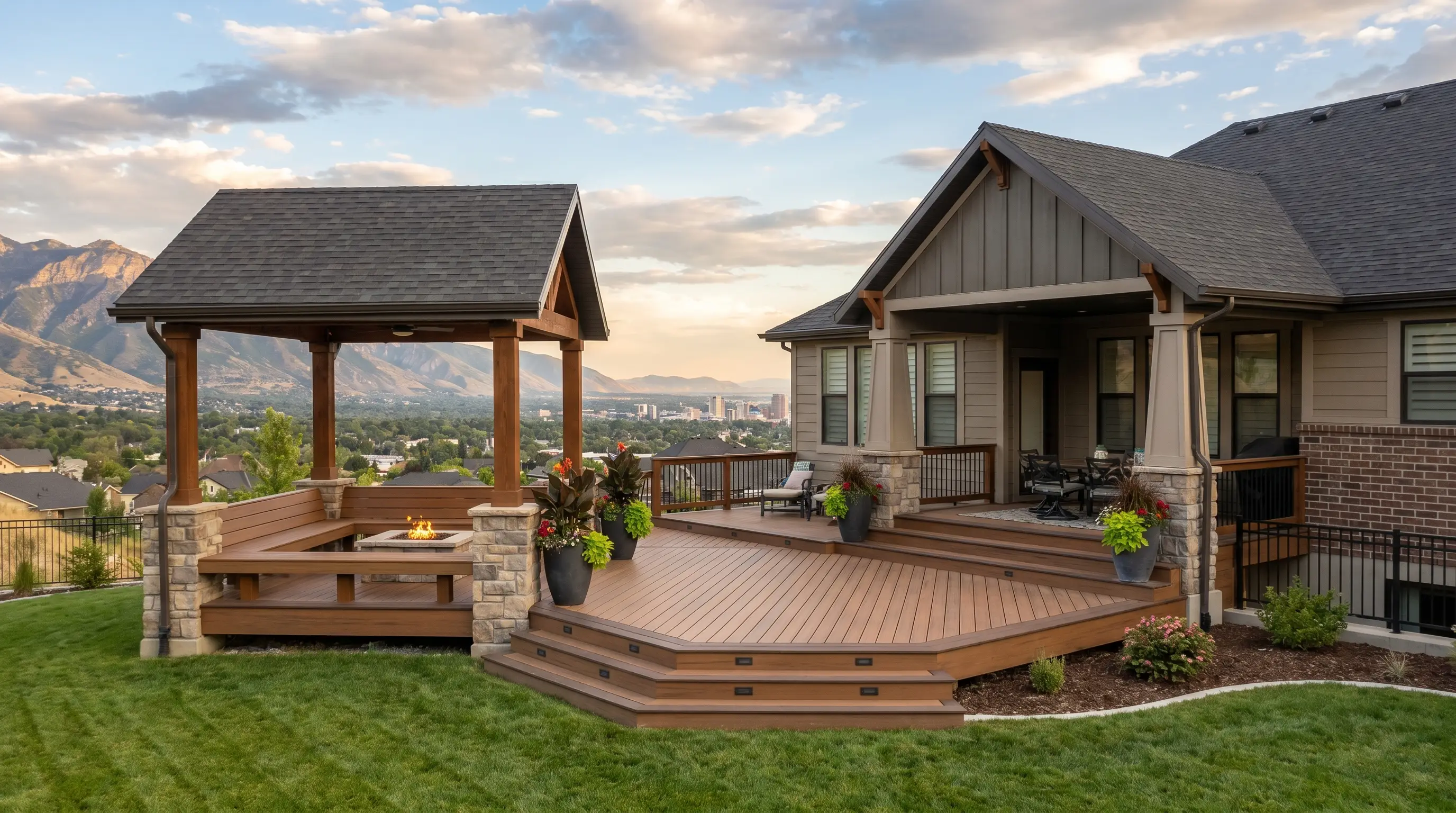
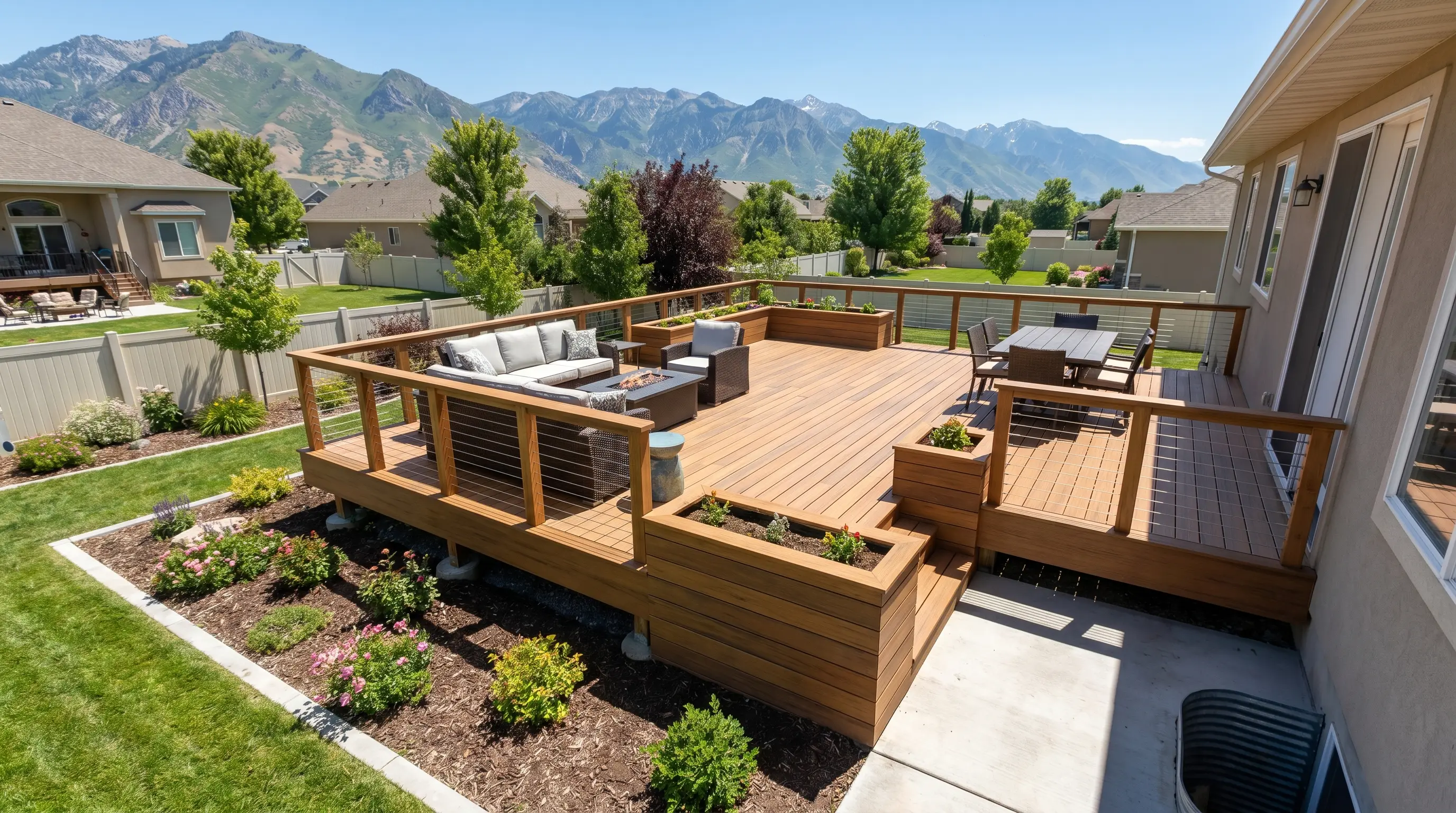
Deck design in Utah County has shifted well beyond a simple rectangular platform. Homeowners want outdoor living space that feels intentional, an extension of the home, not an afterthought.
Some of the most requested layouts include:
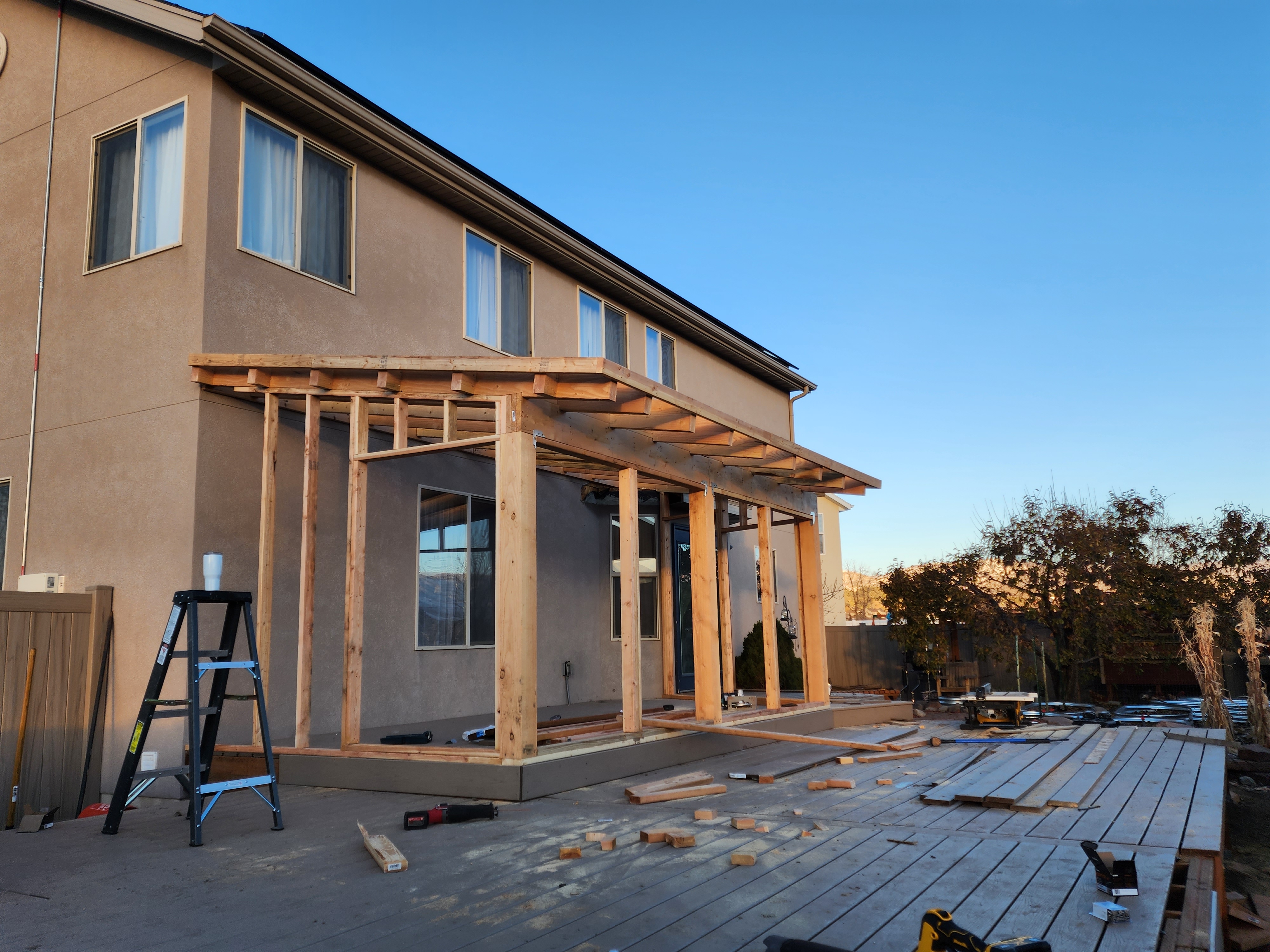
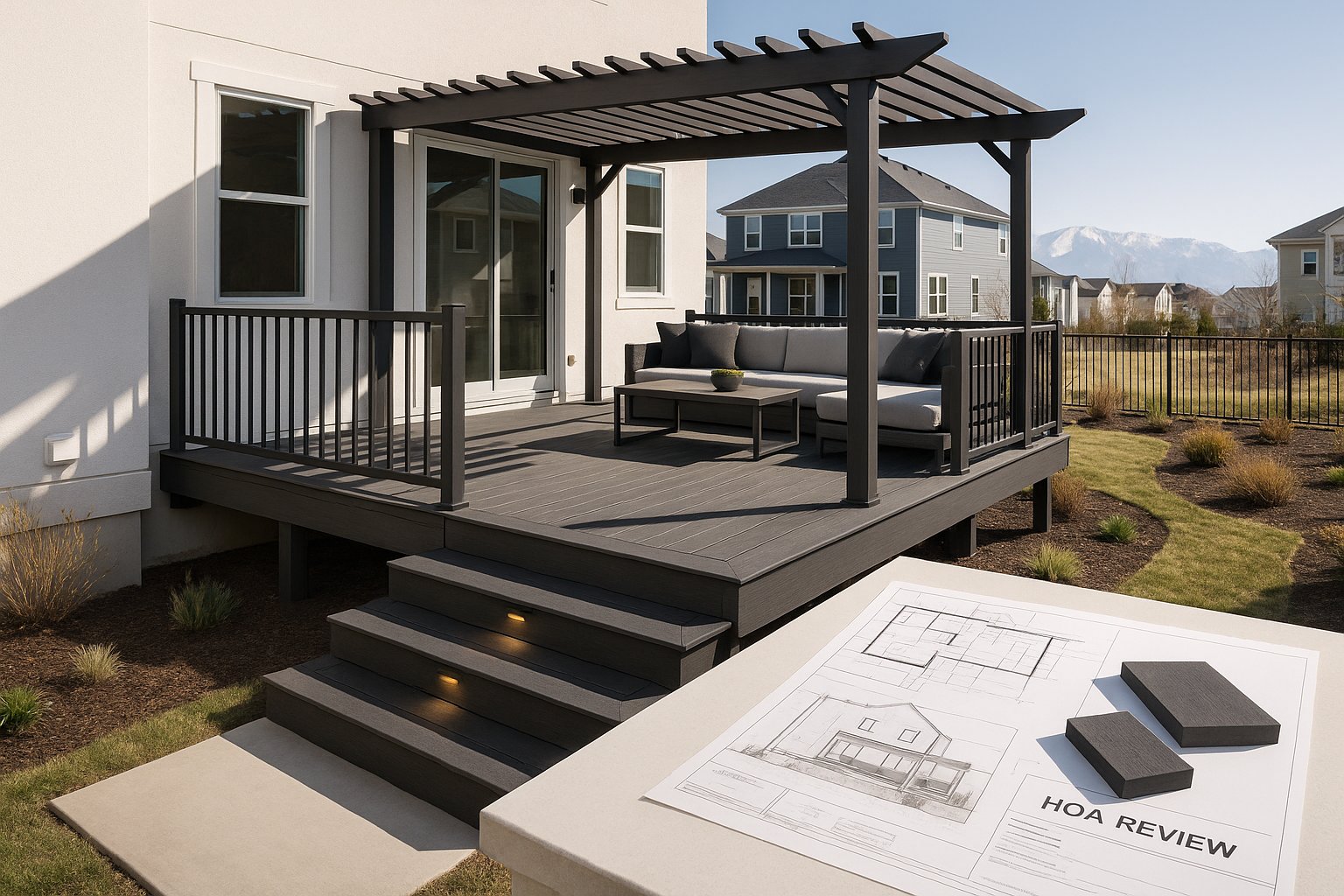
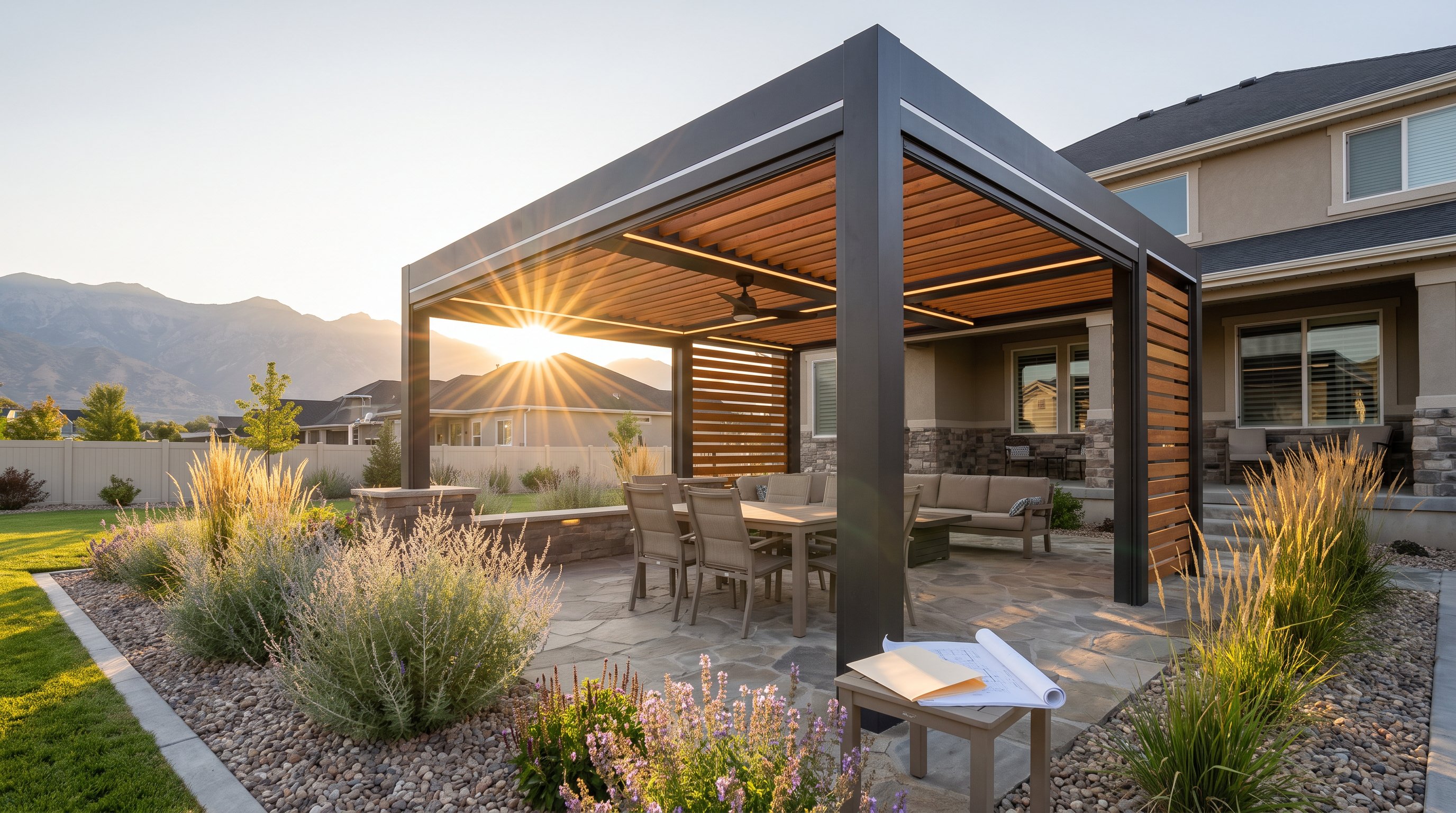
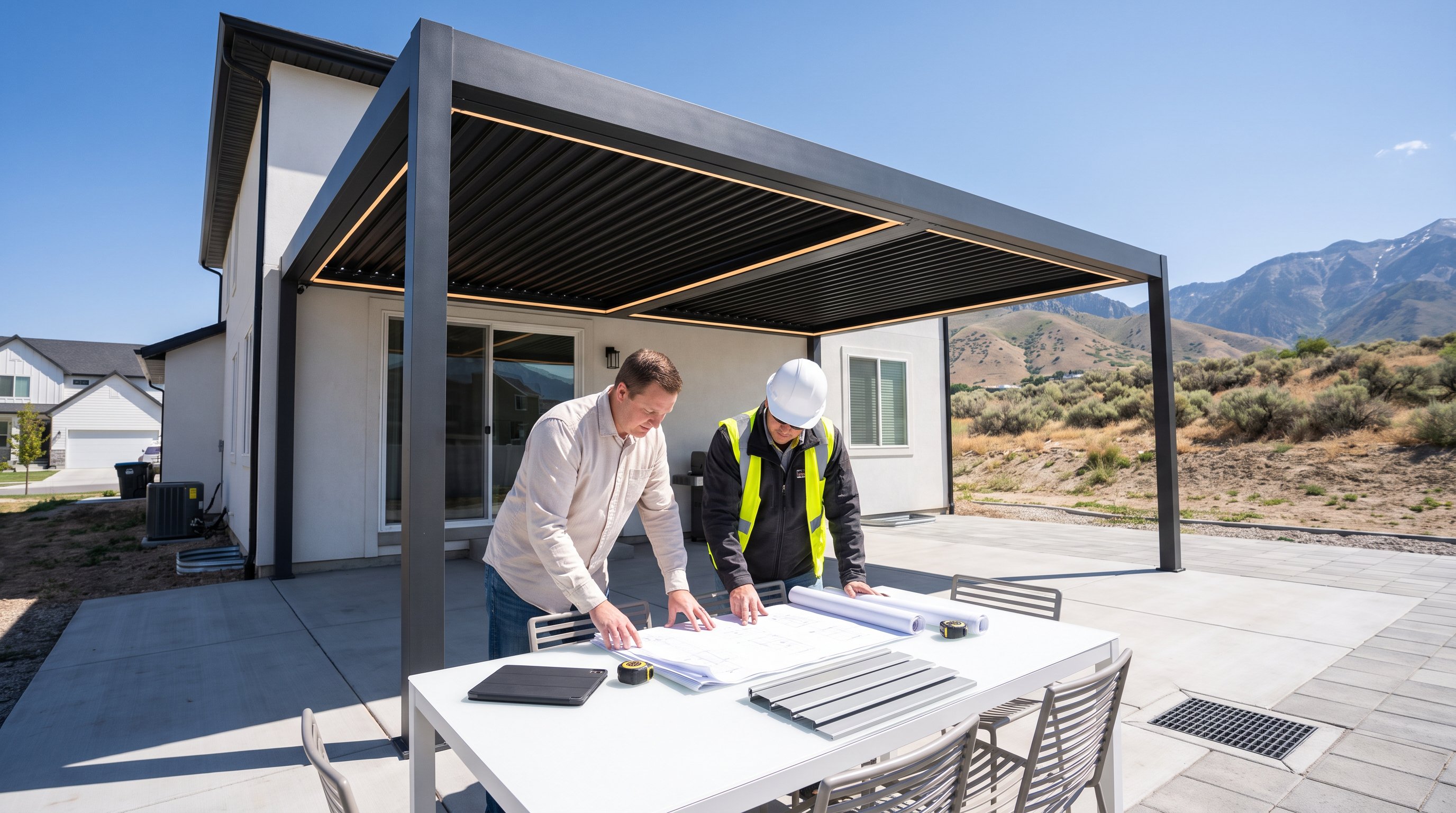
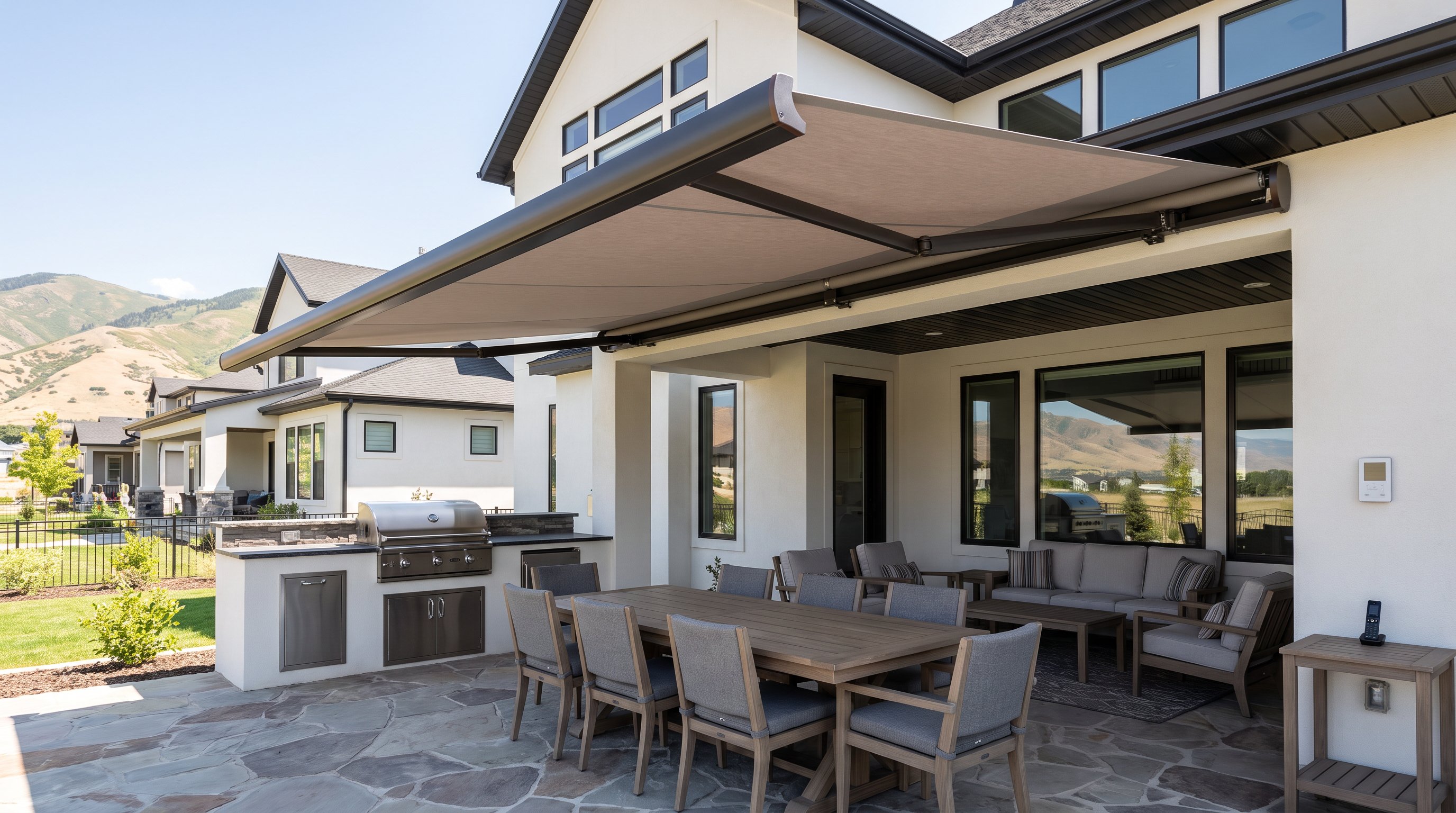
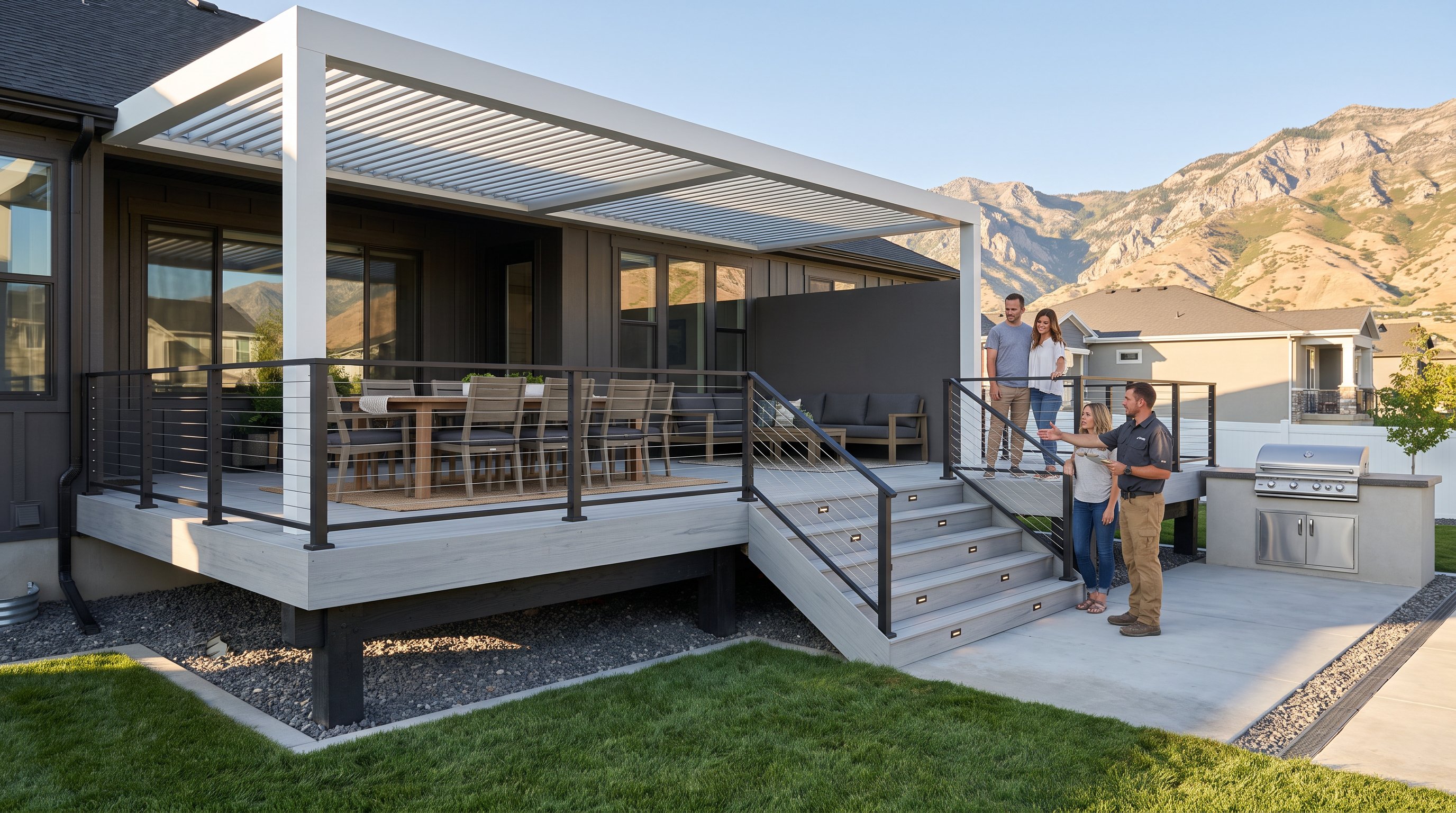
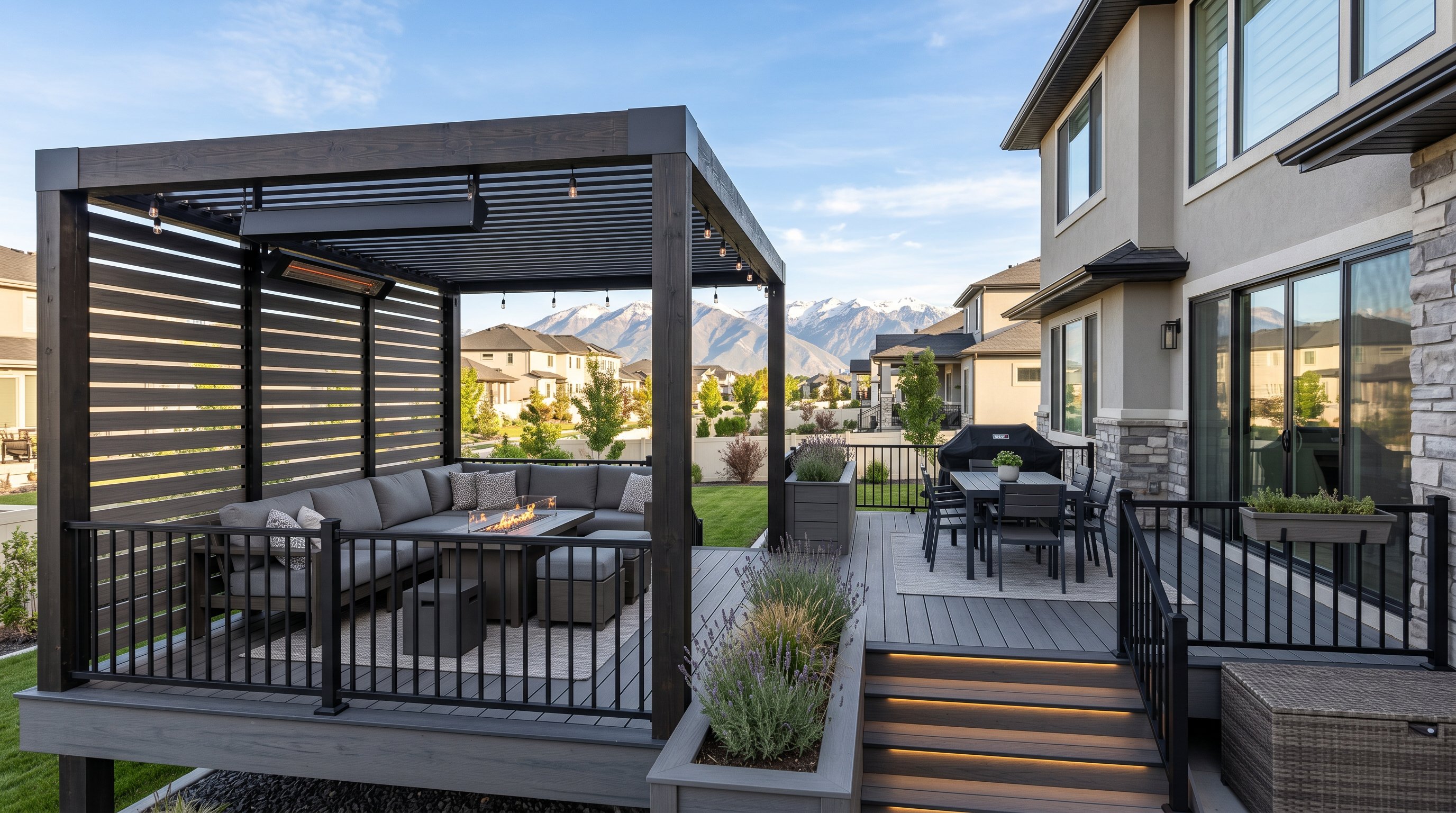
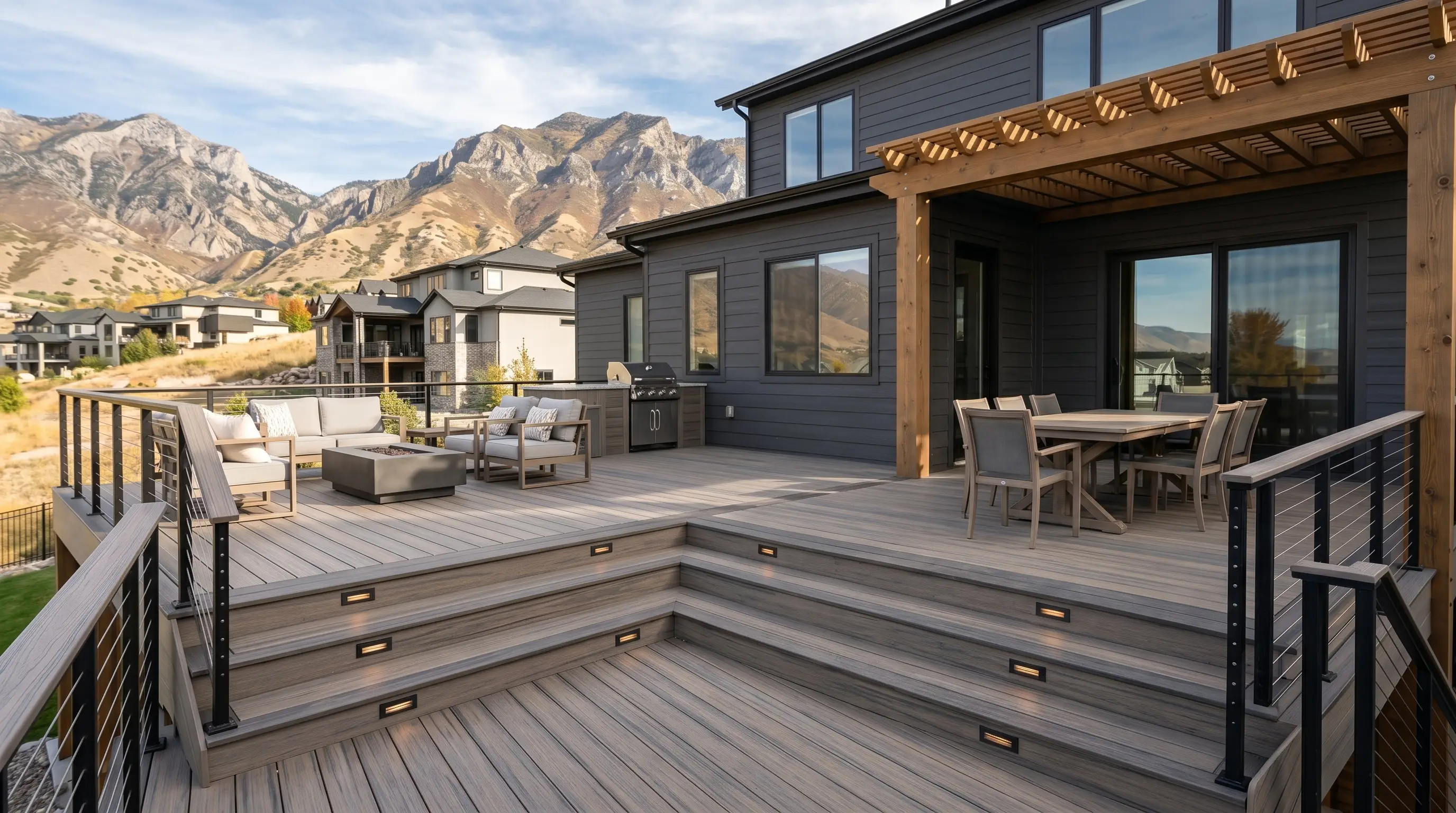
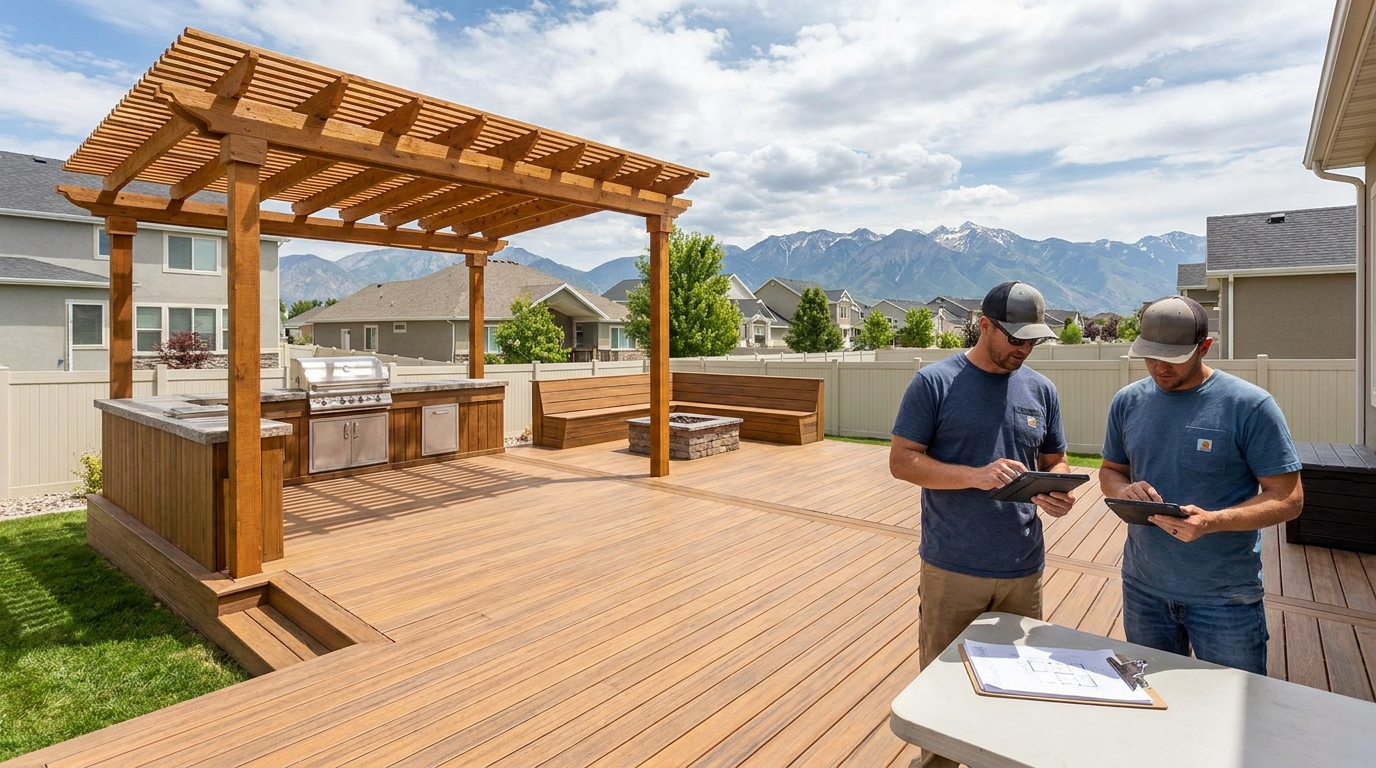
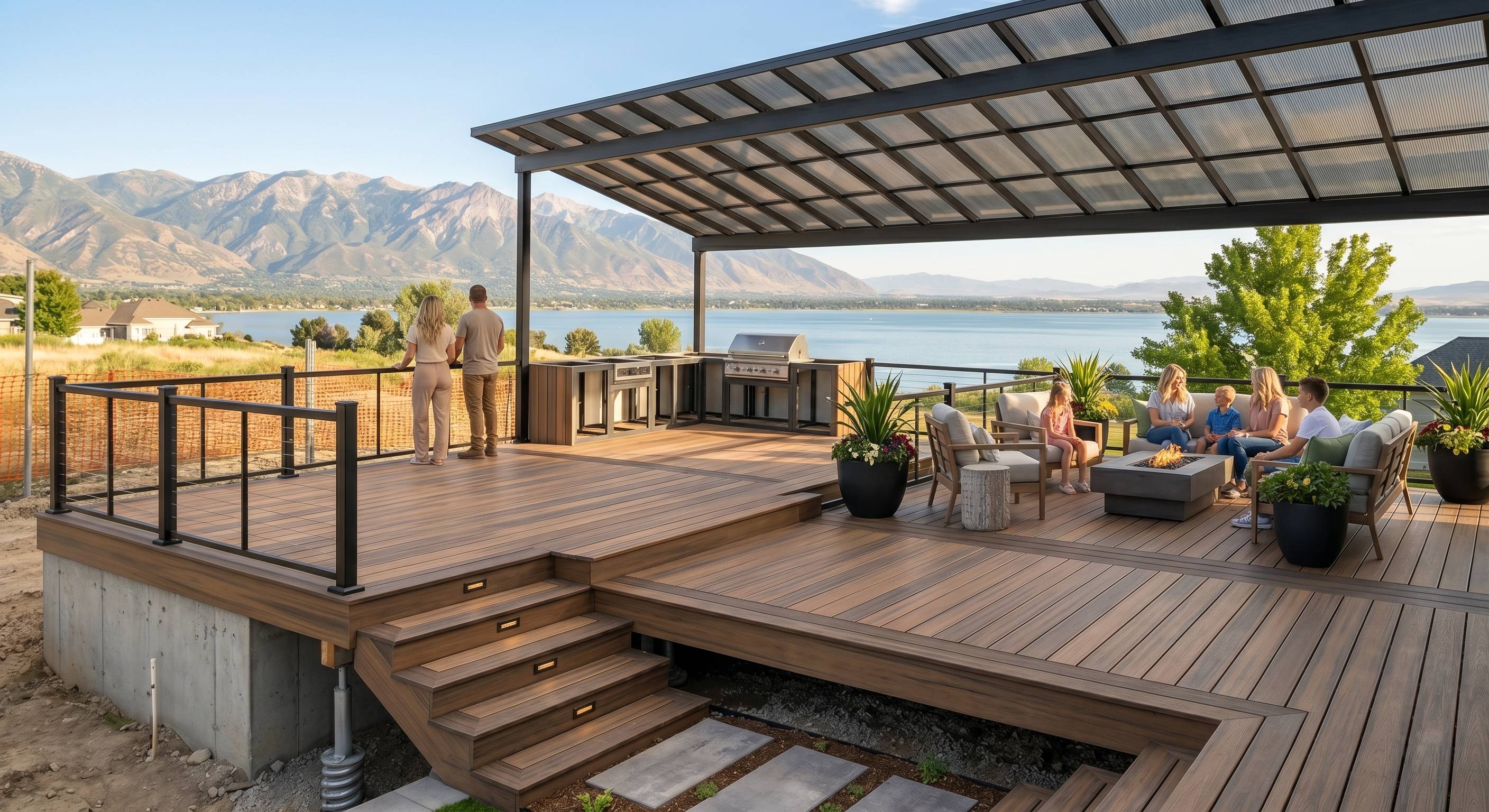
The biggest trend, though, is adding features that make the space usable through more of the year. Pergolas are especially popular in Lehi because summer sun can be brutal. We often see custom timber shade structures or motorized louvered pergolas that let homeowners control light and airflow.
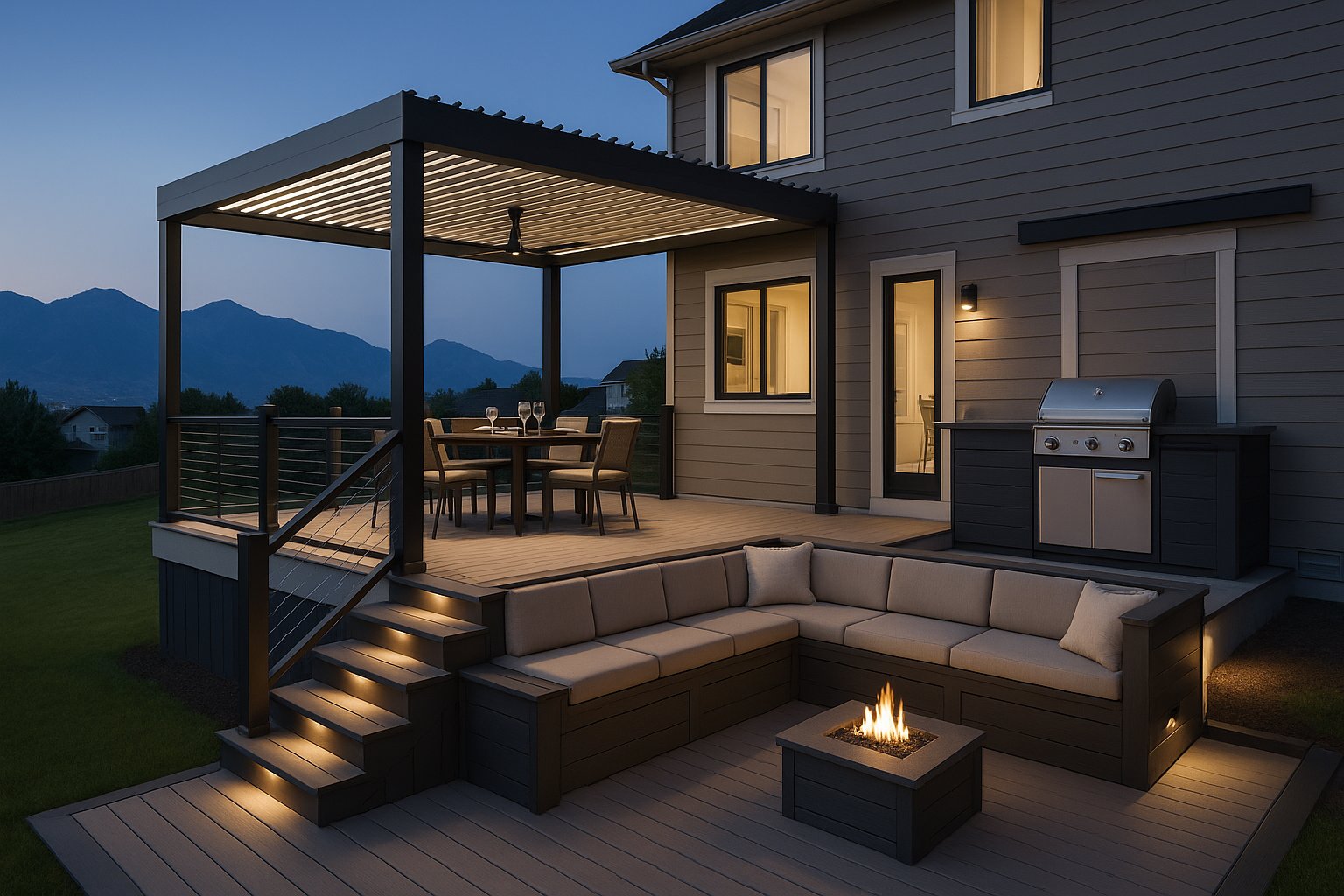
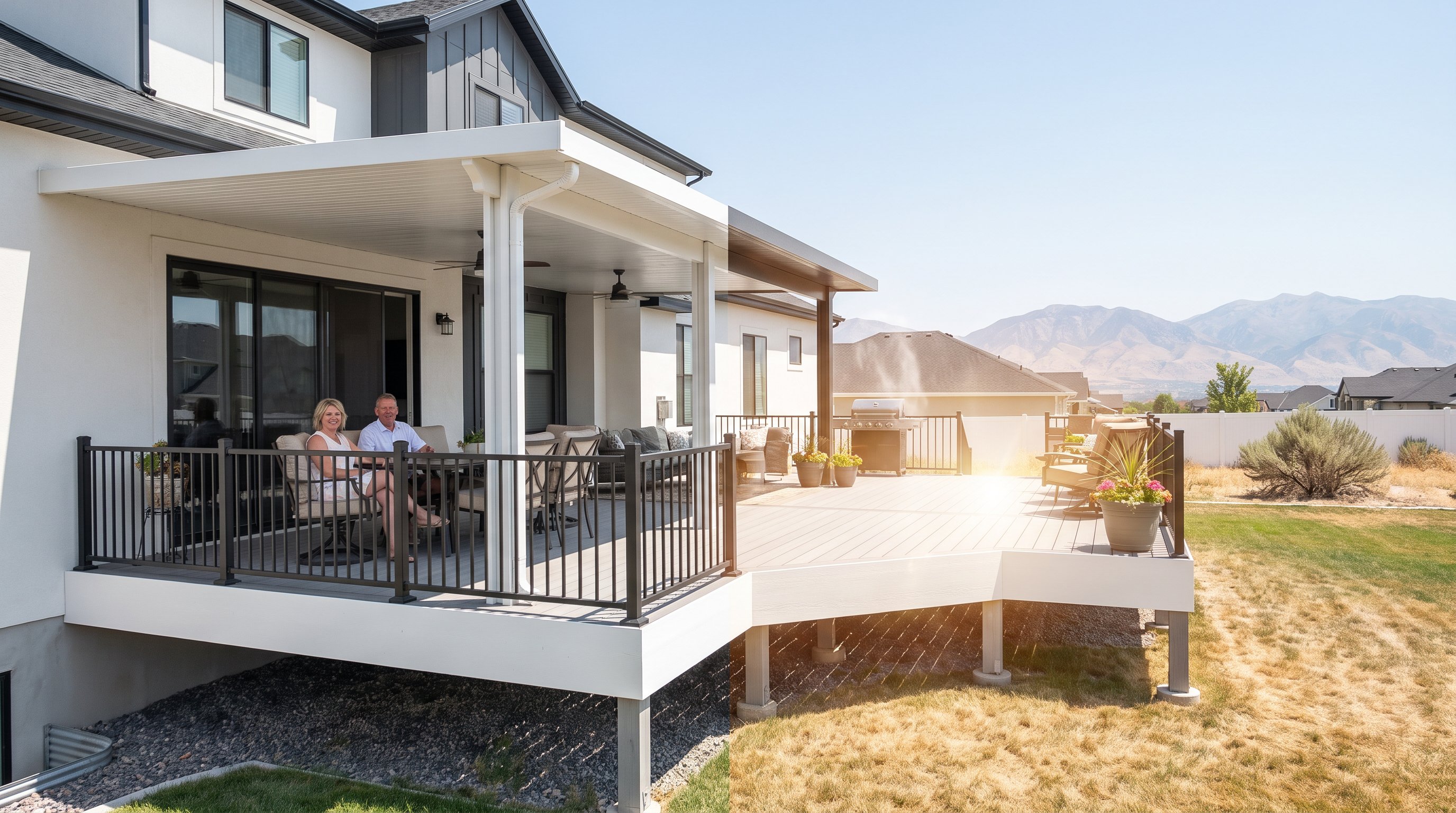
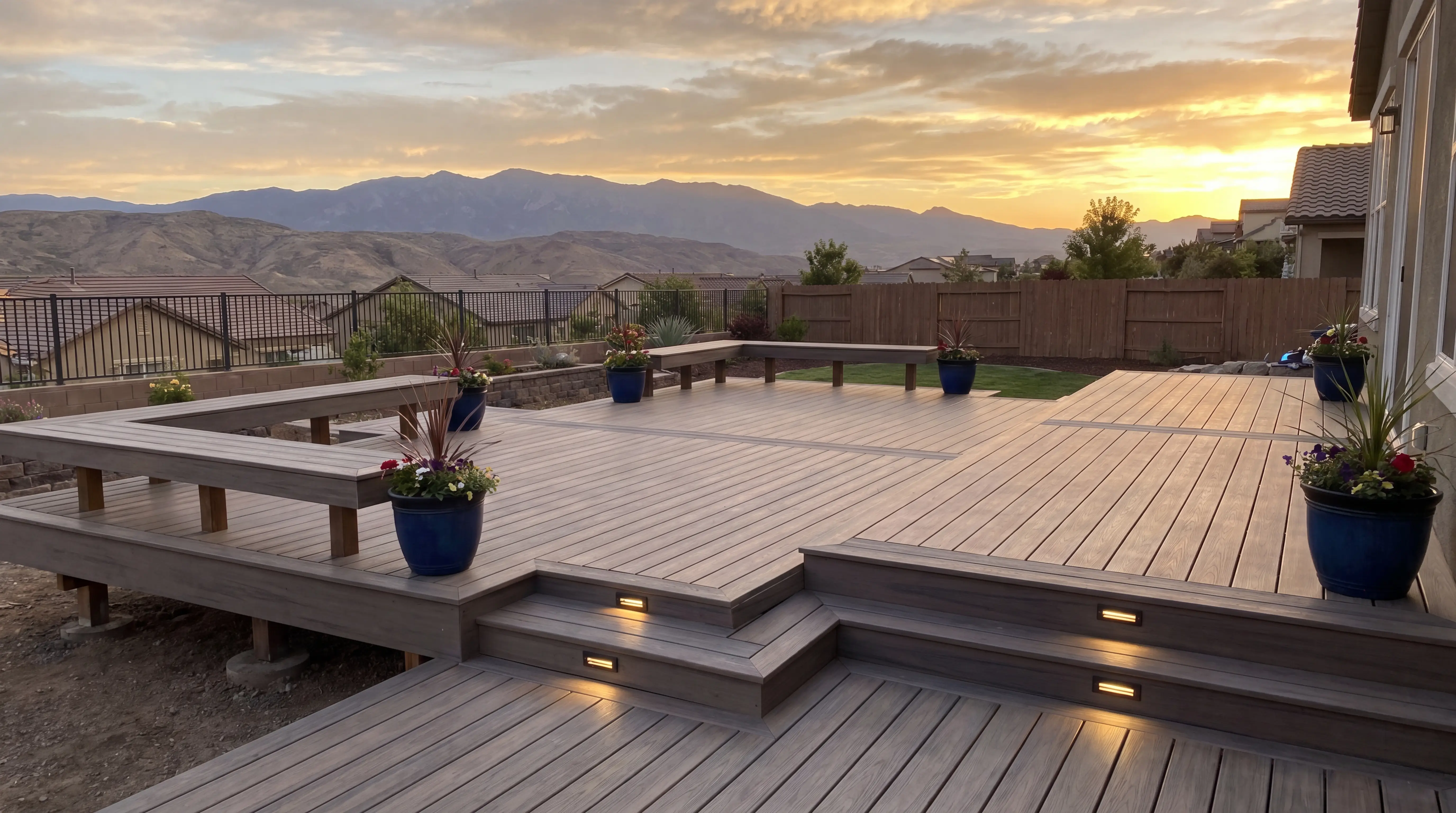
Other high-value upgrades include low-voltage LED stair and railing lights, privacy walls, built-in seating, outdoor kitchens, and under-deck drainage systems for second-story decks. Modern railings are also shaping the look of newer projects. Aluminum, cable, and glass panel systems feel cleaner than bulky wood balusters, and they preserve those mountain views people are paying for in the first place.
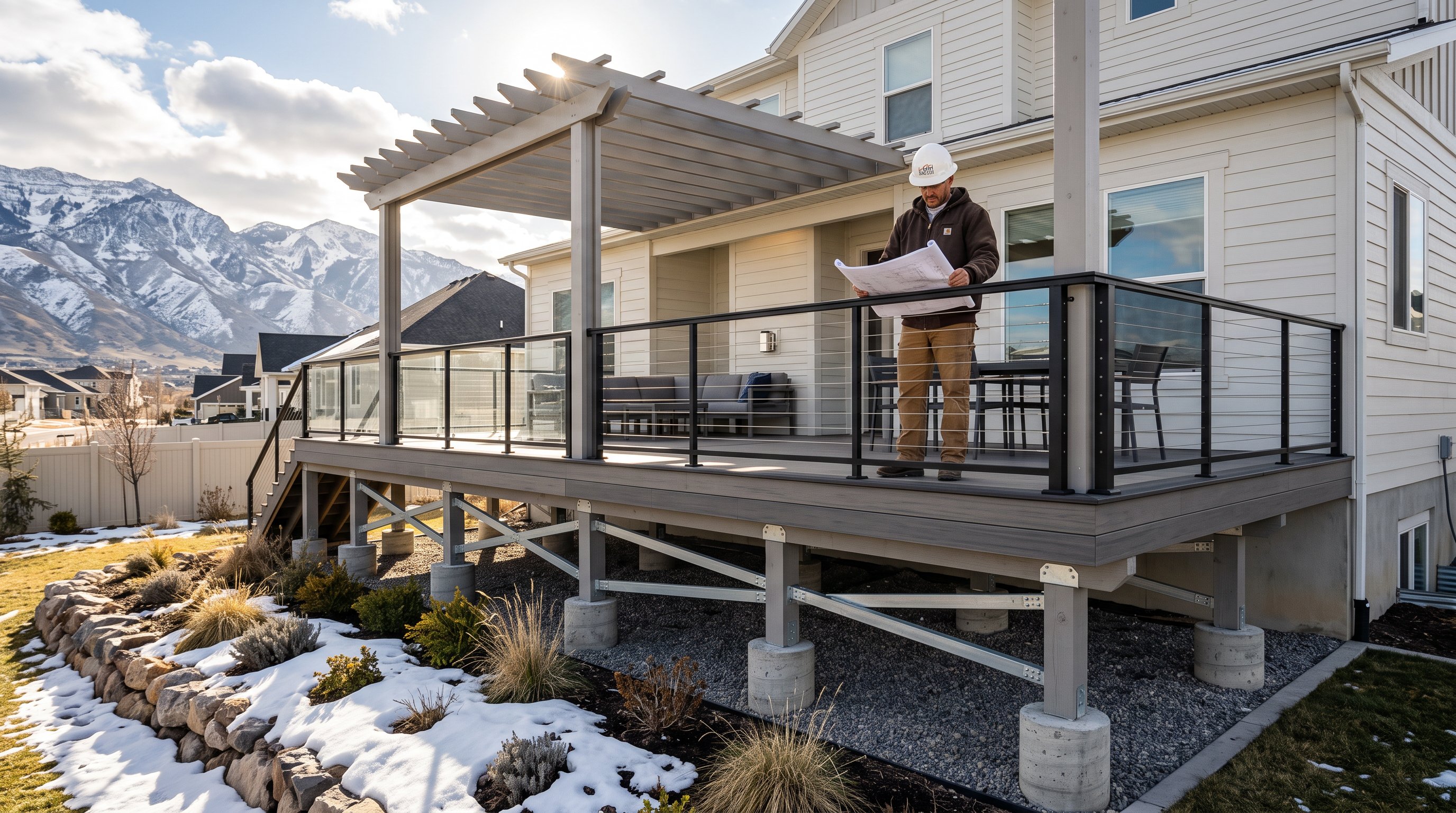
Utah is hard on exterior structures. That's not a scare tactic: it's just reality. A deck in Lehi has to survive dry air, intense sun, major temperature swings, heavy winter snow, and repeated freeze-thaw cycles.
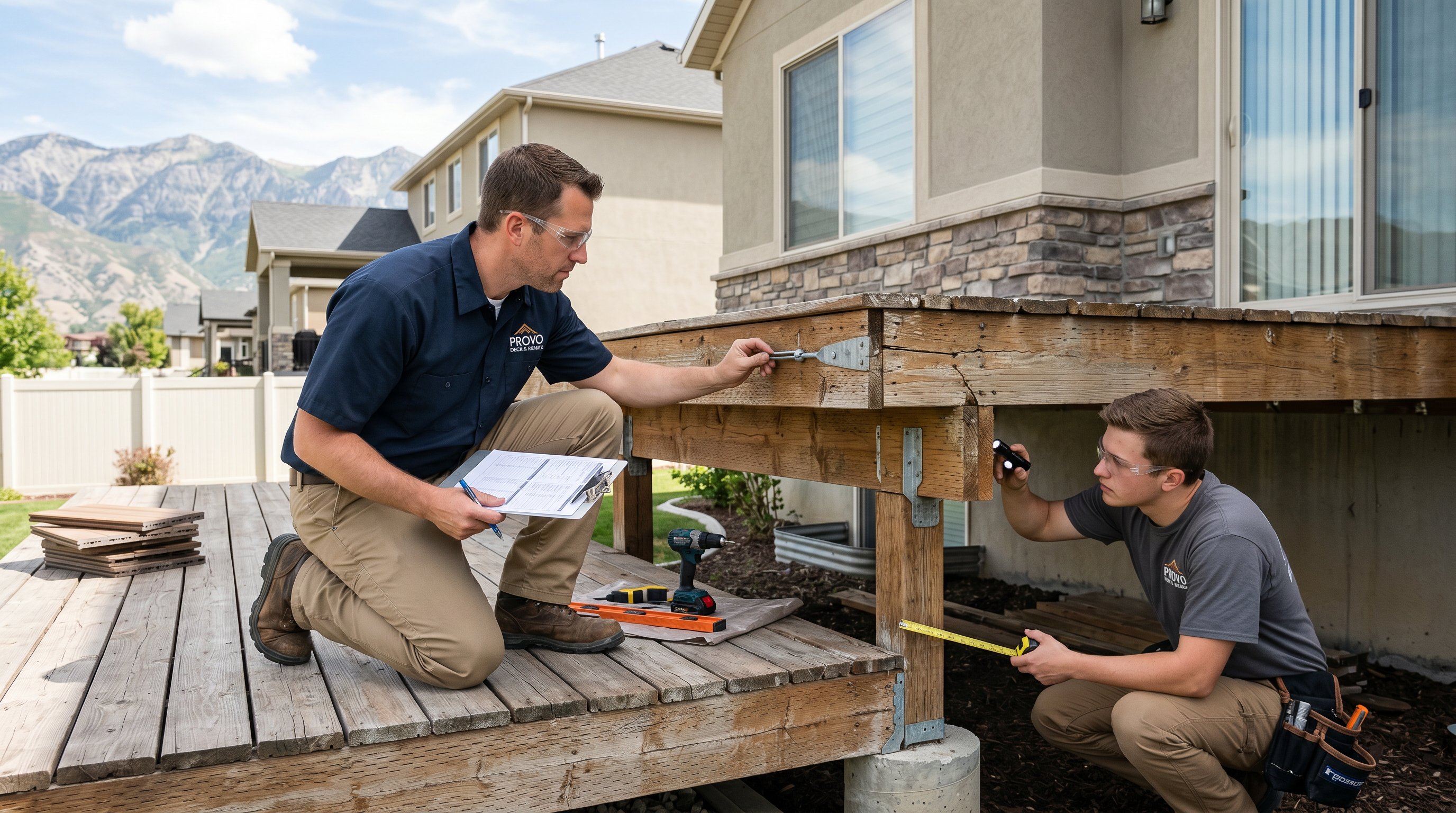
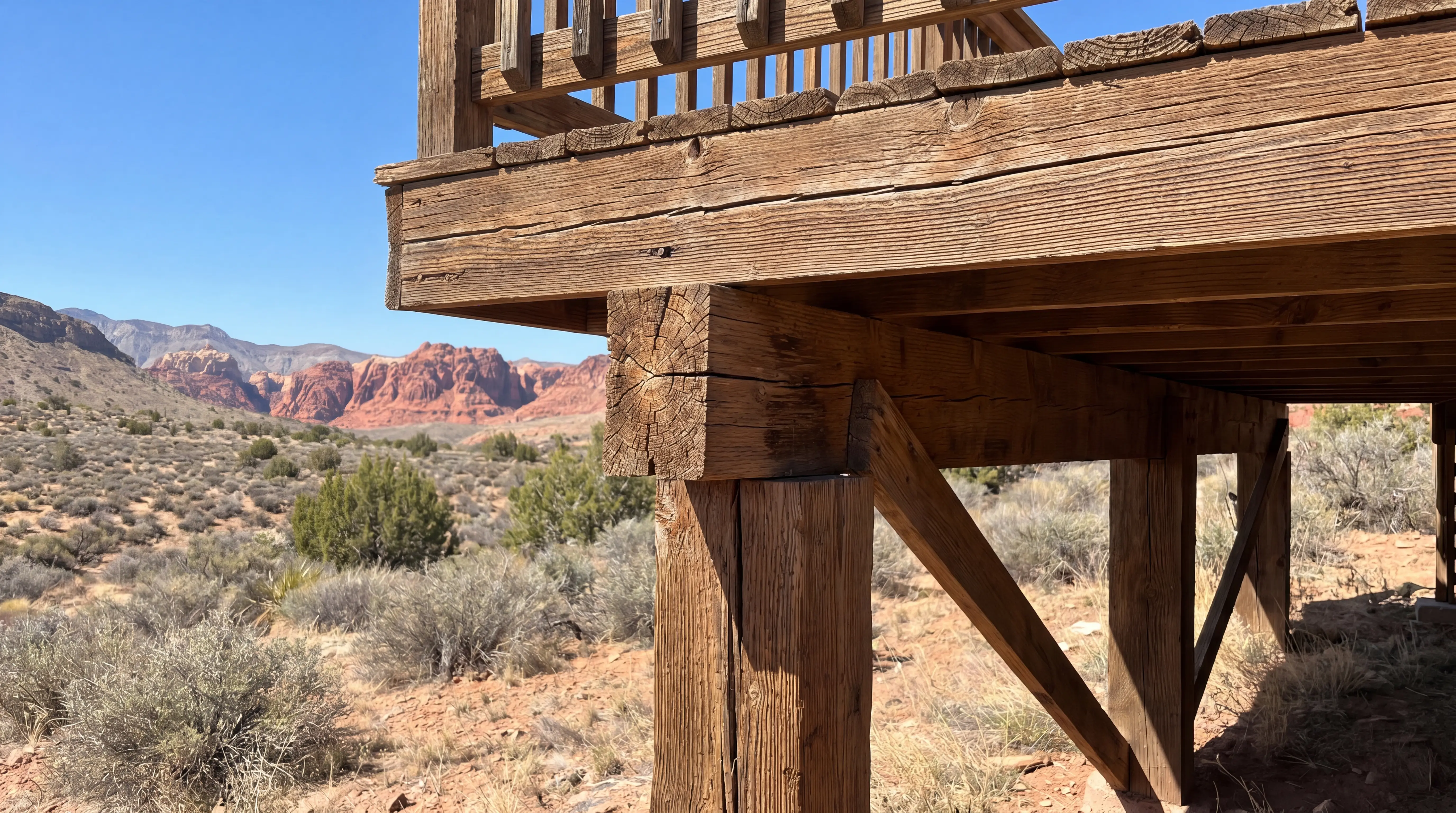
That's why design and engineering matter so much. Footings need to go below the local frost line, typically 30 inches or more, to reduce shifting and heaving. Framing, joist spacing, and connectors should also be selected with snow load in mind, especially for elevated decks or builds that integrate pergolas, roofs, or hot tub zones.
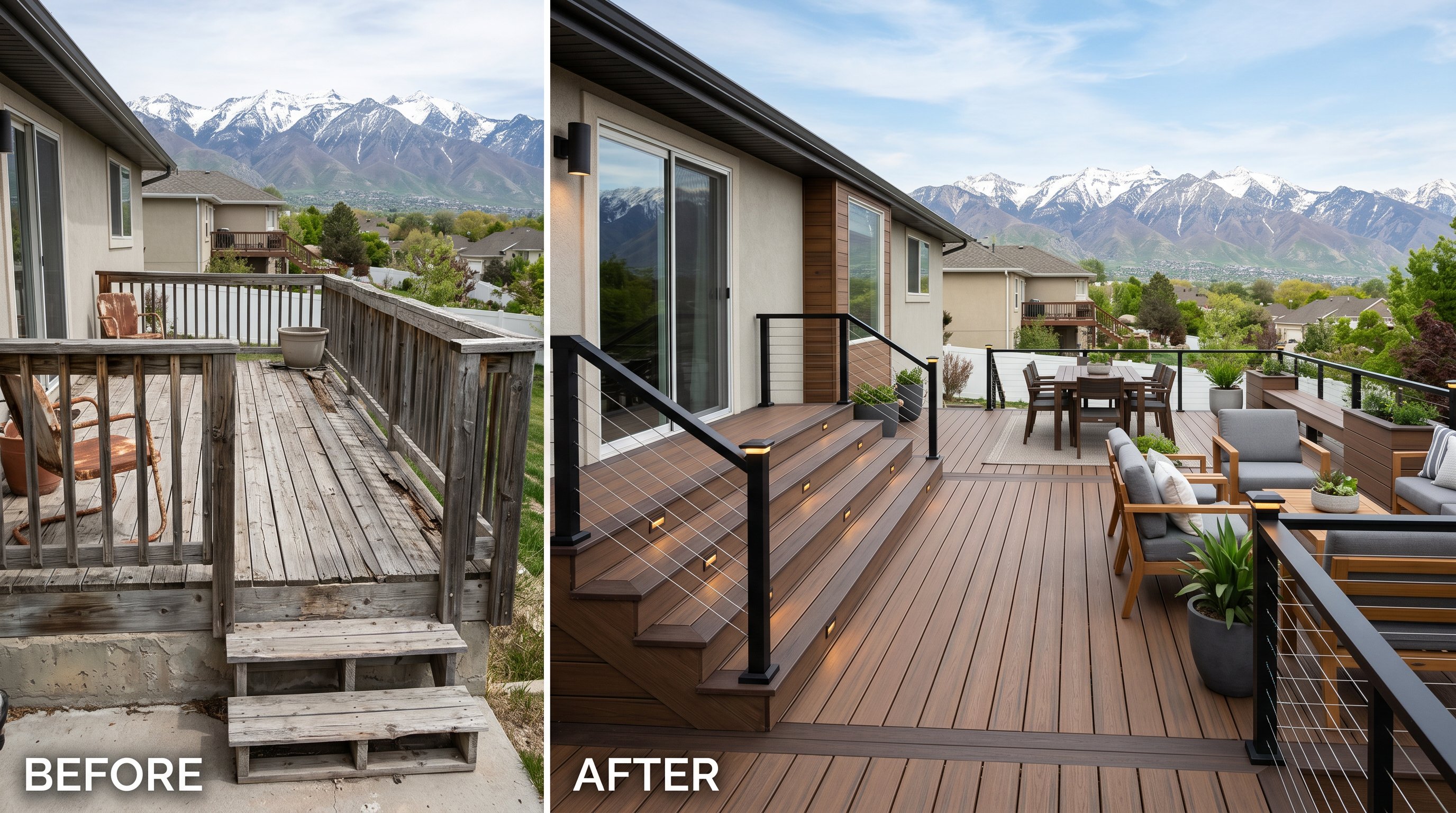
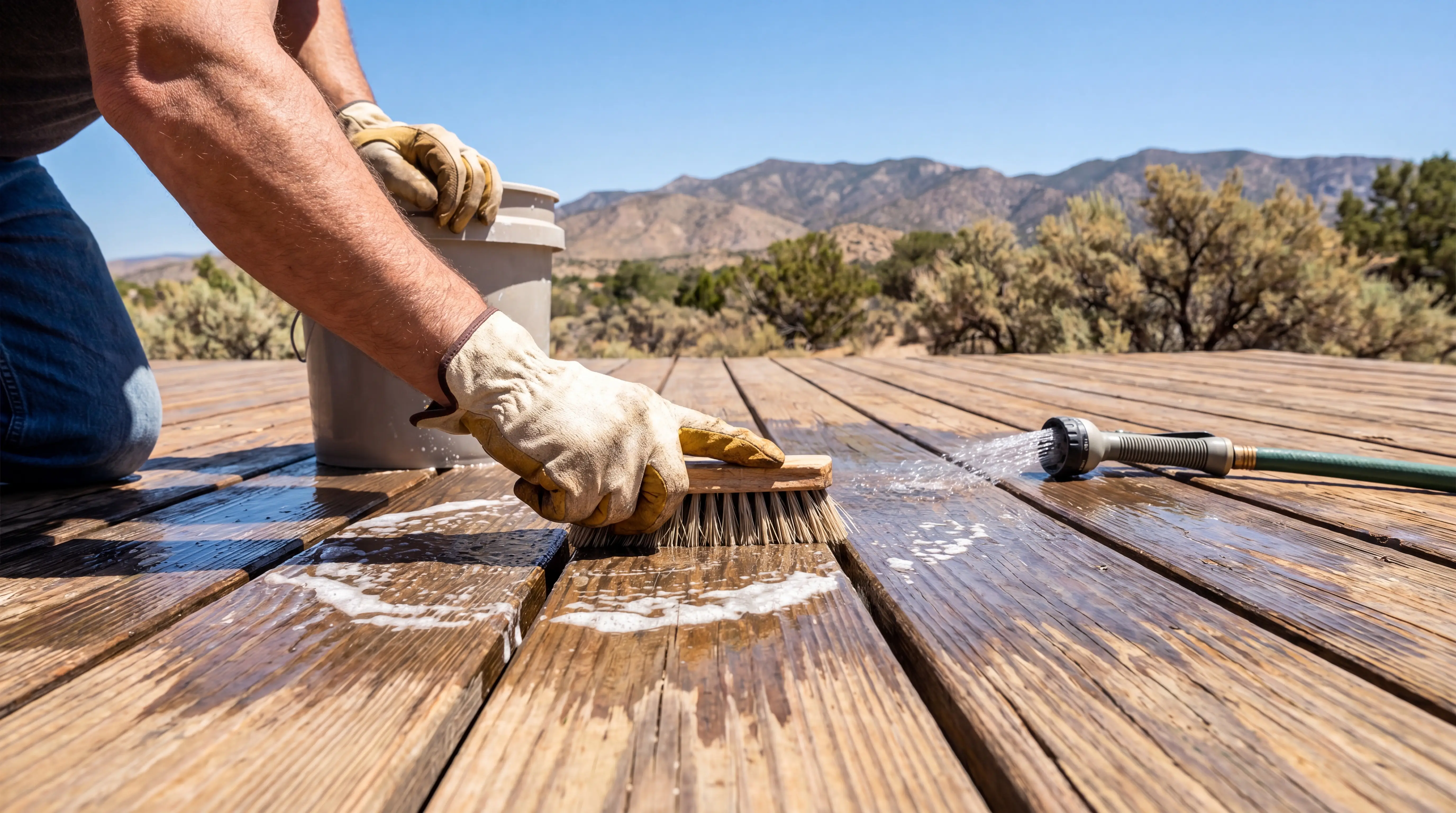
Sun exposure is another big one. South- and west-facing decks can take a beating in summer. Natural wood can still be beautiful, but in Utah it often means more staining, sealing, splintering, fading, and warping than homeowners expect. That's one reason many local builders, including us, recommend capped composite decking from brands like Trex or TimberTech. It handles UV better, resists moisture from snow melt, and cuts down on long-term maintenance.
A good local builder won't just ask what looks nice. We'll ask where the sun hits at 5 p.m., how snow drifts collect, and whether drainage under the deck could make the space more useful.
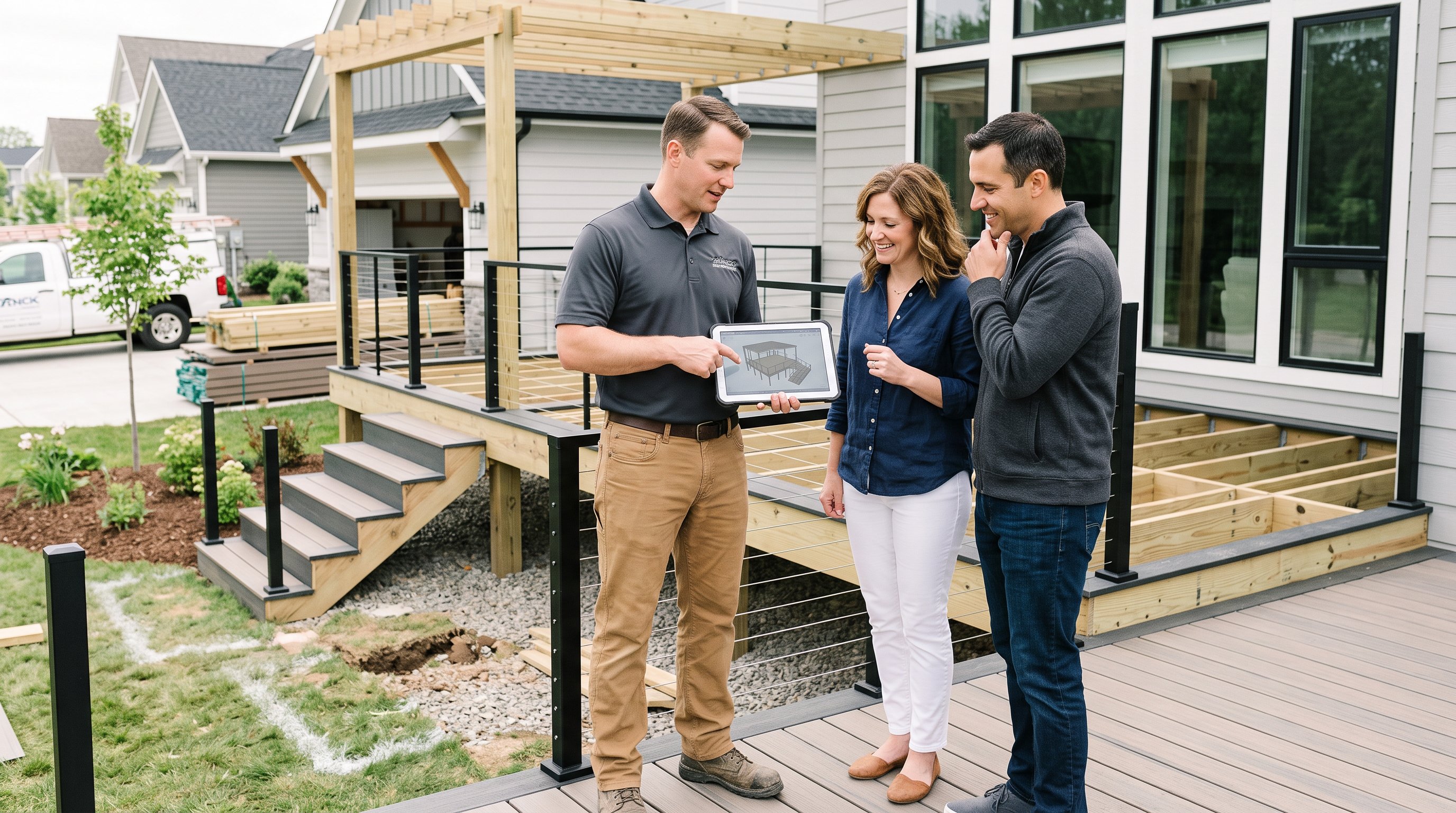
A professional deck project should feel organized from the start. If it feels vague before work begins, it usually gets more stressful later.
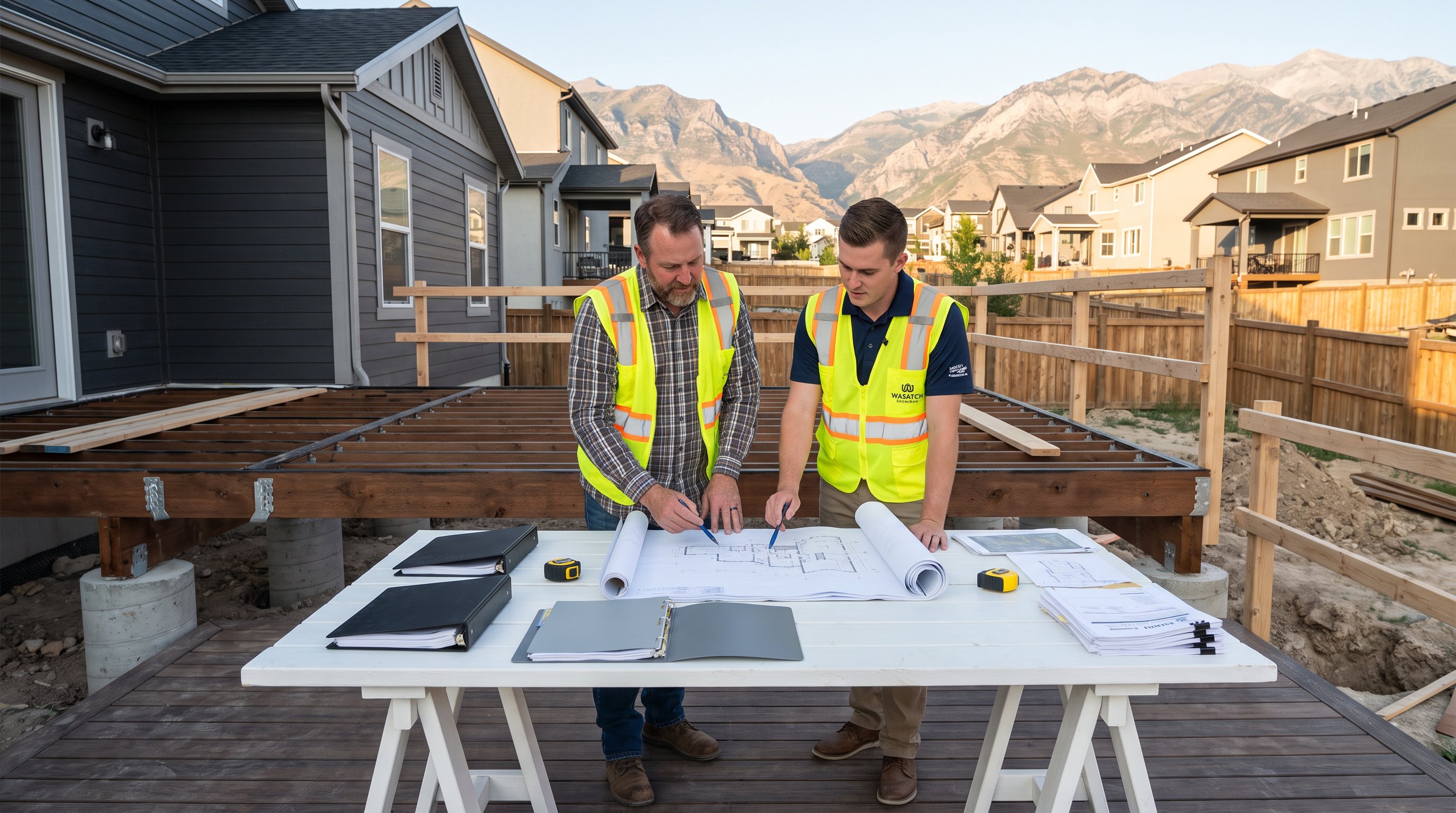
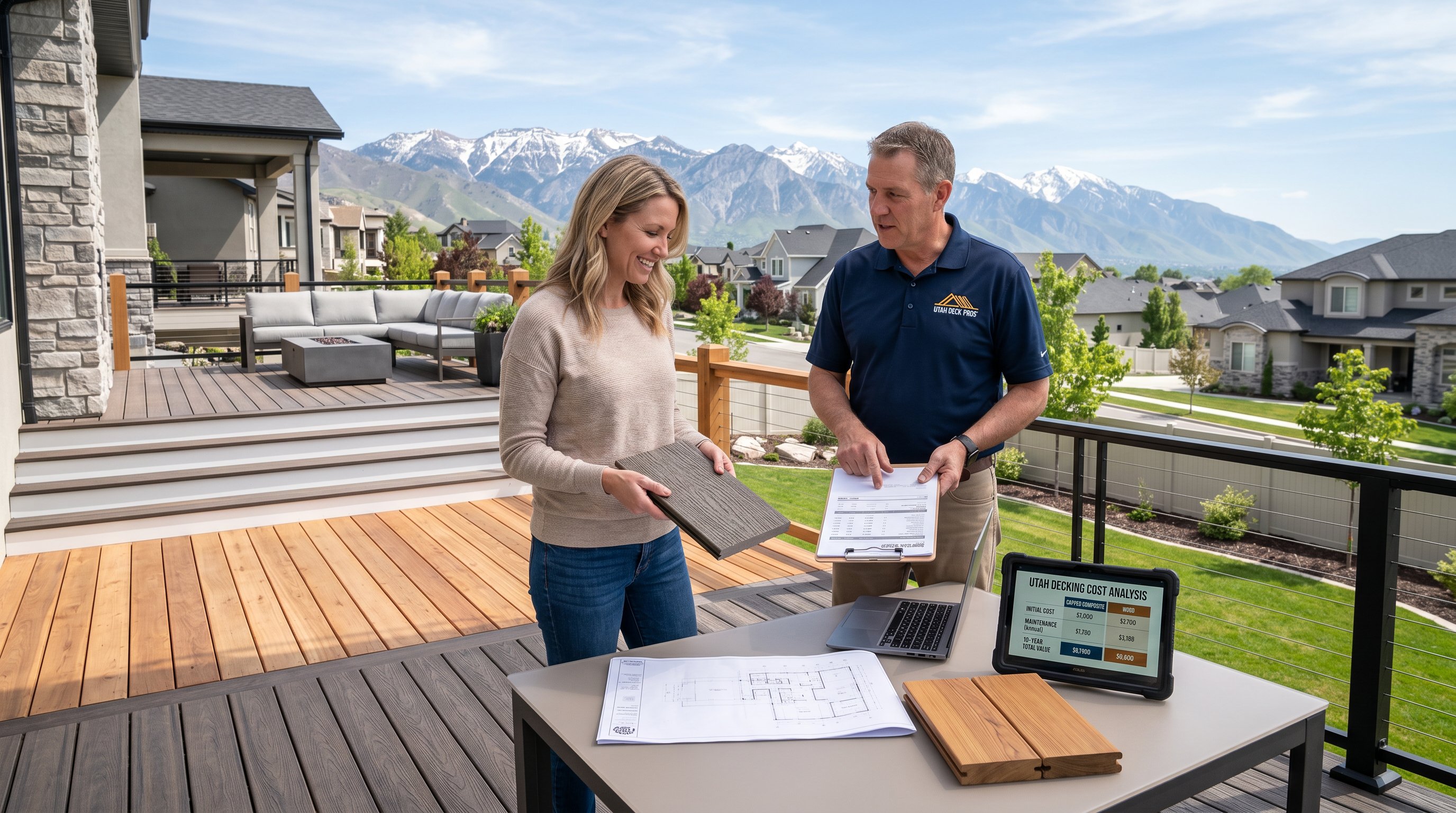
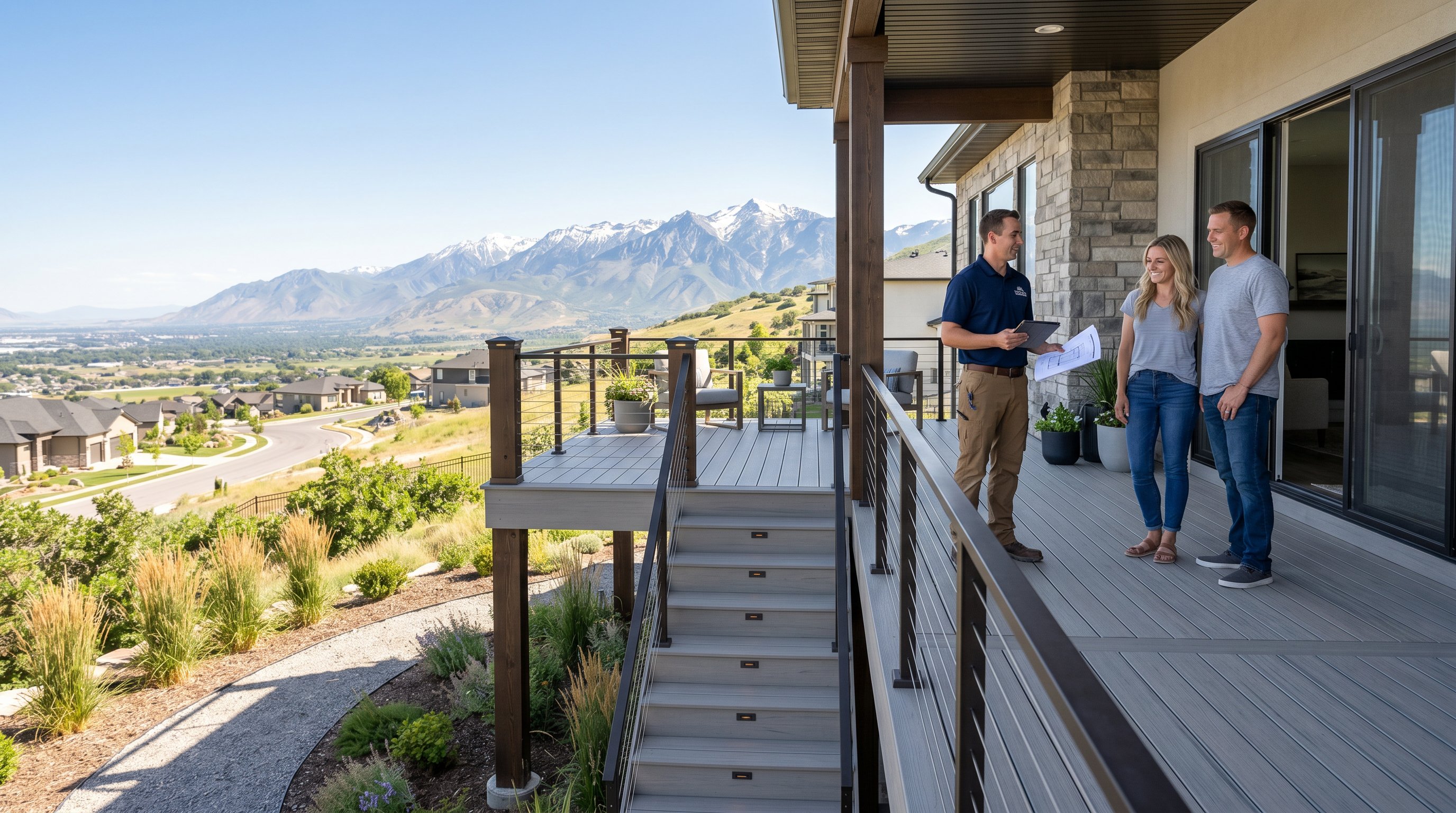
Most deck builds in Lehi begin with an on-site consultation to talk through layout, material options, grading, stairs, railings, and features like pergolas or lighting. From there, a strong contractor should provide a detailed estimate, not a fuzzy number scribbled on a card, and ideally a design or 3D mockup so you can visualize how the deck will connect to the home.
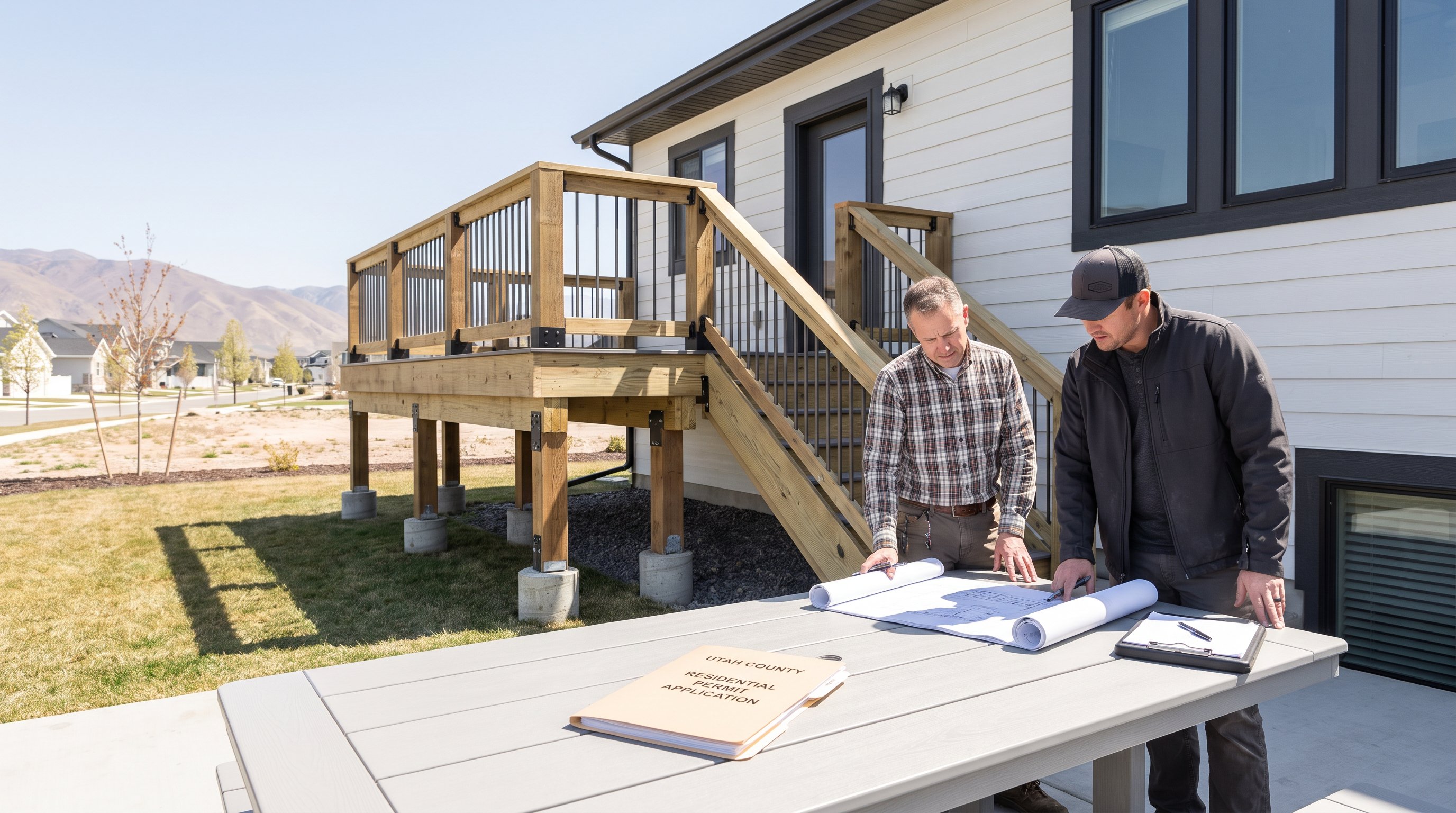
Next comes engineering, permits, and HOA documentation if needed. This is where local experience saves time. In neighborhoods with strict design guidelines, missing paperwork can stall the project fast.
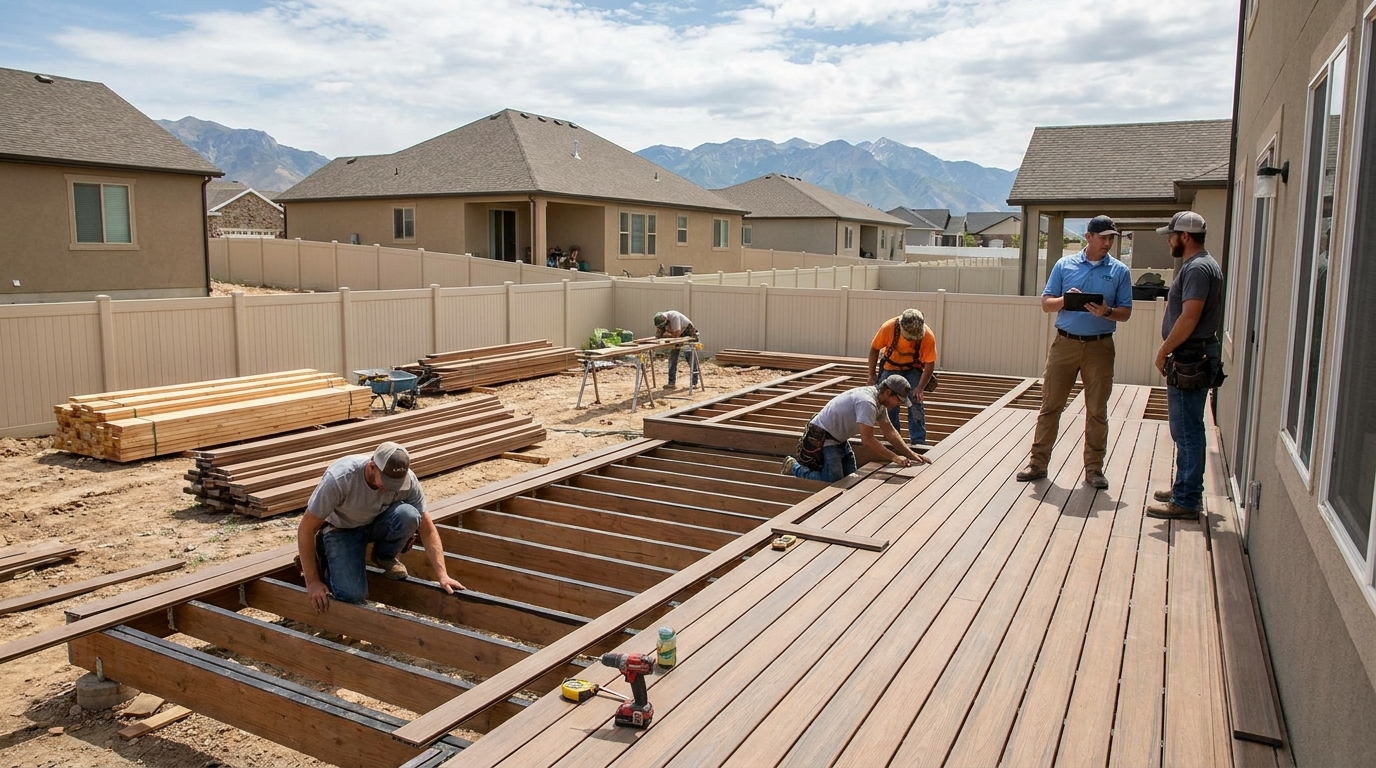
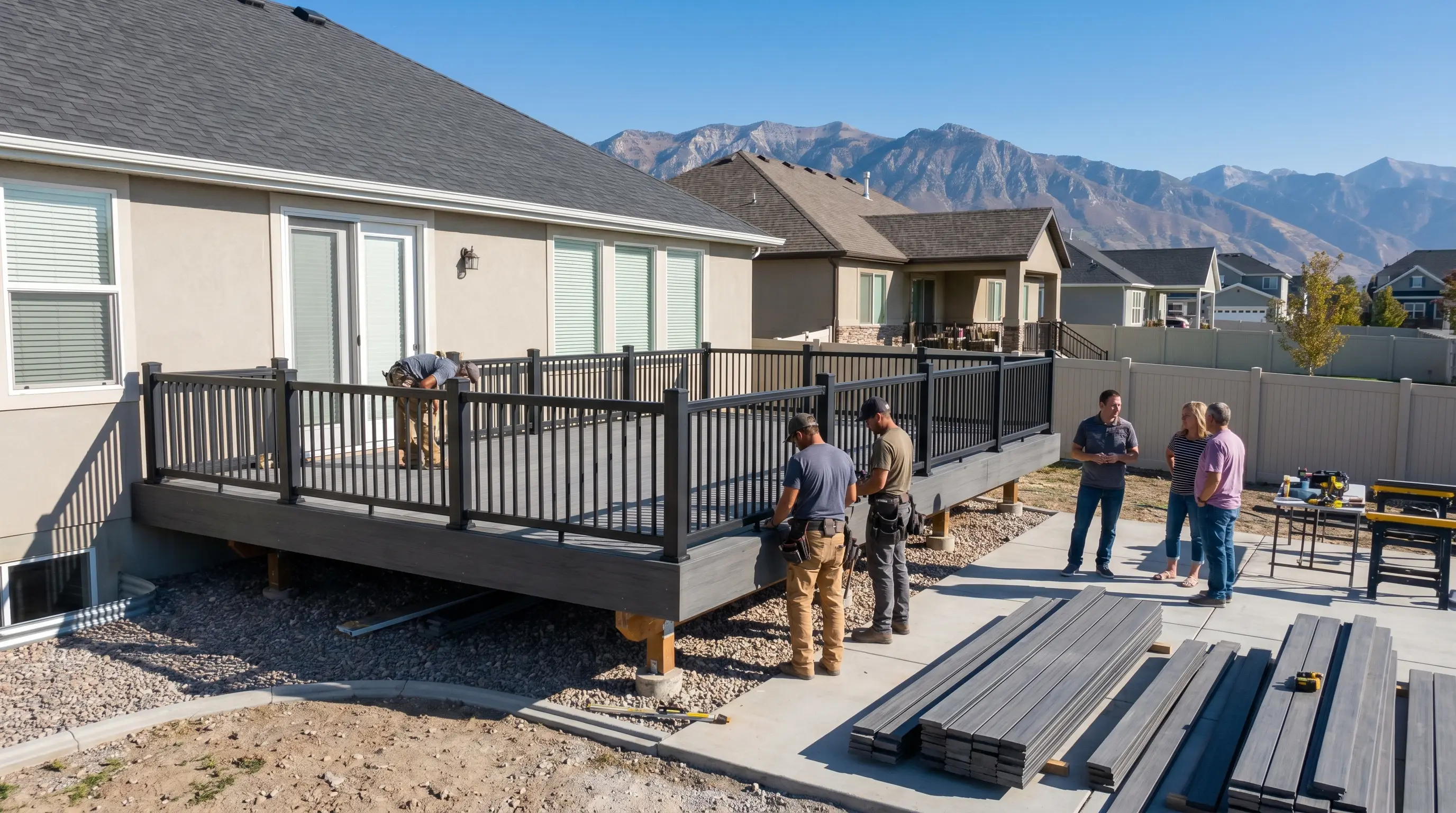
Once approved, construction typically includes footing excavation, concrete placement, framing, decking installation, railing work, and final finish details. Most standard projects take about 2 to 6 weeks from excavation to final walkthrough, depending on complexity, weather, and inspection timing.
Homeowners should also expect regular communication, clean job sites, and respect for landscaping. Those little things aren't little when a crew is in your yard for several weeks.
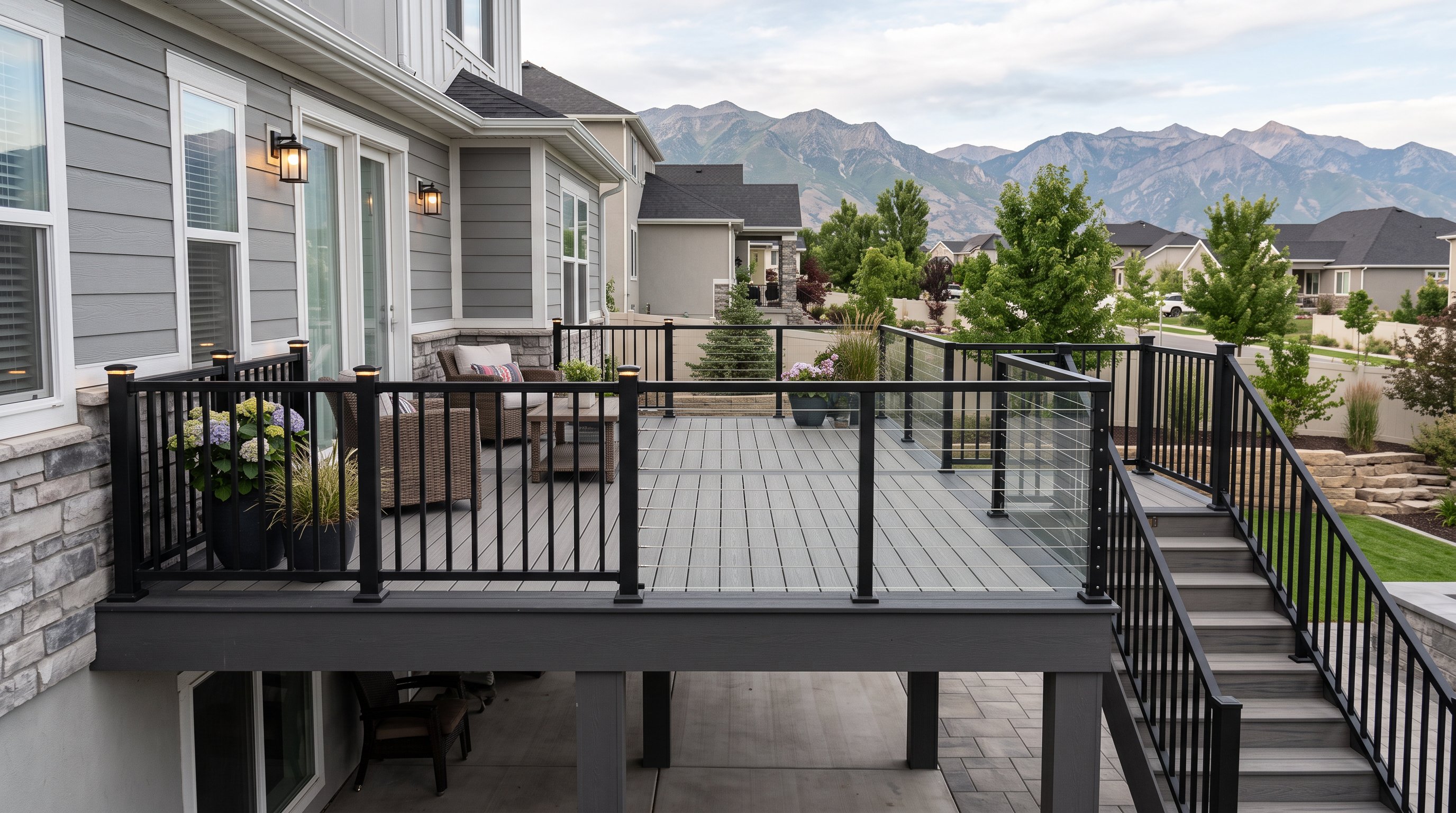
The best deck isn't always the cheapest up front. It's the one that still performs well after years of sun, snow, foot traffic, and weekend use.
For many Utah homeowners, capped composite decking offers the best balance of appearance and durability. It's low maintenance, doesn't splinter like aging wood, and generally holds color better under strong UV exposure. Typical new composite deck pricing often lands around $65 to $95+ per square foot, depending on layout, stairs, railing style, and site conditions.
Natural wood, such as cedar or redwood, can cost less initially, often around $45 to $65 per square foot, and some homeowners still prefer its warmth. But it usually comes with more upkeep.
Railings deserve careful thought, too. Powder-coated aluminum is durable and clean-looking. Cable railing gives a modern feel with minimal visual blockage. Glass panels create the most open view, though they raise cost and require more cleaning.
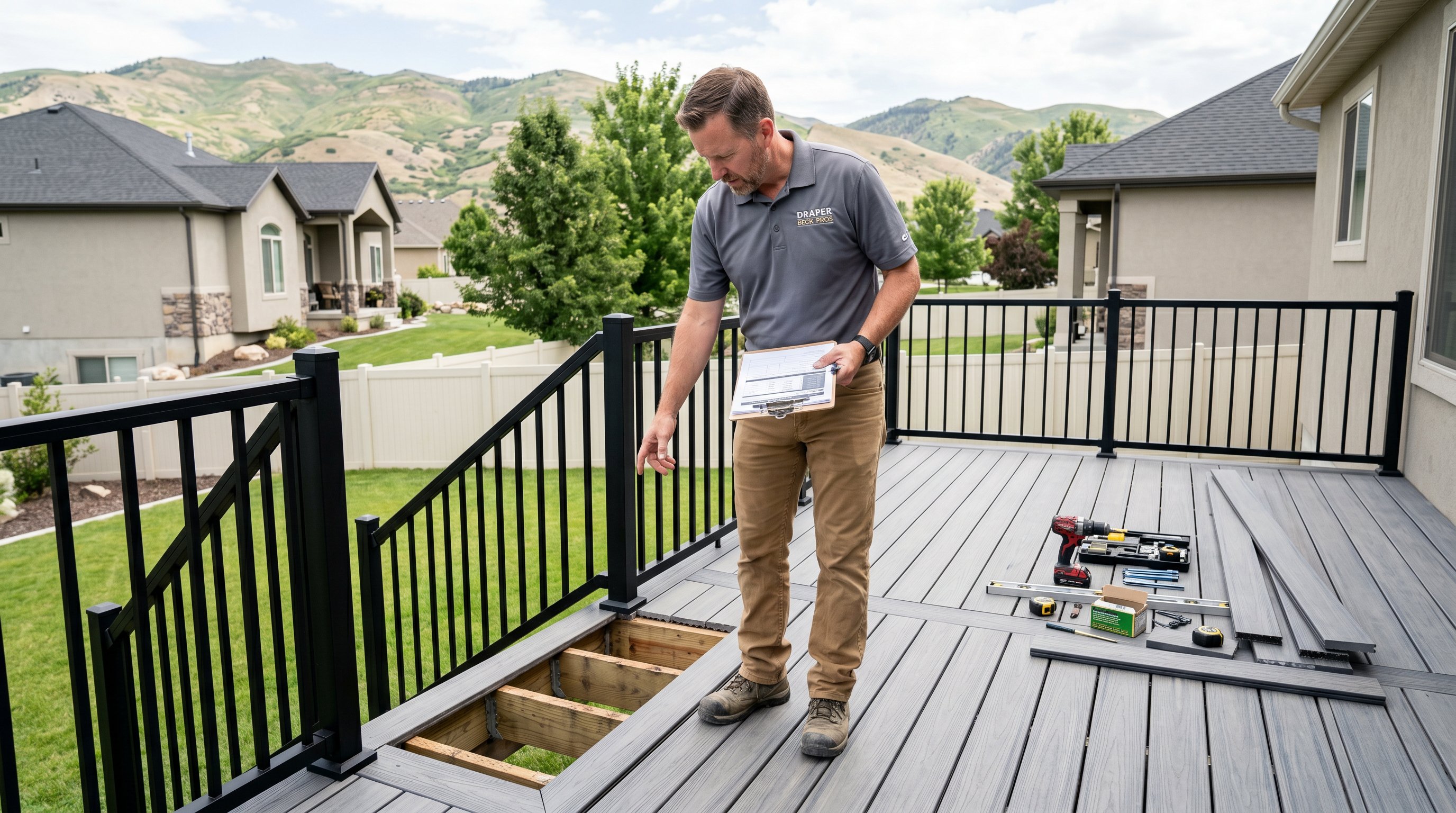
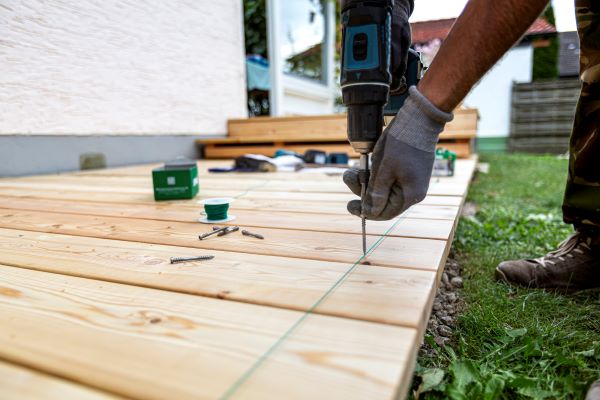
Finishes and accessories matter more than people think. Hidden fasteners, picture-frame borders, post cap lighting, fascia detailing, and dry-space systems underneath elevated decks all contribute to whether the final result feels basic, or truly custom.
Not all deck builders near Lehi, UT operate at the same level, even if their websites say similar things. A smart comparison goes beyond photos.
Start with the essentials:
Then look at project fit. Ask to see examples of decks similar to yours, elevated, multi-level, composite, pergola-integrated, or resurfaced. A builder who mostly does basic platforms may not be the right team for a more involved outdoor living project.
Communication is another separator. We'd rather homeowners ask direct questions than guess. Who will manage the job? How often will updates come? What happens if weather delays work? Is cleanup part of the process?
Finally, compare value, not just bid price. A lower number can hide shallower footings, lighter framing, cheaper hardware, or vague allowances. The best builders are transparent. At 3sixty, we'd rather explain the numbers honestly over a cup of coffee than win a job with a quote that changes halfway through.
A deck in Lehi should be built for the way Utah homeowners actually live, and for the climate they live in. If you're comparing deck builders near Lehi, UT, focus on local experience, code knowledge, material quality, and clear communication. The right builder won't just install boards. We'll help create an outdoor space that adds comfort, value, and years of use to your home.

.avif)
.avif)











.png)



.webp)