
If you're comparing composite deck installers in Draper, the real question isn't just who can build a deck. It's who can build one that still looks sharp, drains well, handles Utah weather, and pays you back over time. Around Draper, that matters more than people think. Strong UV, dry air, snow load, and sloped lots can turn a "simple" project into an expensive lesson if the builder cuts corners. We've seen the difference firsthand. A well-designed composite deck isn't just lower maintenance than wood, it can be the smarter long-term investment for how Utah homeowners actually live.
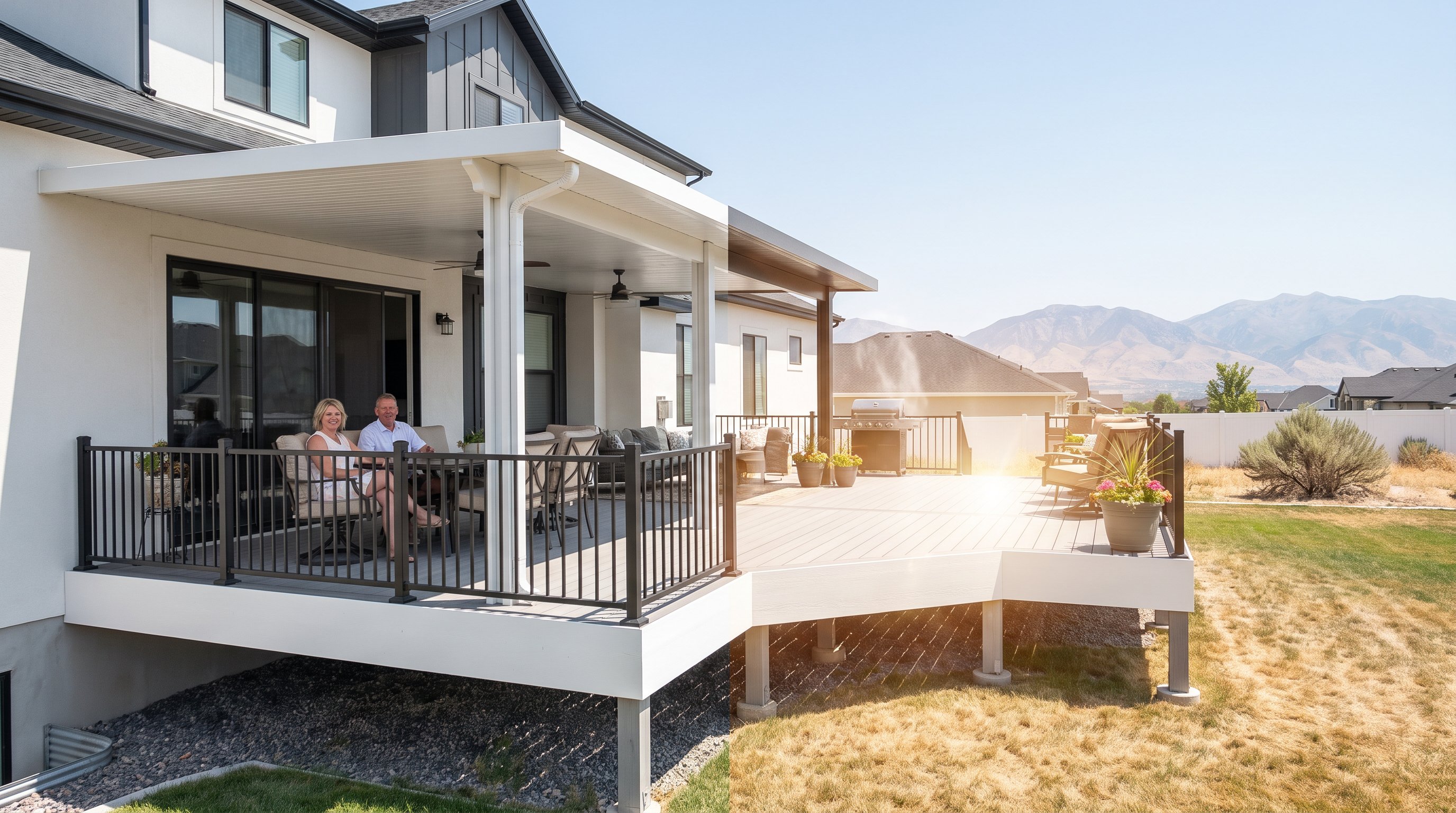
Draper's climate is tough on outdoor materials. Intense summer sun, dry air, freeze-thaw cycles, and winter snow all work against traditional wood. That's why capped composite has become such a practical choice for local homeowners.
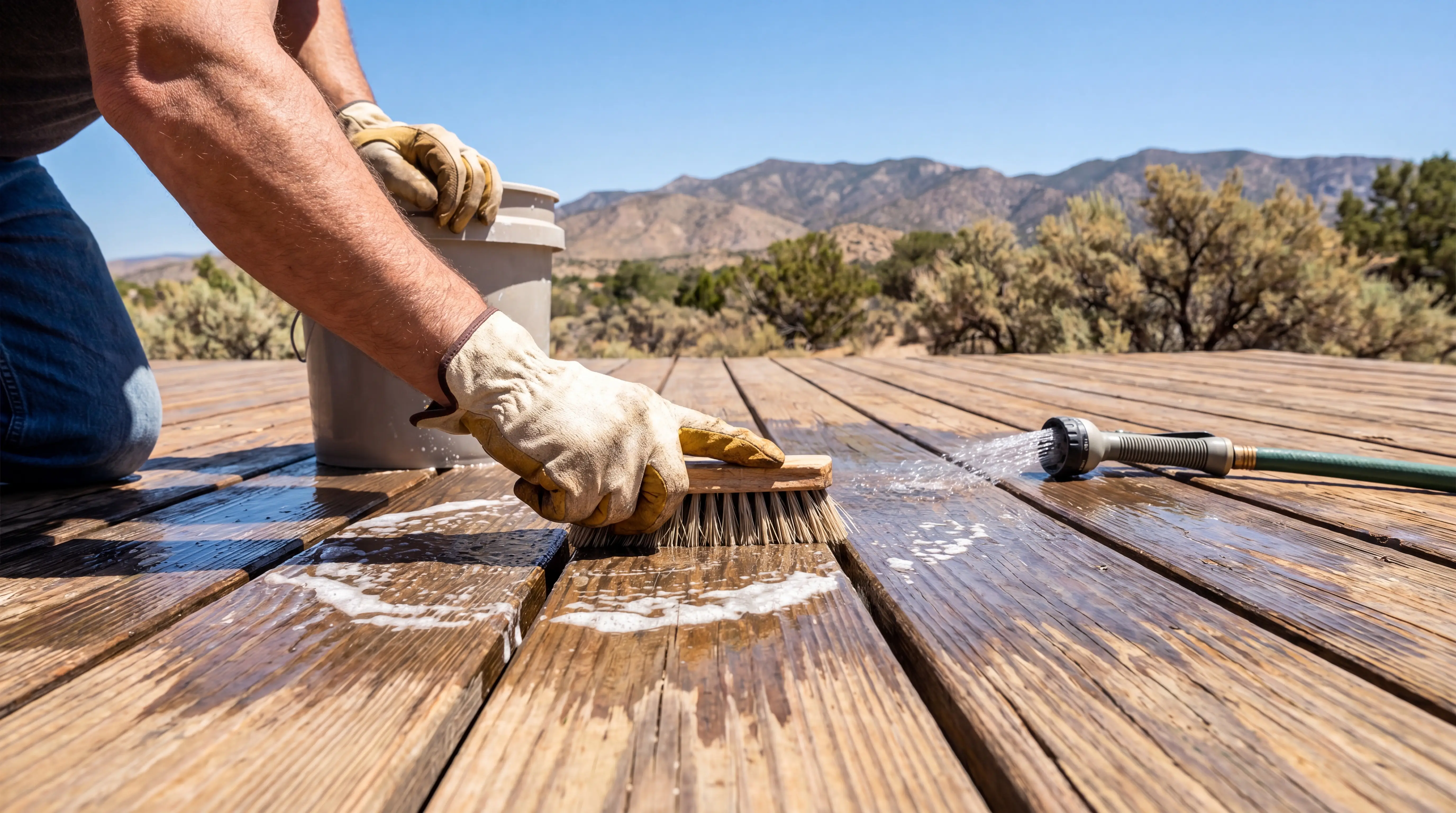
Compared with cedar or redwood, composite decking doesn't need the same cycle of sanding, staining, sealing, and board replacement. It resists splintering, warping, and fading far better in Utah conditions. For families, that means less upkeep and fewer weekend repair projects. For homeowners thinking about ROI, it means lower lifetime maintenance costs.
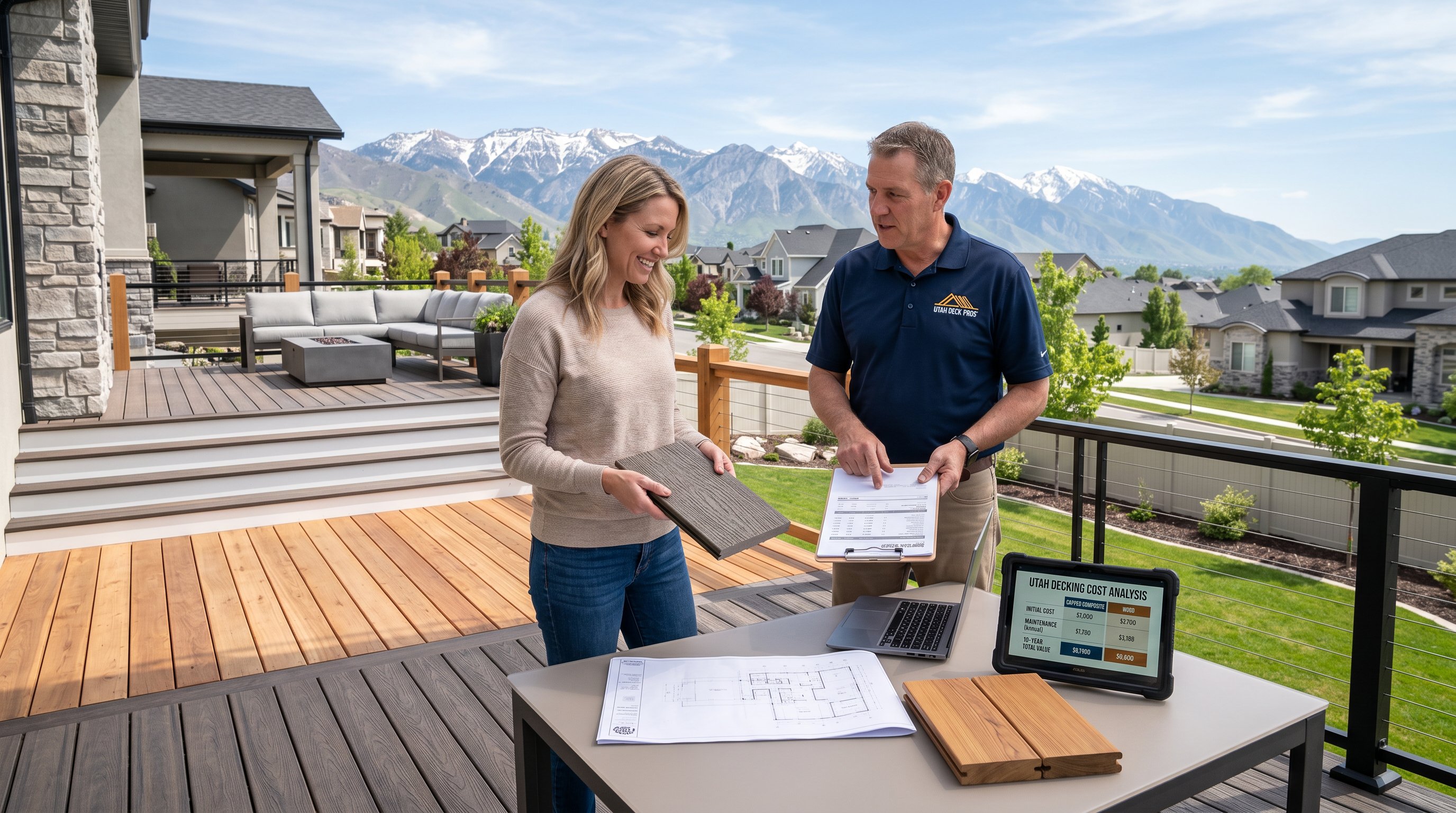
Upfront, wood is usually cheaper. But over 10 to 15 years, the math often shifts. Repeated stain purchases, labor, warped boards, and early resurfacing can erase wood's initial savings. Composite costs more at the start, but it tends to hold up better and demand less from you.
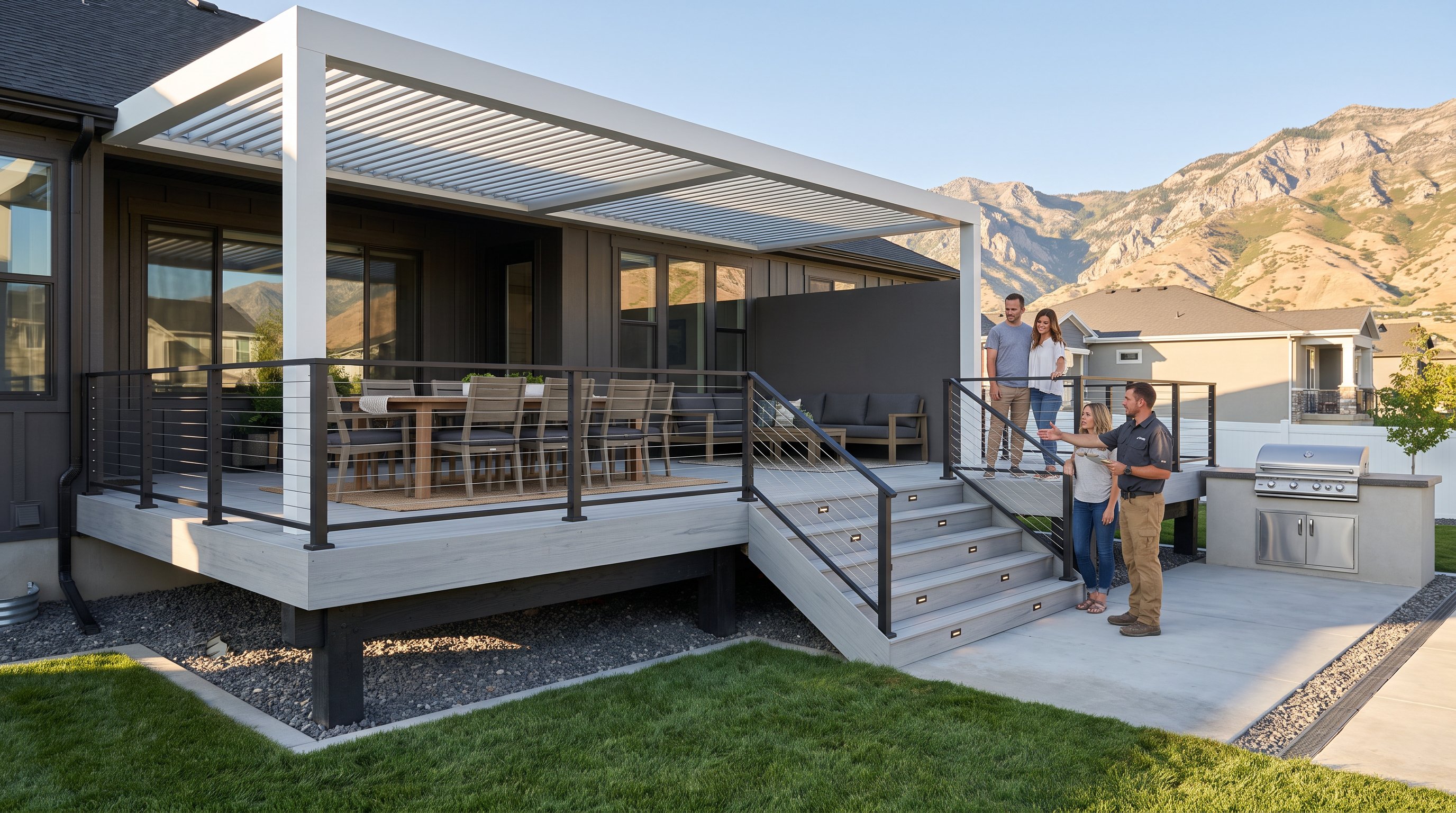
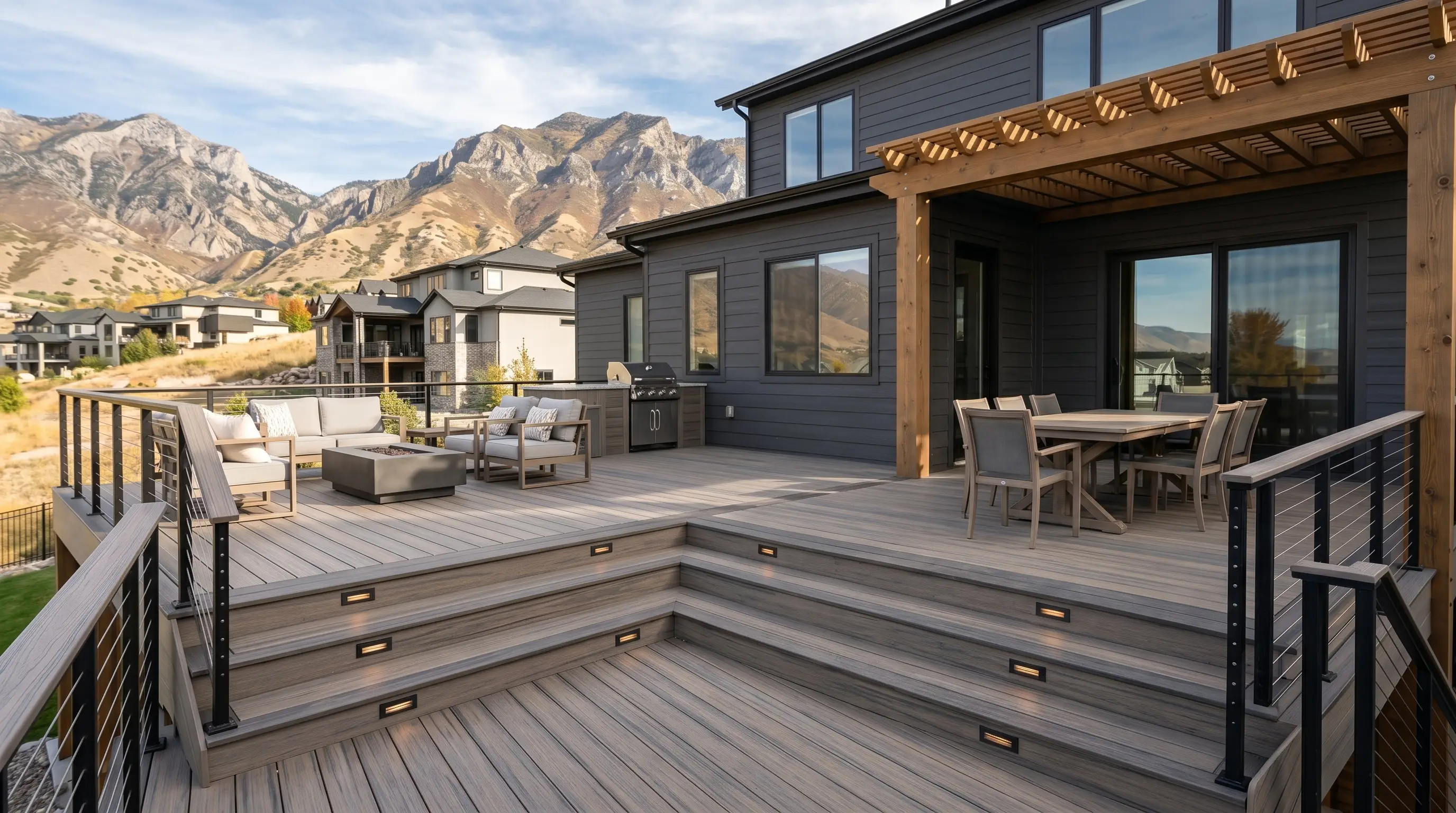
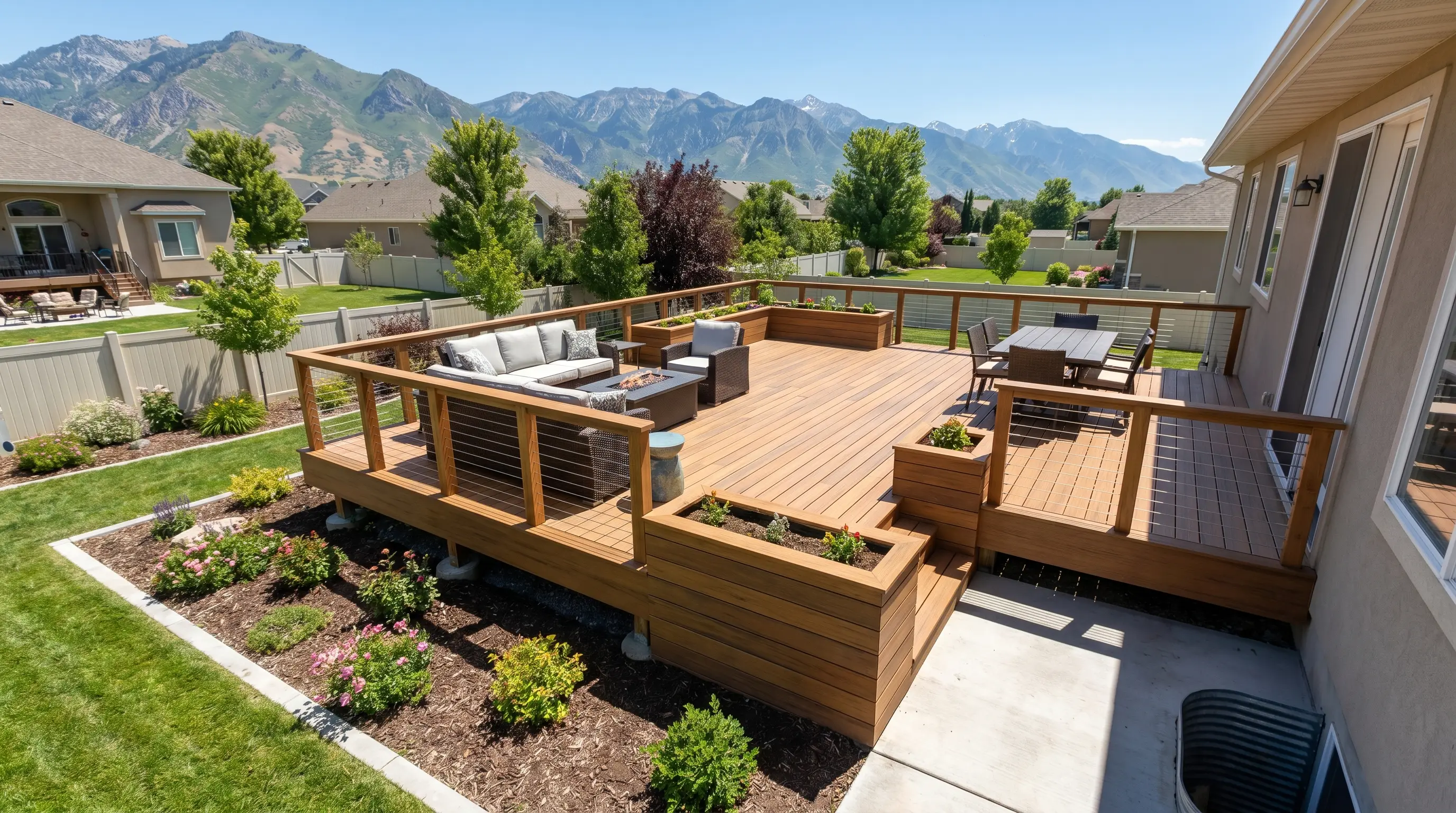
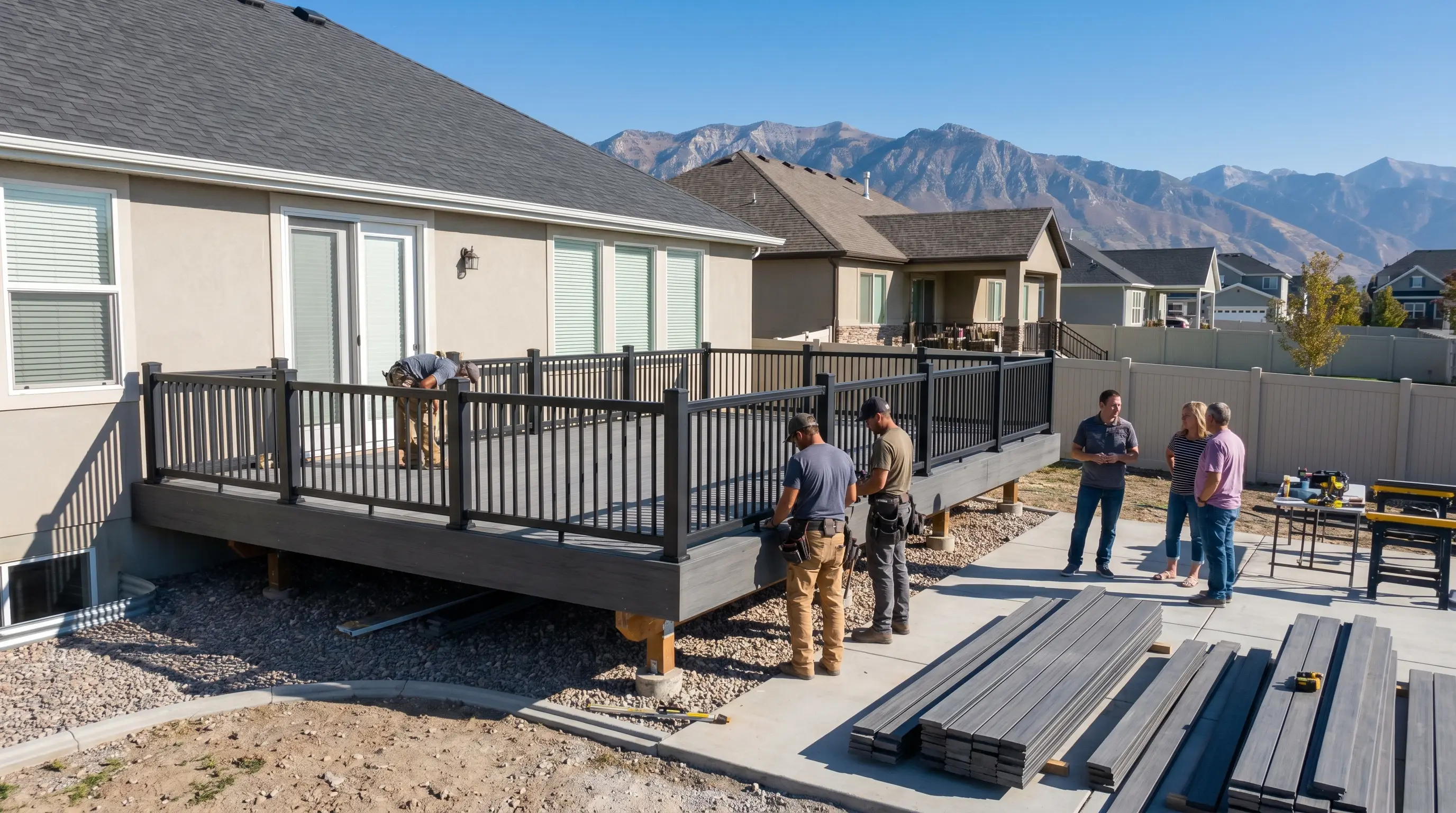
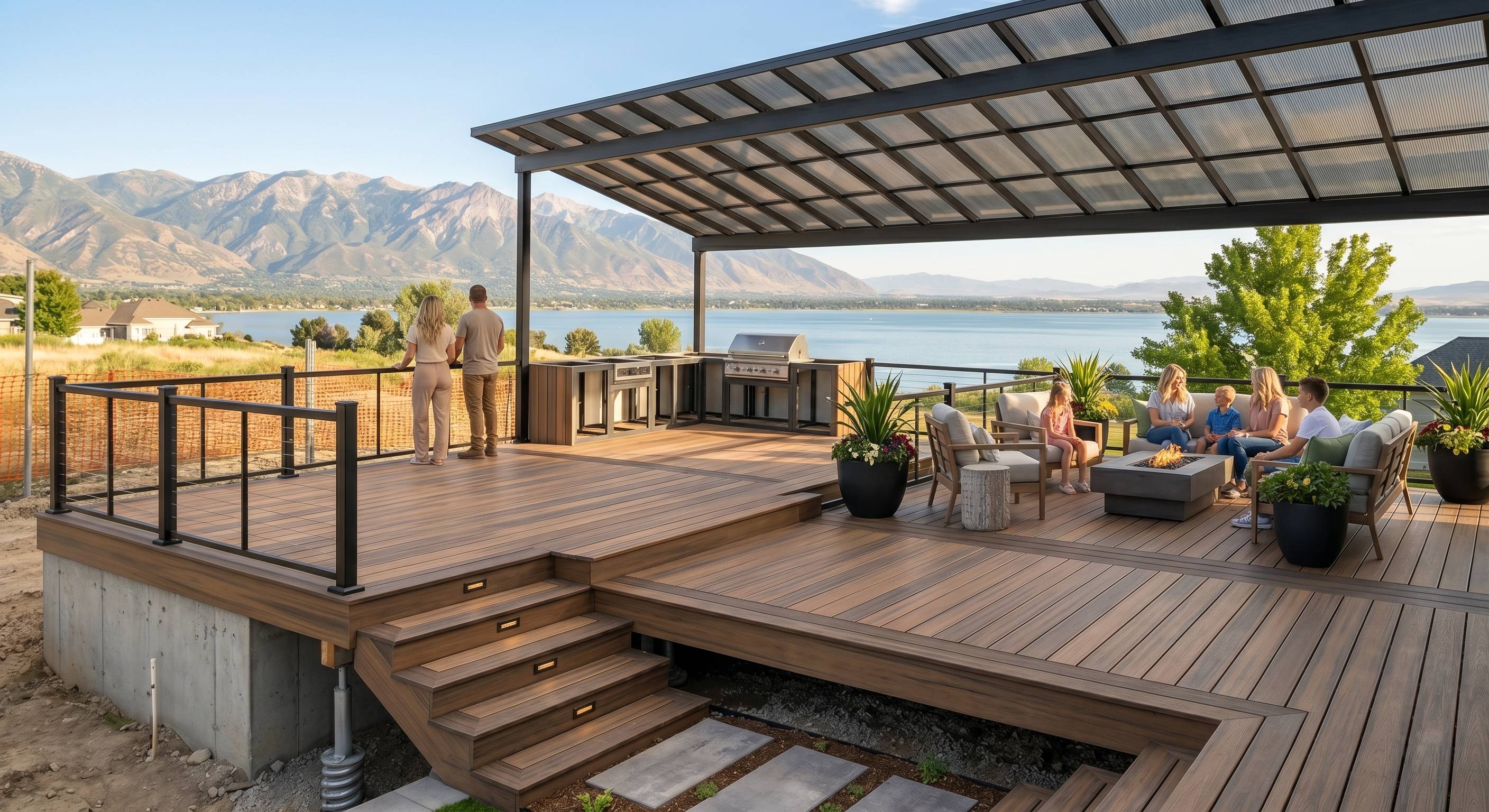
And there's another practical point: many Draper backyards are built for views. Composite pairs well with modern aluminum, cable, and glass railing systems, so you can get a cleaner-looking outdoor space without committing yourself to constant maintenance.
Not every draper composite decking contractor brings the same level of planning, structural knowledge, or communication. We'd start with licensing, insurance, and local project experience, especially in Salt Lake and Utah County conditions.
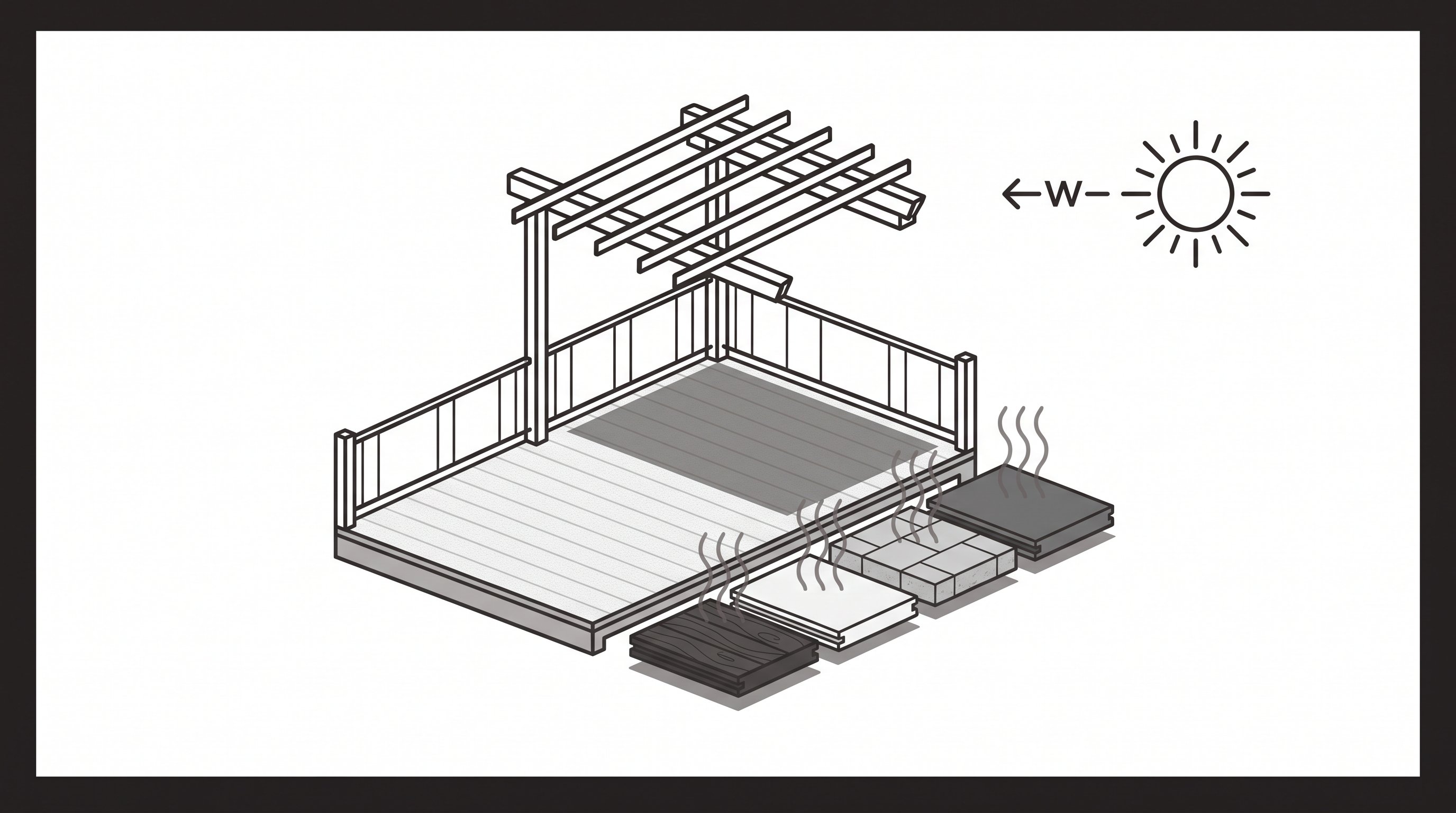
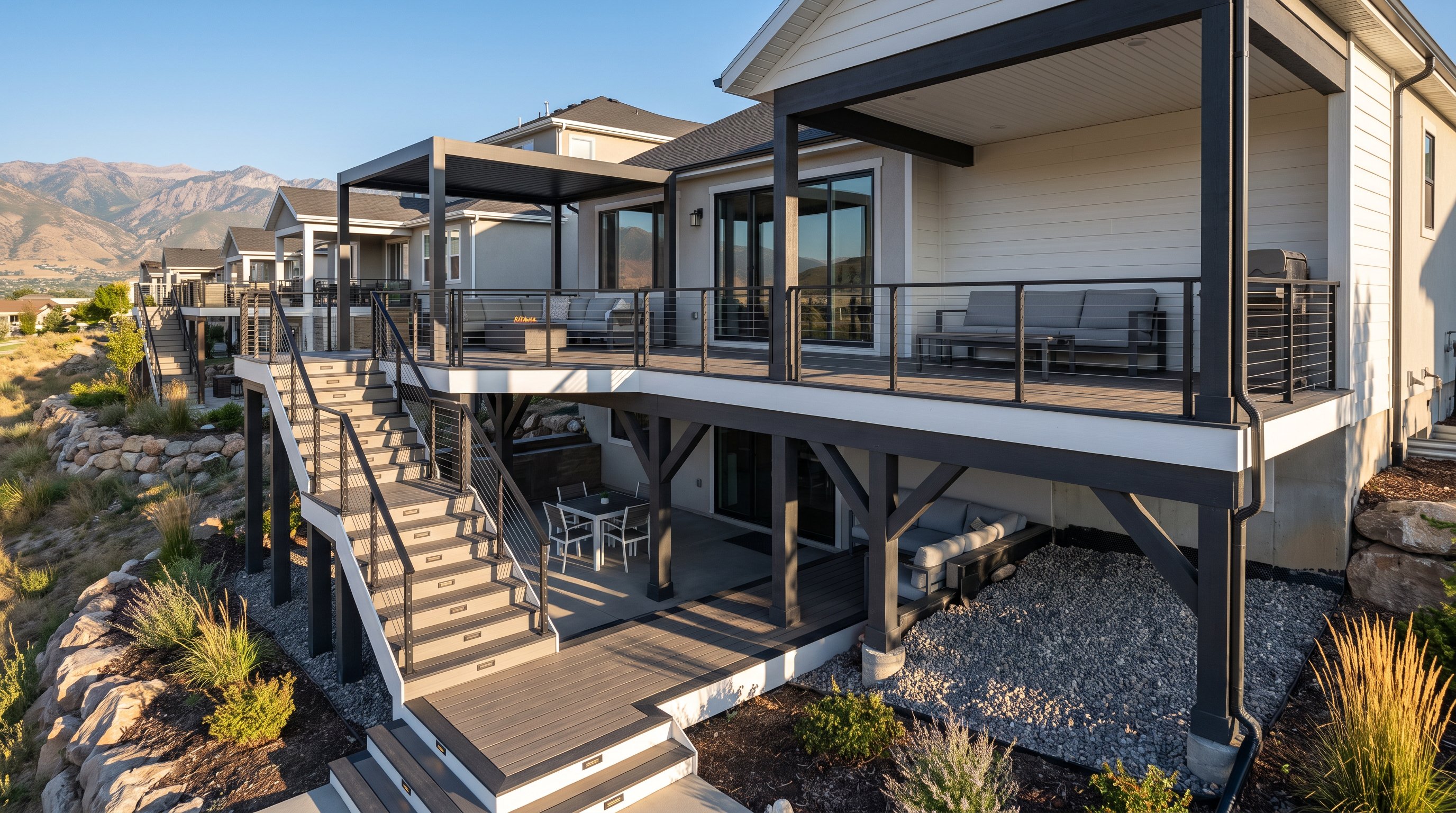
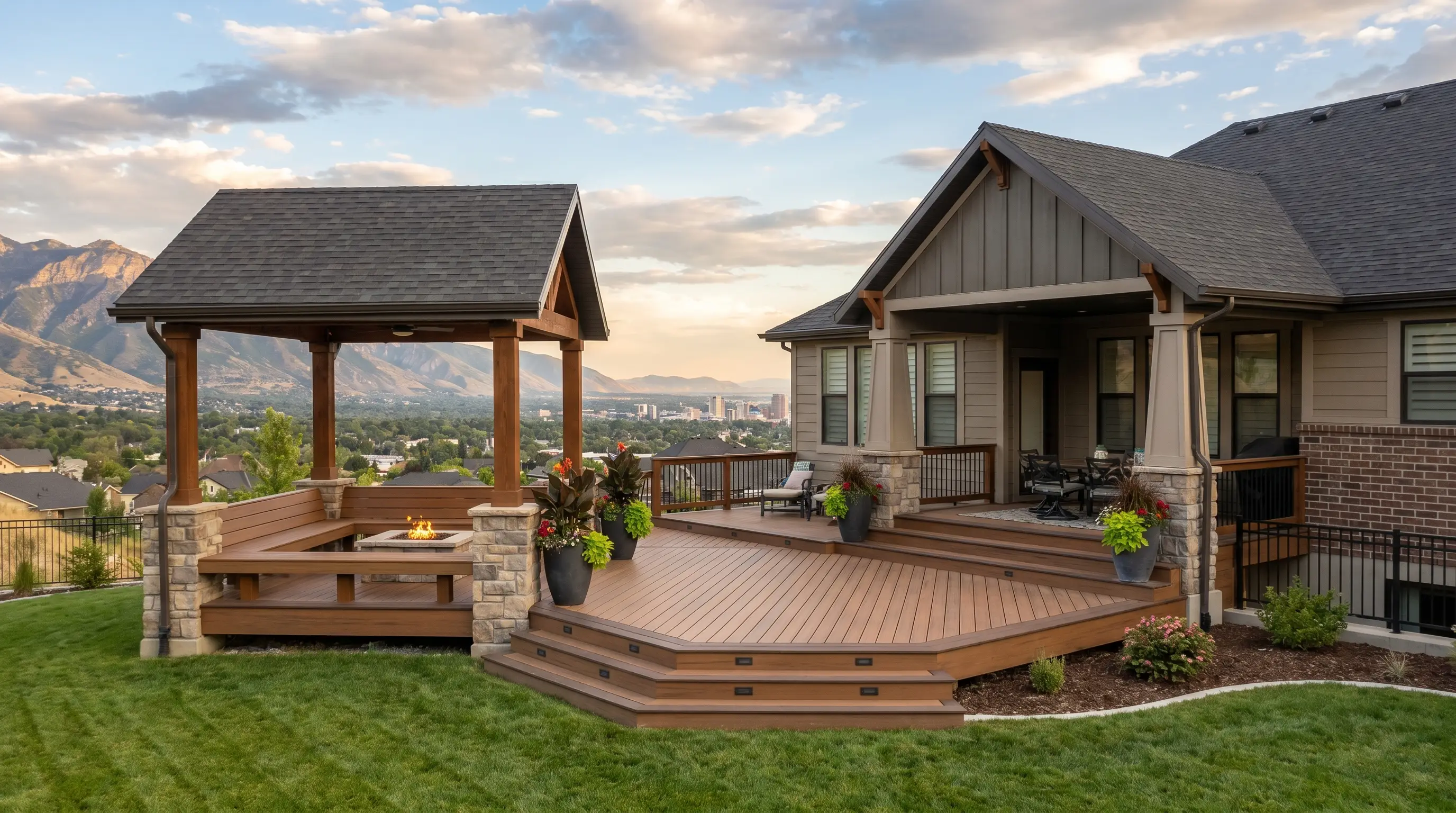
Then look at how they approach design. A strong contractor should talk about more than colors and board brands. They should ask about sun exposure, drainage, stairs, railing preferences, snow loads, and how you'll actually use the space. If your yard slopes, they should already be discussing options like stepped multi-level decks, retaining integration, taller support framing, or under-deck usable space.
It's also worth asking for a clear scope of work, realistic pricing, and timeline expectations. Honest builders won't dodge details. They'll explain material allowances, permit needs, footing requirements, and what could affect cost.
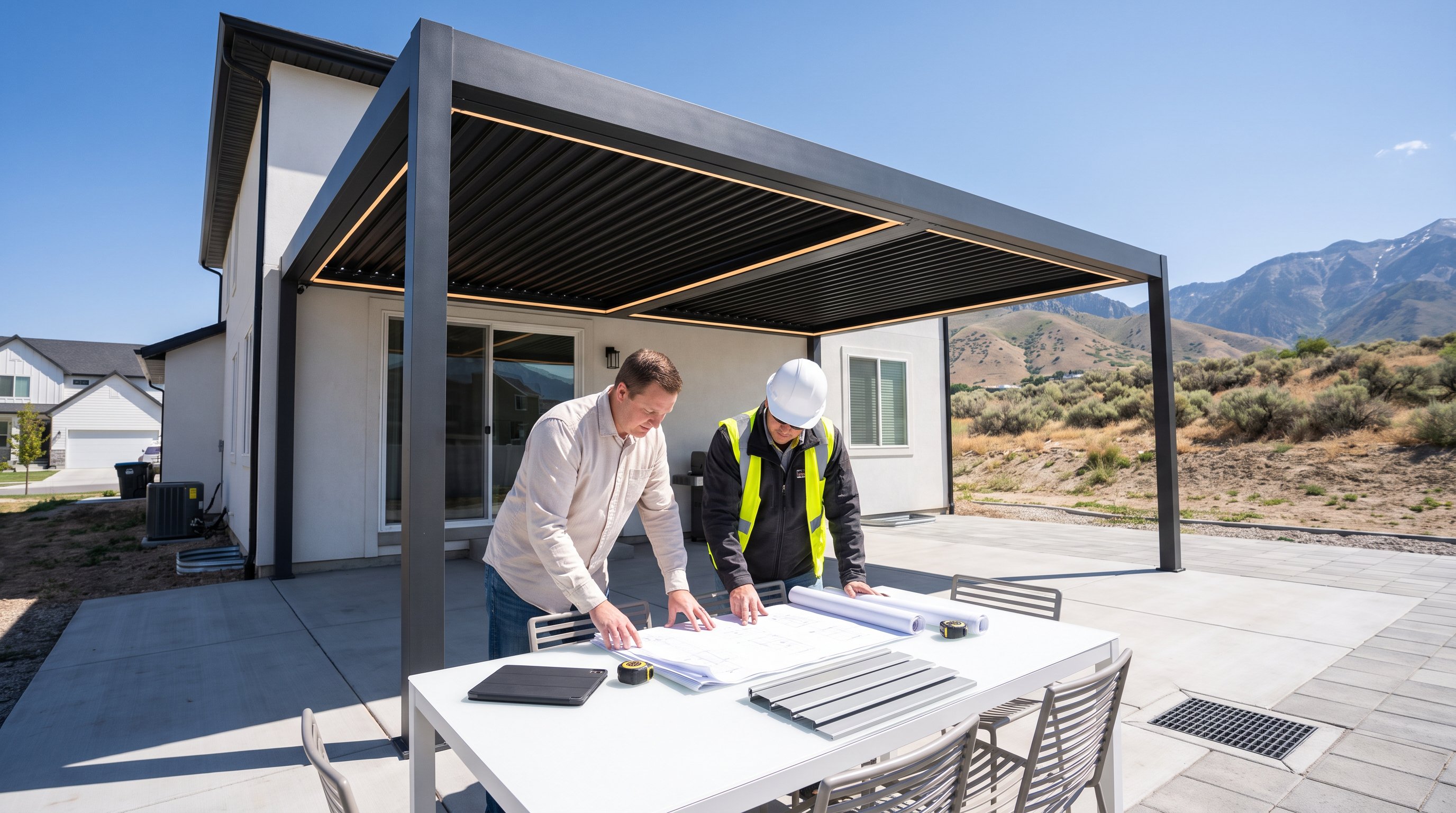
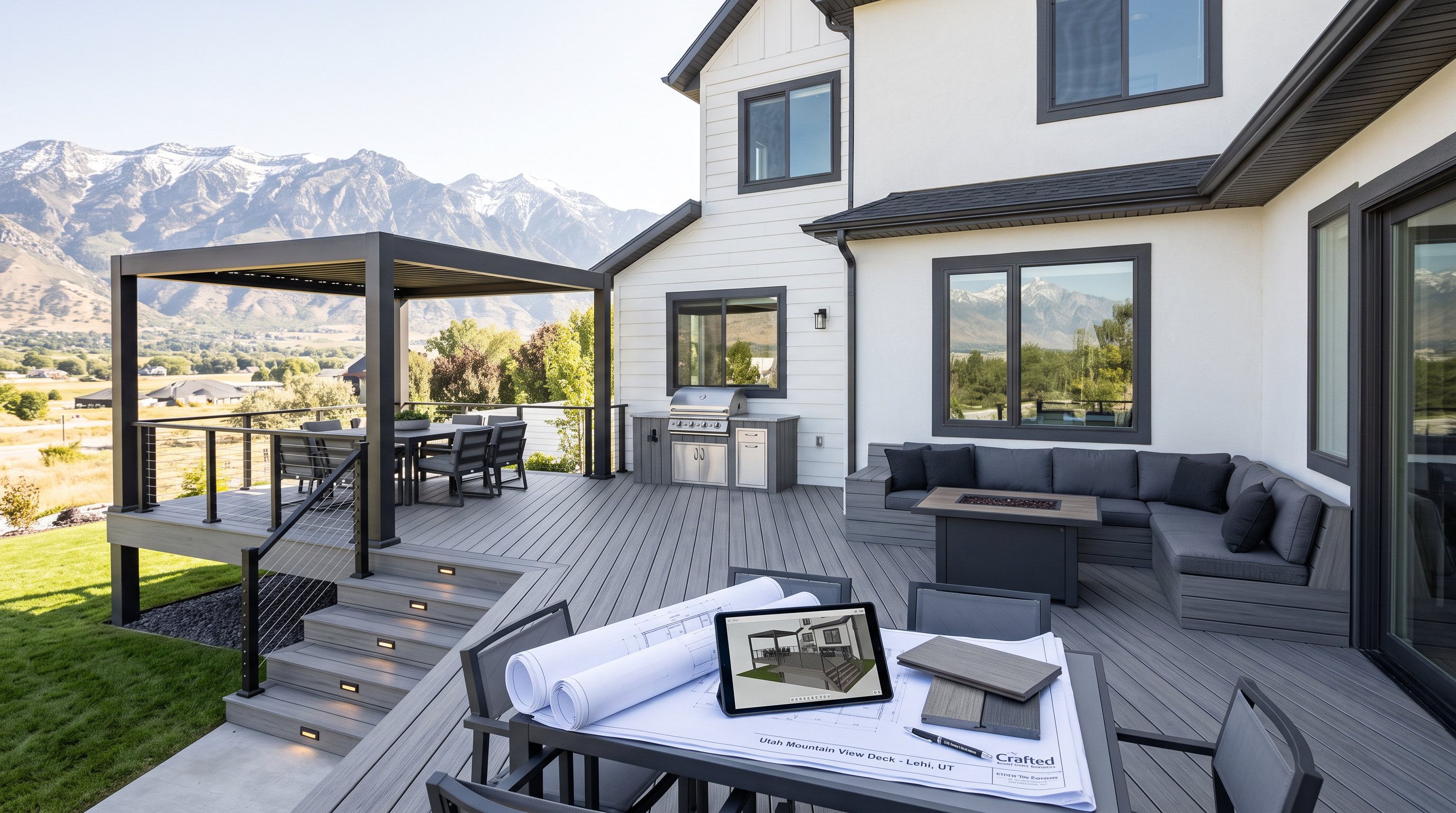
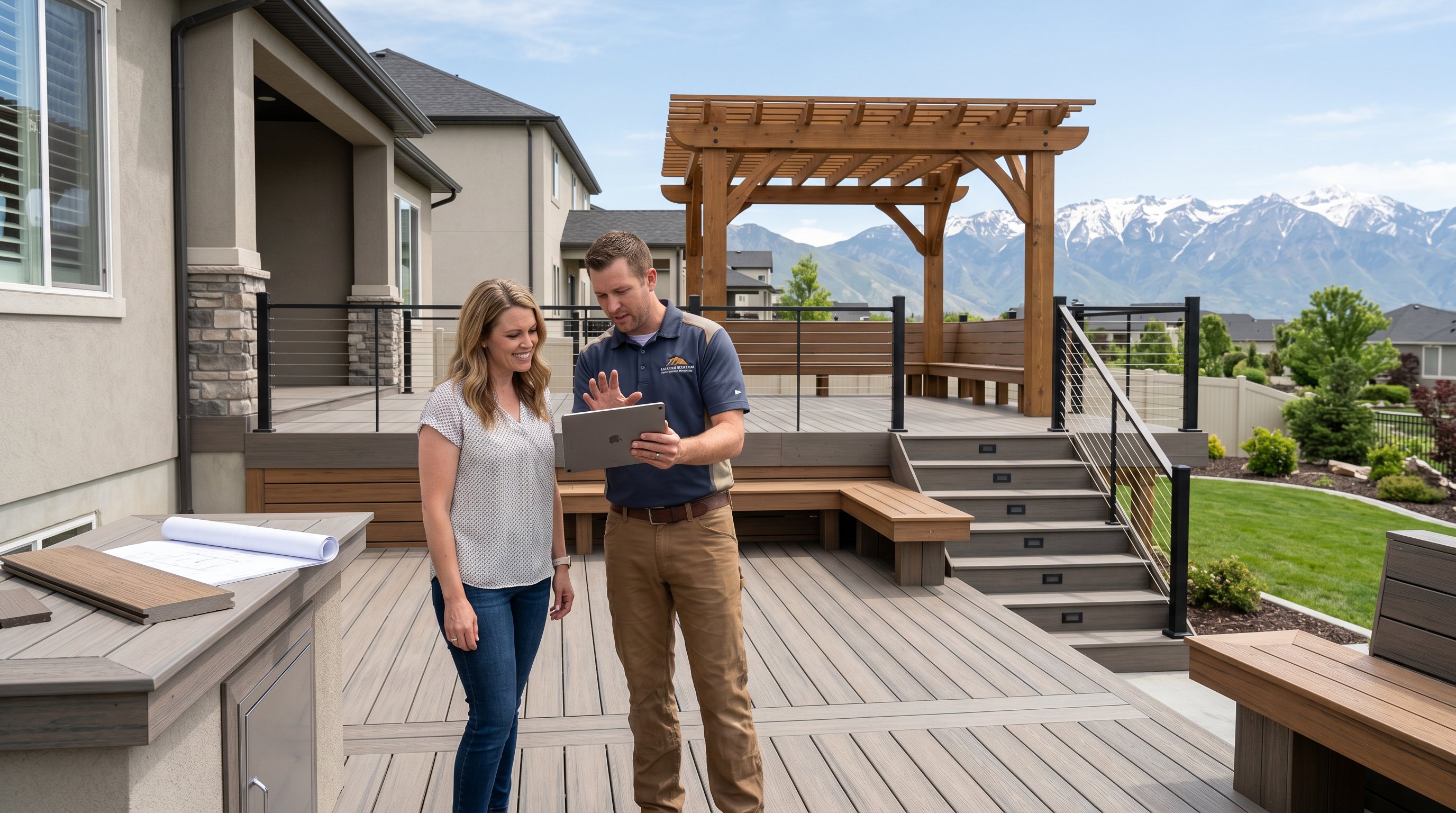
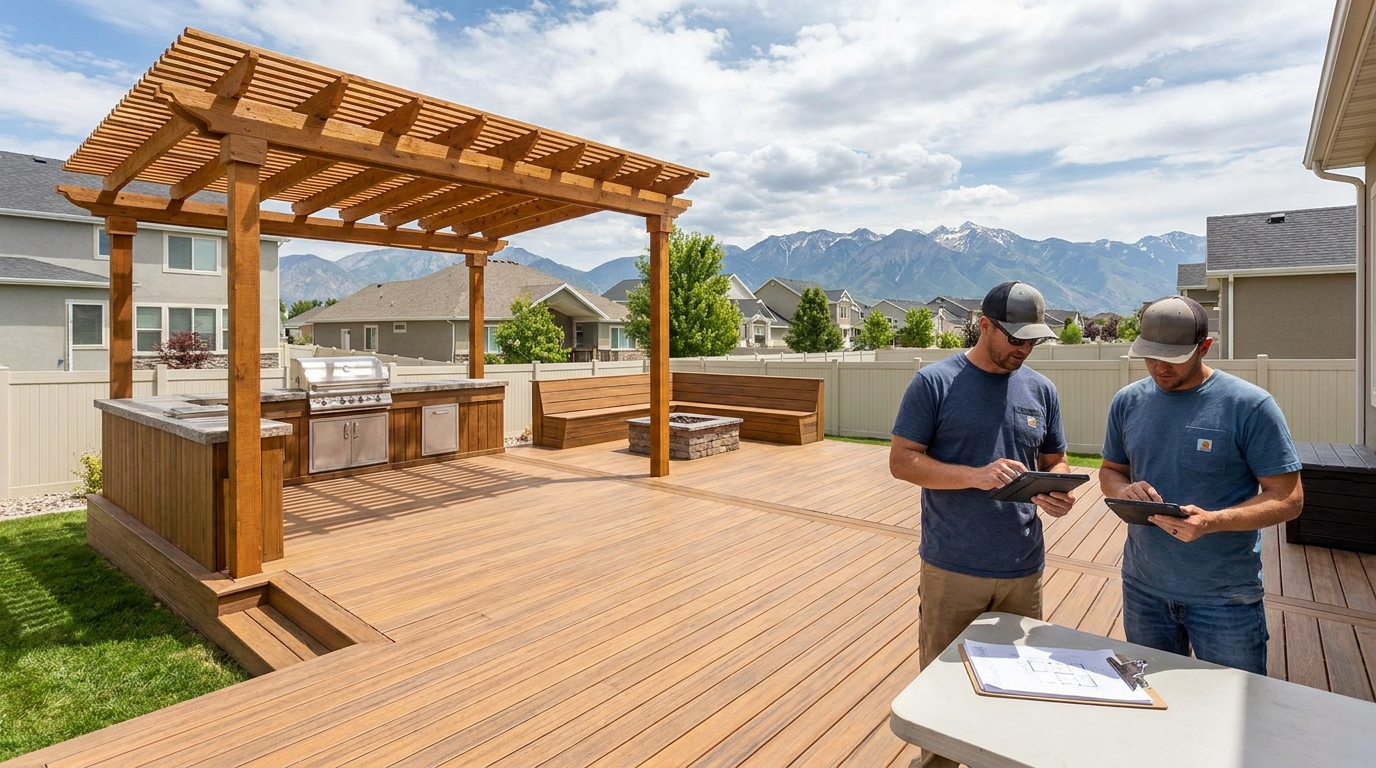
At 3sixty, we believe homeowners should be able to see the project before construction begins. That's why 3D mockups and in-home estimates matter. They reduce surprises and make it easier to compare builders on substance, not just sales talk.
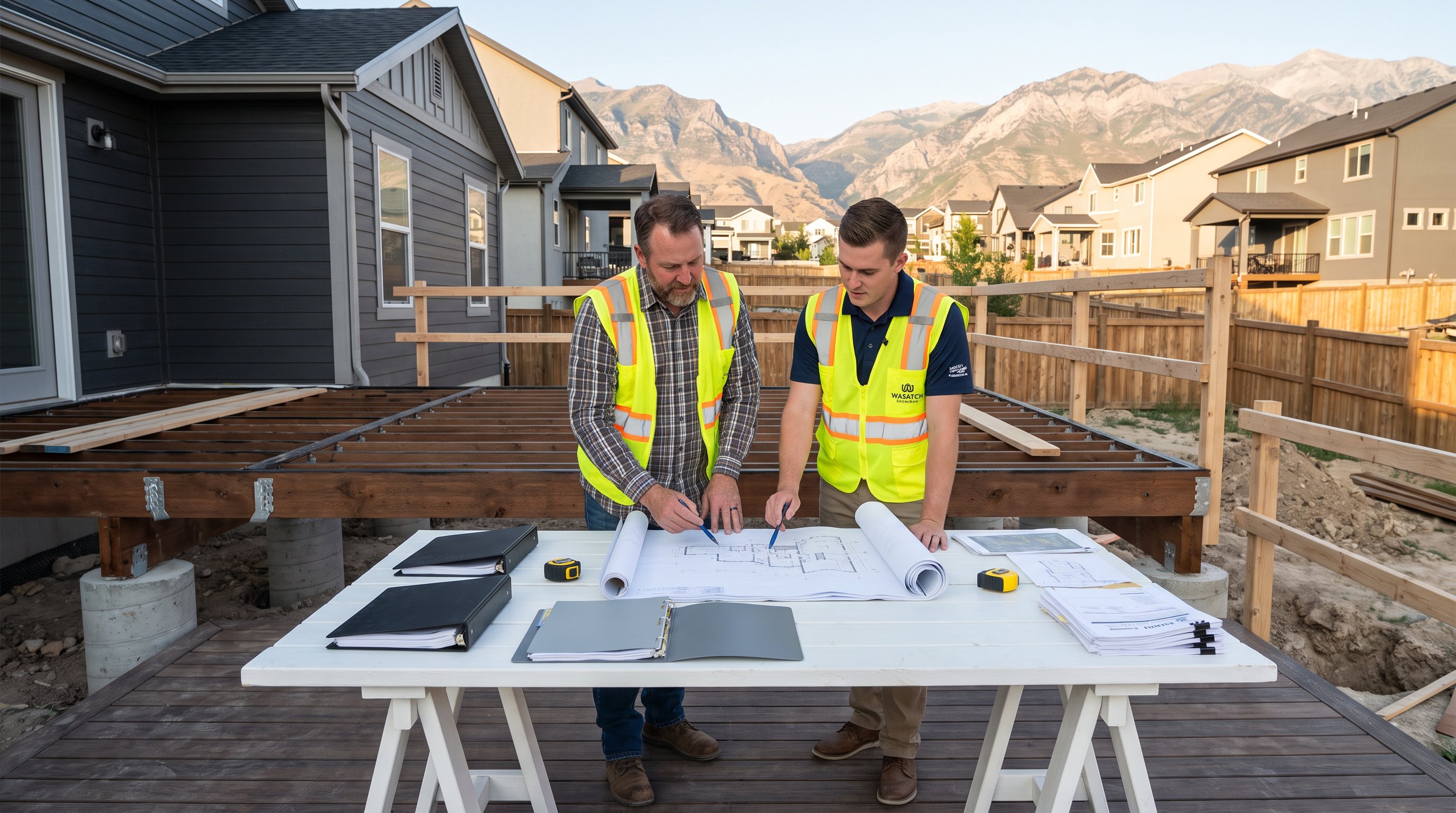
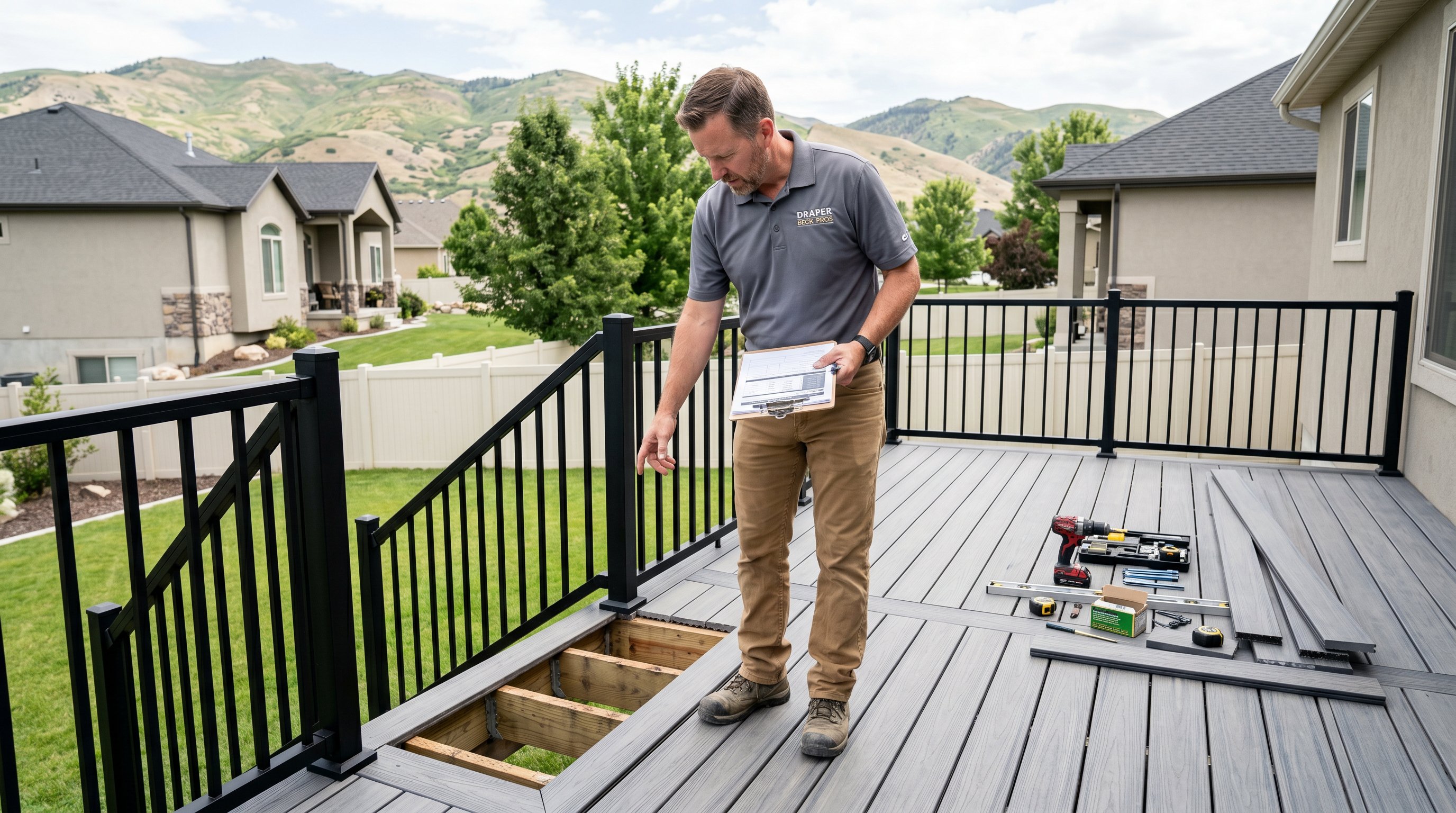
Good custom deck installation in Draper starts long before excavation. The best projects begin with a site visit that evaluates elevation changes, access, existing structures, drainage paths, and how the deck should connect to the home.
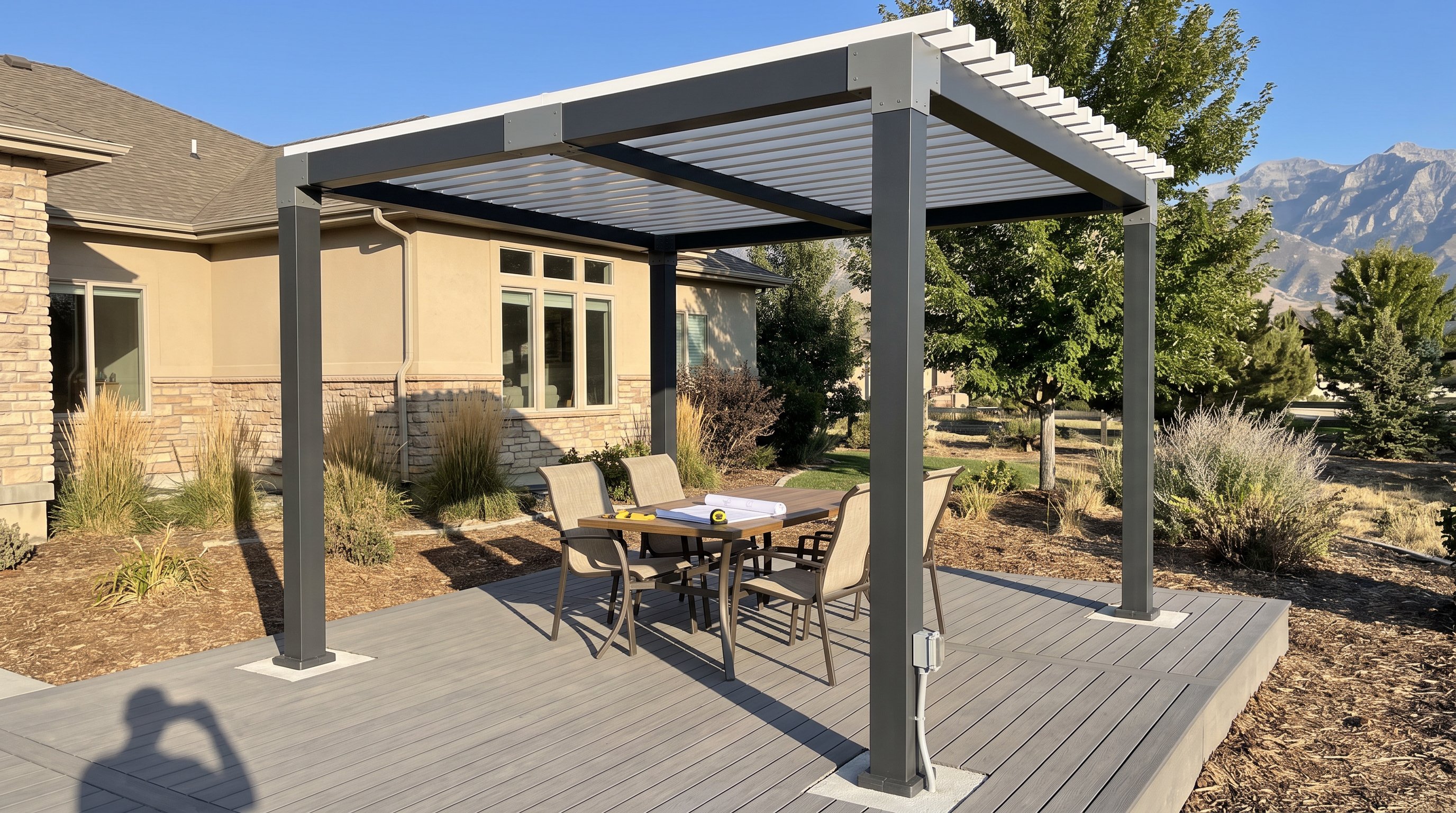
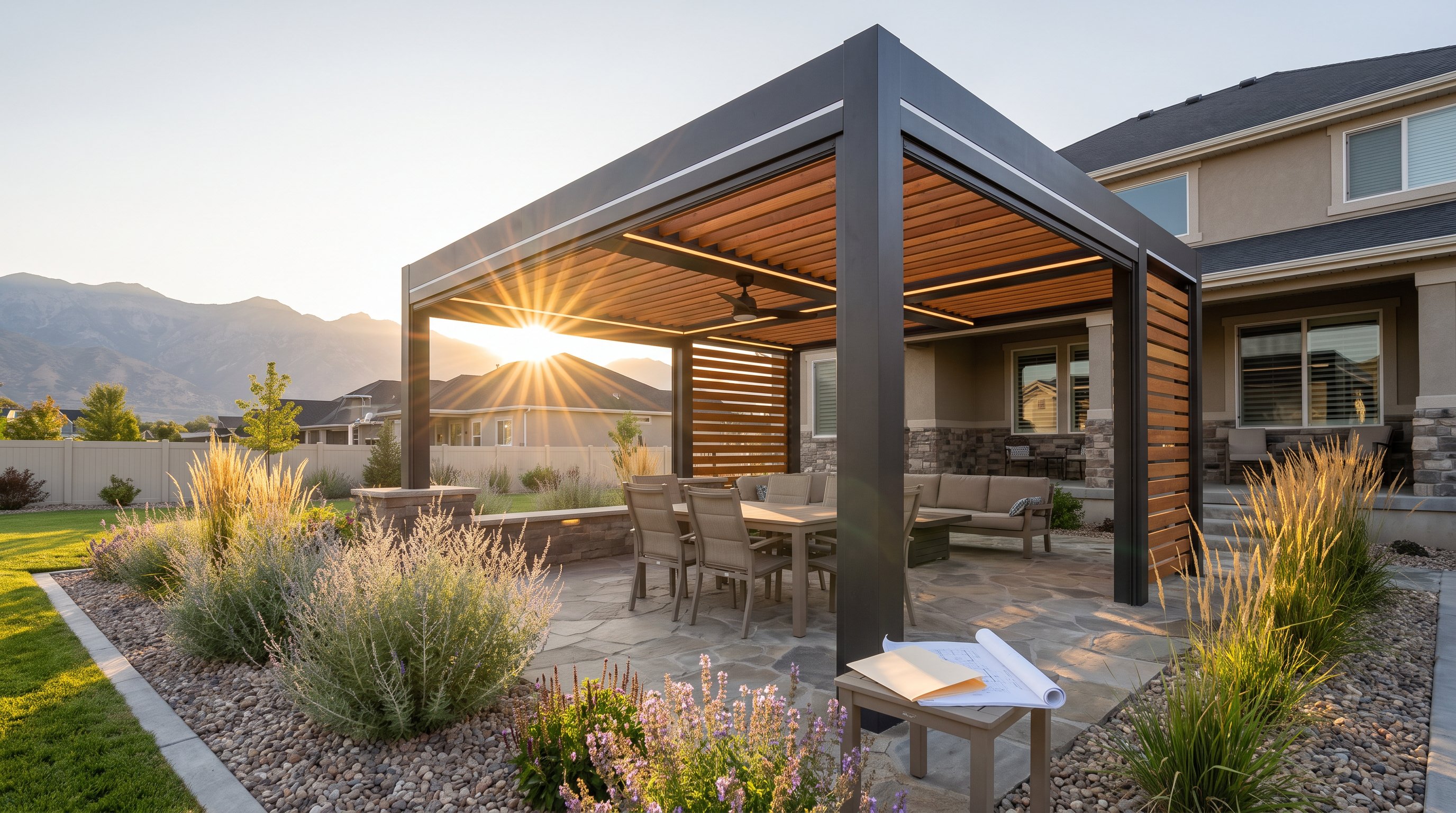
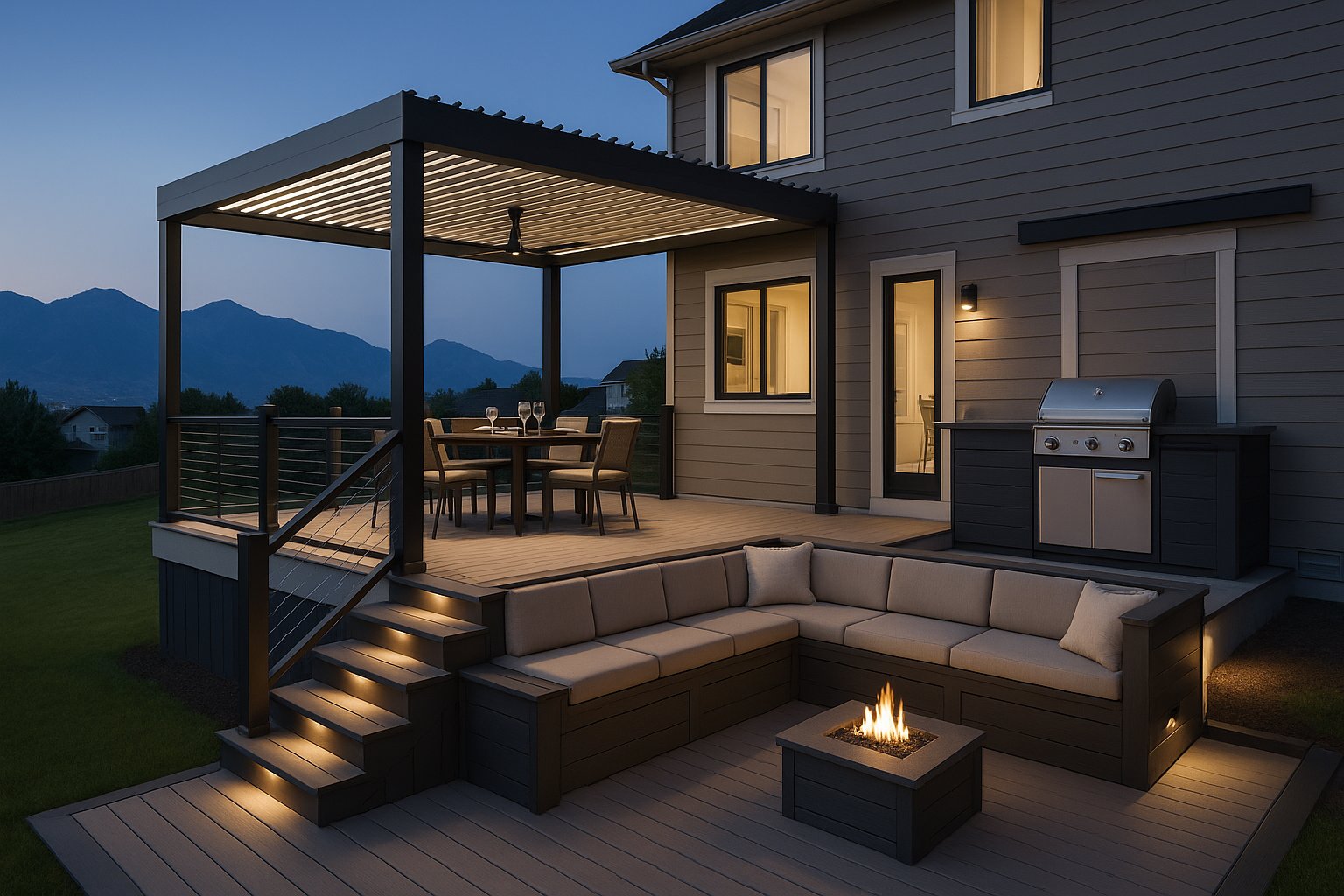
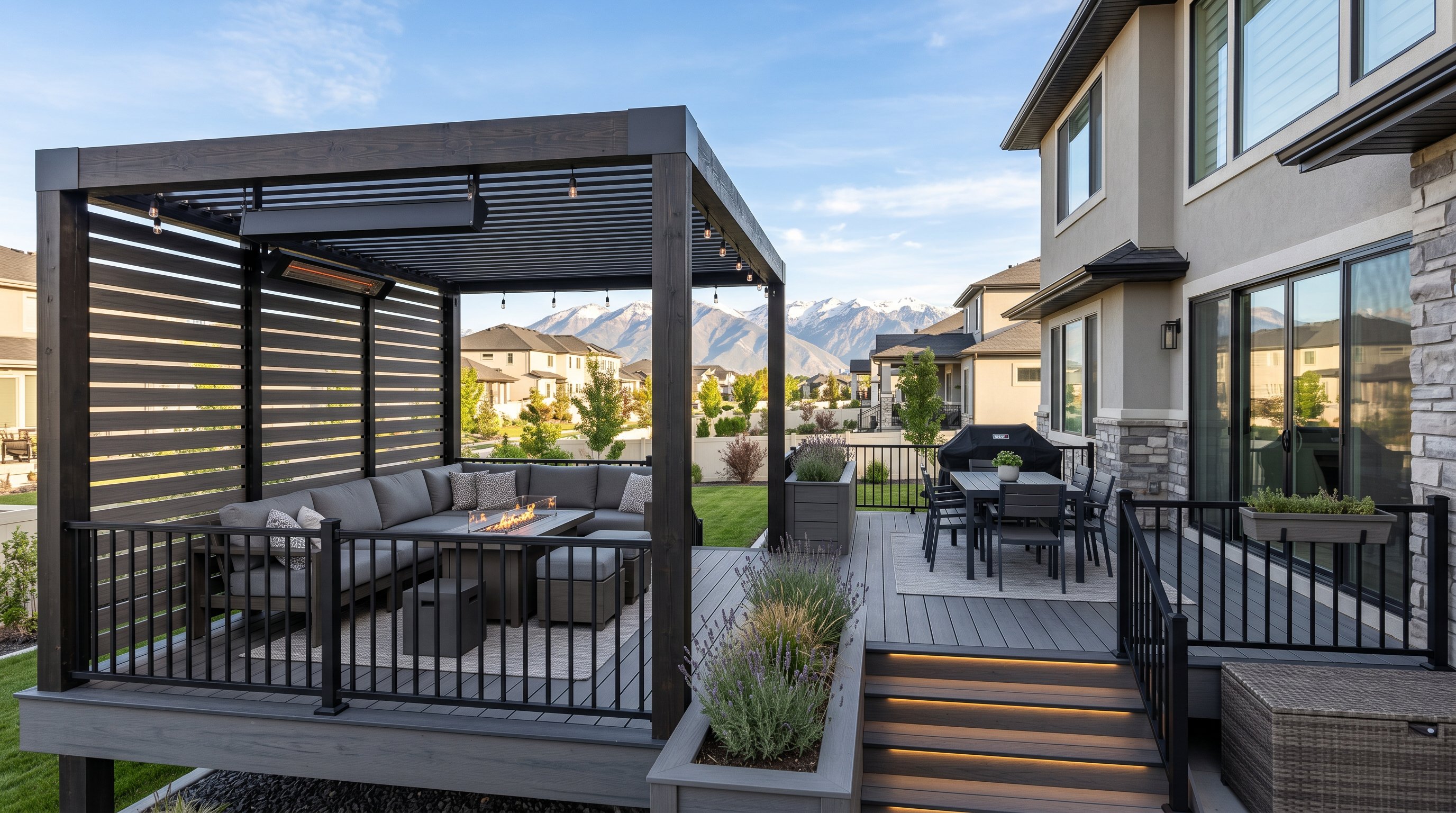
For sloped yards common in Draper, the design phase is where mistakes are either prevented or baked in. We usually evaluate whether the lot is better served by an elevated deck, a tiered layout, integrated stairs, or a combination deck-and-patio approach. In some cases, adding a pergola, privacy wall, or dry-space under-deck system creates much more usable square footage than a flat platform alone.
Next comes material selection and engineering. Capped composite brands such as Trex or TimberTech are popular because they handle Utah's UV exposure well. But framing matters just as much. Proper joist spacing, hardware, footings below the frost line, and snow-load planning are what make the finish last.
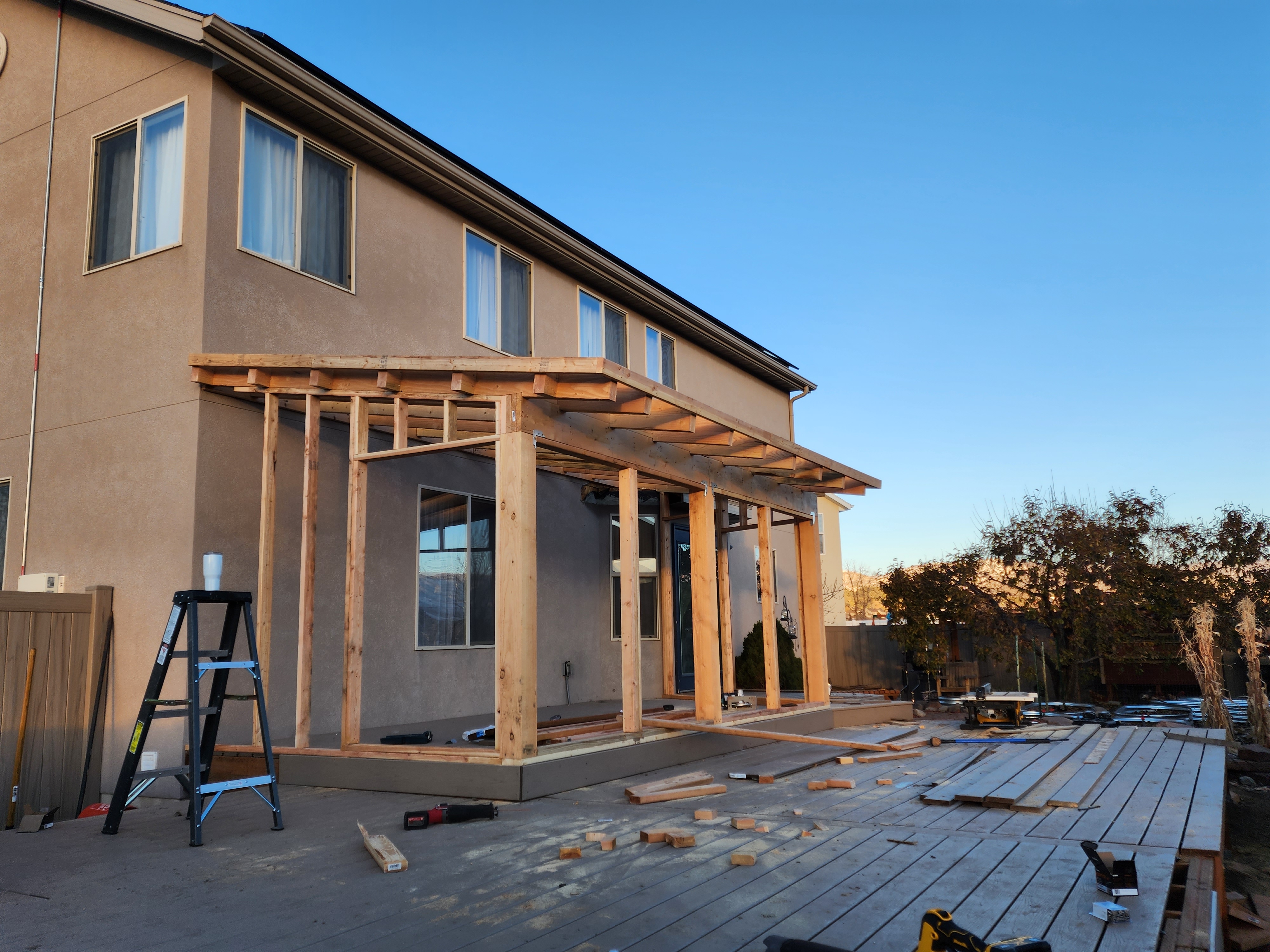
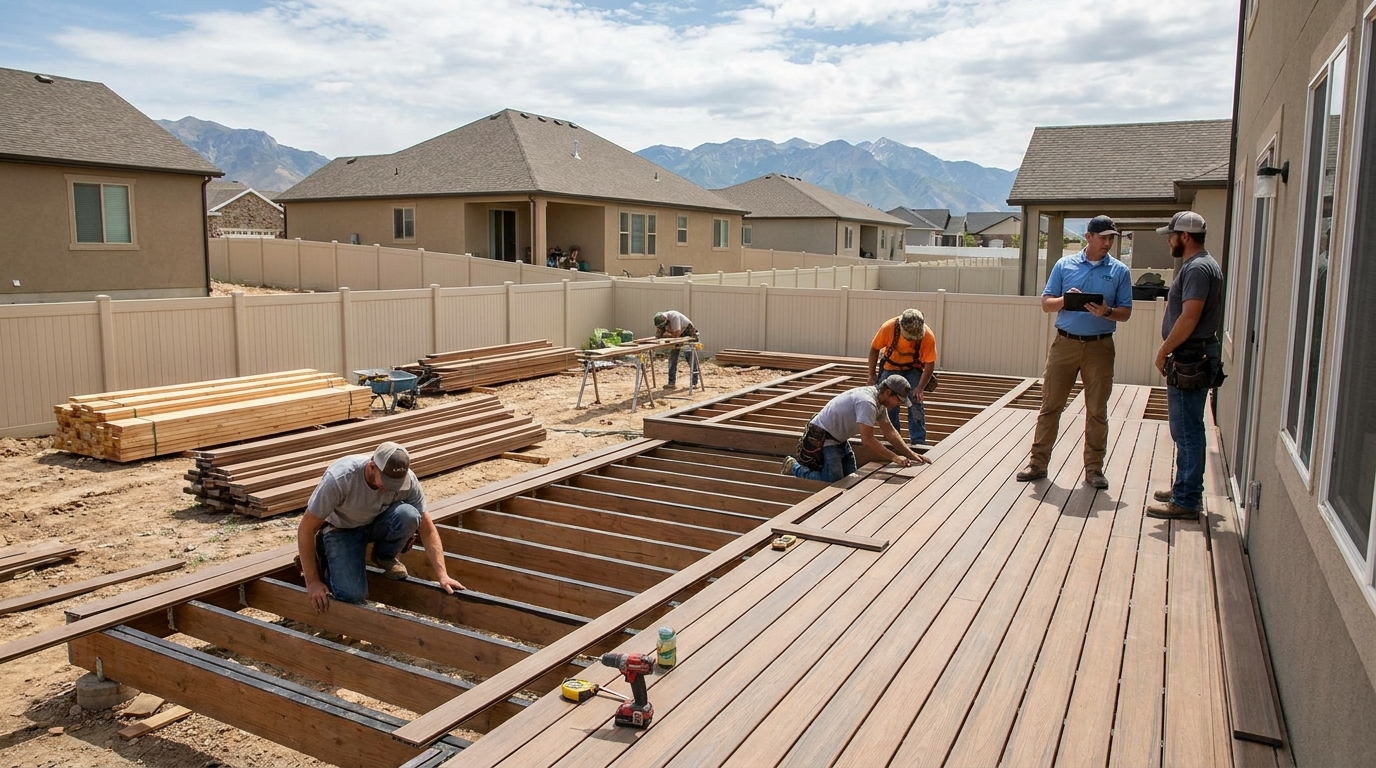
Most standard projects take roughly 2 to 6 weeks from footing work to final walkthrough, depending on weather and permits. During construction, steady updates matter. Homeowners should never be left guessing what's happening next.
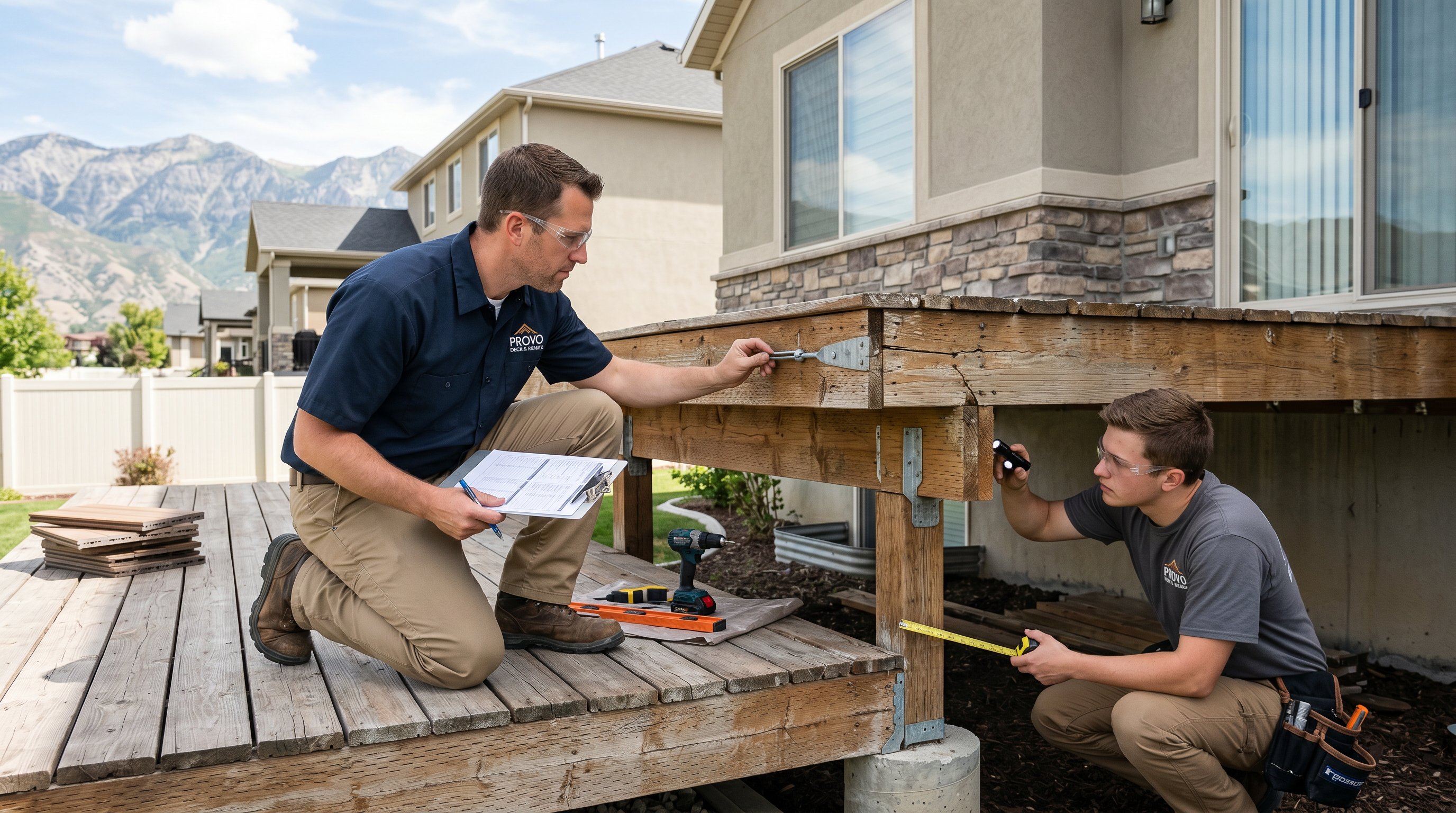
A full composite deck replacement in Draper isn't always necessary, but sometimes repair stops making financial sense. If the framing is compromised, the footings are shifting, or the original build no longer meets code, replacement is often the smarter call.
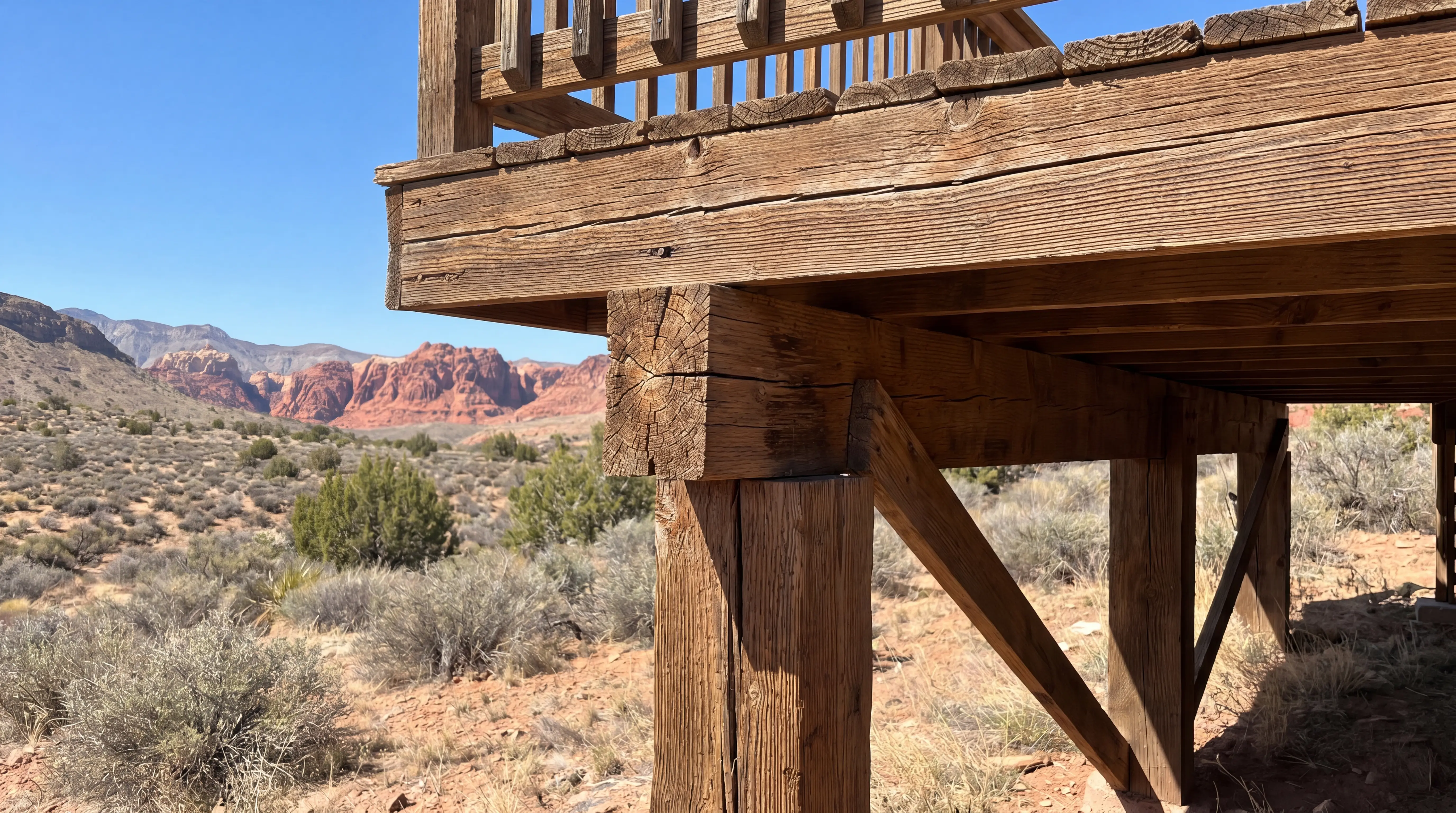
Watch for loose rails, soft or rotted substructure, widespread movement, failing stairs, or visible settling. On older wood decks, surface issues can distract from deeper structural problems underneath. We've seen decks that looked "mostly fine" until the boards came off.
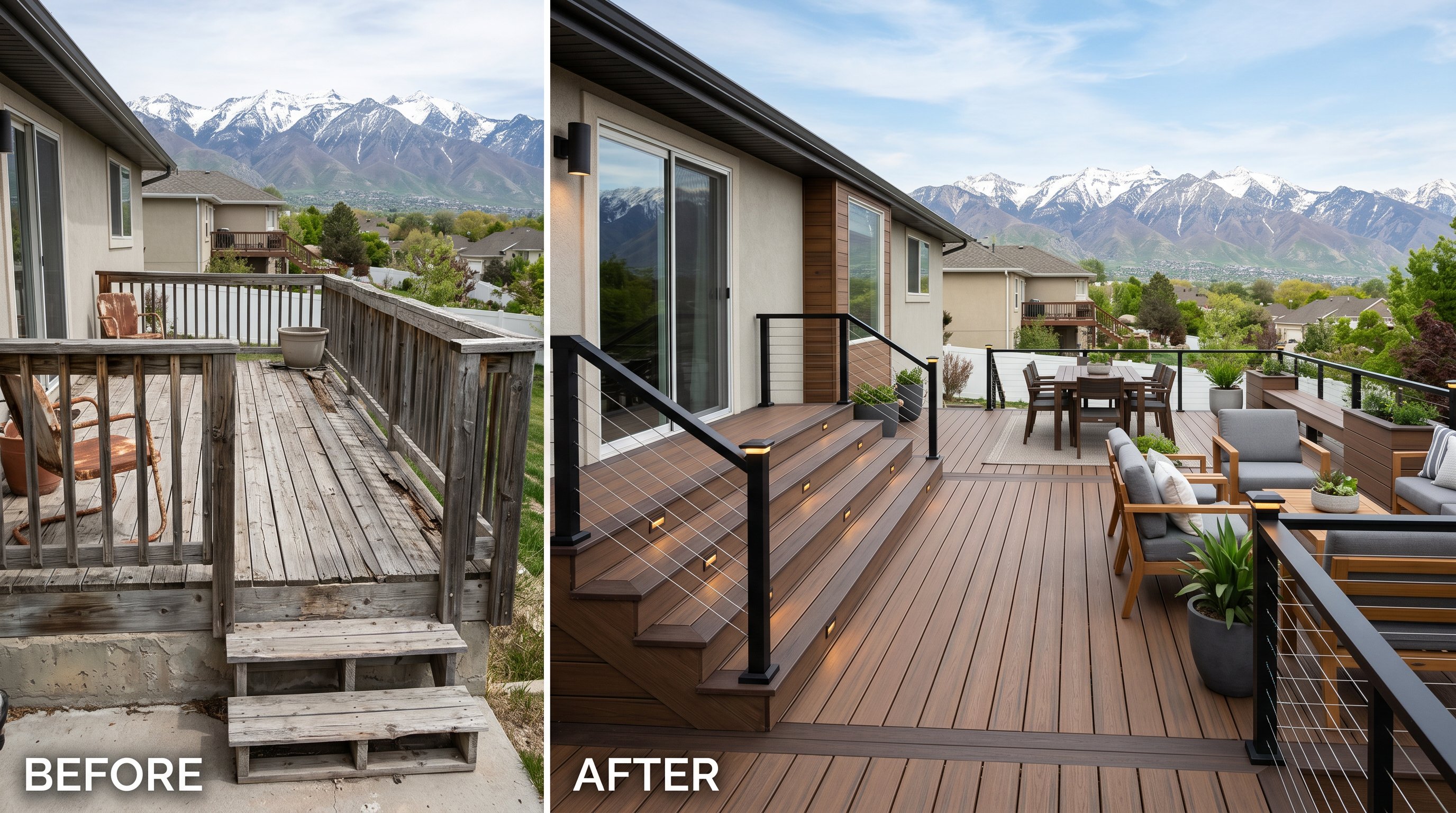
There's also the lifestyle factor. If your current deck is undersized, poorly laid out, or unusable in afternoon sun, replacing it with a better composite design can add more value than another round of patchwork repairs. A resurfacing project may work if the existing frame is truly solid: in those cases, replacing old boards and rails with composite can be cost-effective.
But if your deck struggles with drainage, slope transitions, or outdated stair placement, a replacement may solve multiple problems at once, and give you a cleaner, safer outdoor living space for the next decade or more.
This is where experienced Draper local deck builders separate themselves from generic contractors. Building a deck in Utah means accounting for frost depth, structural loads, attachment details, and local permit requirements, not just appearance.
In Draper, site conditions can get tricky fast. Sloped terrain may require taller posts, more complex beam layouts, reinforced stair runs, or coordination with retaining walls and drainage. If the deck is elevated, under-deck water management may also be worth planning from day one.
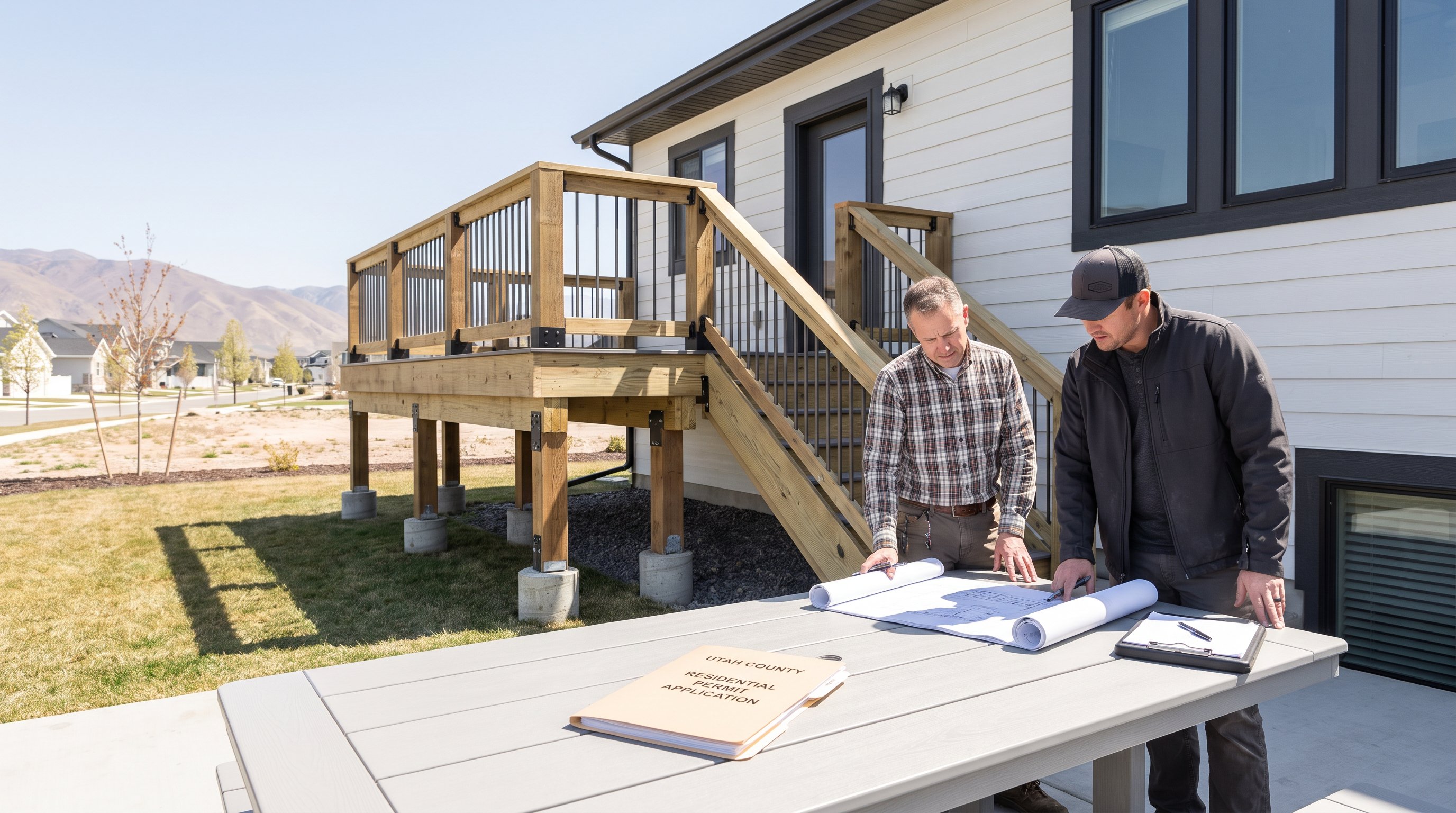
Then there are approvals. Depending on neighborhood requirements, you may need city permits, engineering details, and HOA documentation. A professional builder should manage that process, not leave you chasing paperwork.
We also recommend asking how the contractor handles snow-load engineering and footing depth. In Utah, shallow foundations can heave during freeze-thaw cycles. Footings generally need to extend below the local frost line, often 30 inches or more. Done right, the deck feels solid in year one and year ten. Done wrong, you'll feel it every spring.
Composite deck pricing depends on more than square footage. In Draper, the biggest cost drivers usually include elevation, slope, stair complexity, railing choice, site access, and whether the project is new construction or resurfacing.
As a general guide, a new capped composite deck often lands around $65 to $95+ per square foot, while natural wood may fall closer to $45 to $65 per square foot. If the existing framing is structurally sound, resurfacing with composite can sometimes run about $35 to $55 per square foot.
But long-term ROI matters here. Wood may save money upfront, yet recurring staining, repairs, and earlier replacement can make it more expensive over time. Composite usually asks for a bigger initial investment and far less ongoing attention.
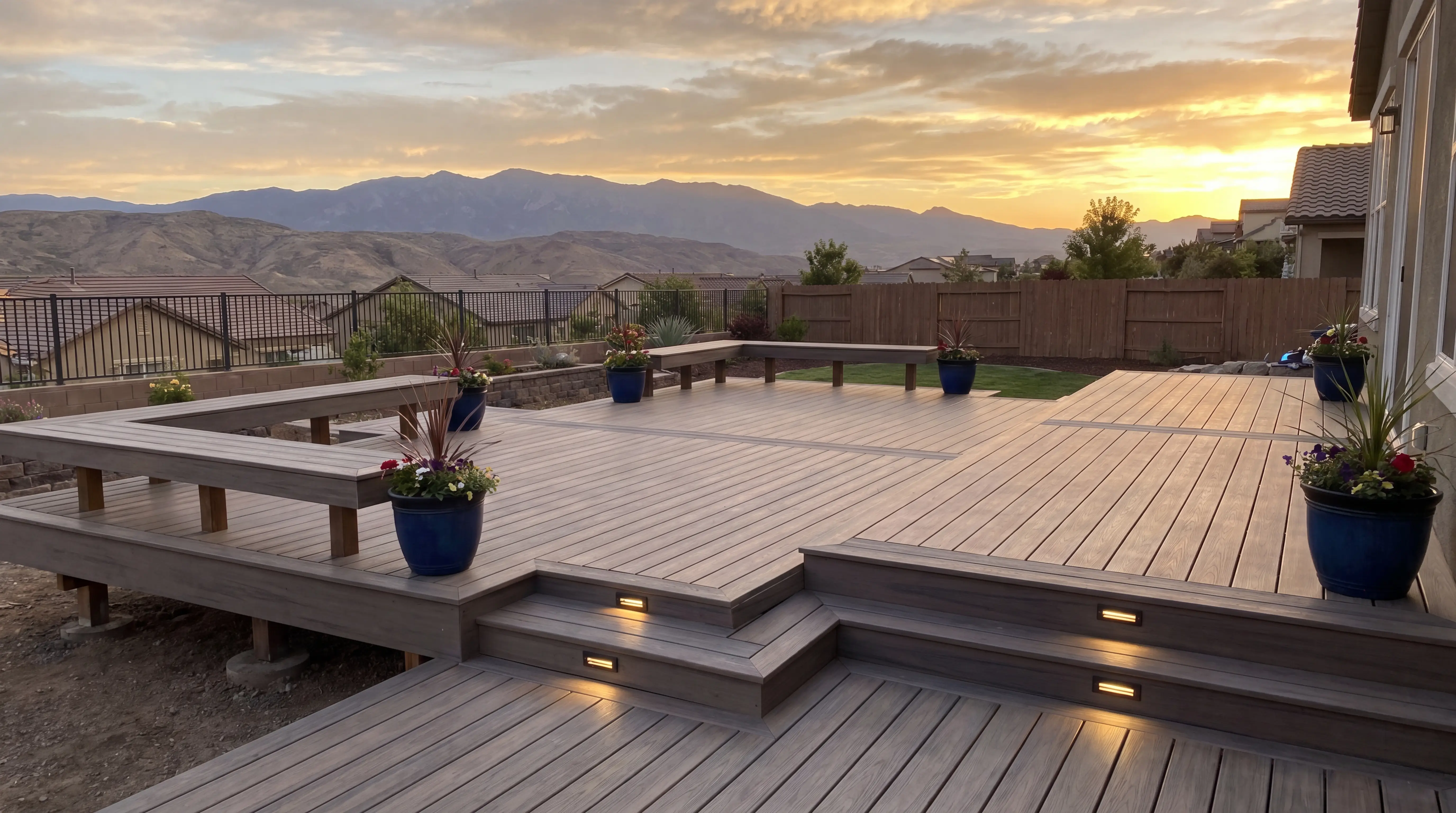
Add-ons also change the budget quickly: cable or glass railings, pergolas, integrated LED lighting, built-in seating, outdoor kitchen framing, or dry under-deck systems. For sloped yards, extra structural work is often unavoidable, but it can dramatically improve usability.
The best estimates are detailed, transparent, and tied to an actual site visit, not a vague number tossed out over the phone.
Choosing among composite deck installers in Draper comes down to more than price. You want a builder who understands Utah's climate, local codes, long-term material ROI, and the real challenges of sloped lots. When design, engineering, and communication are handled well, a composite deck becomes more than an upgrade, it becomes a durable outdoor living space that keeps paying you back year after year.

.avif)
.avif)












.png)



.webp)