
If you're comparing composite vs wood deck cost in Utah, the upfront numbers only tell part of the story. Around Salt Lake, Provo, Lehi, and the rest of Utah County, we regularly see homeowners focus on the first bid, then get blindsided later by staining, sealing, repairs, and weather-related wear. In Utah's dry air, intense UV, snow load, and freeze-thaw cycles, decking choices age very differently. Below, we'll break down what a composite or wood deck really costs in 2026, what drives pricing locally, and why the 10-year hidden costs matter more than most people expect.
For 2026, a realistic Utah price range for a new deck build looks like this:
So yes, wood usually wins on upfront cost. A 300-square-foot deck might land around $13,500–$19,500 in wood, while a comparable composite deck may fall around $19,500–$28,500+ depending on railing, stairs, and layout.
That gap is real. But it's also where a lot of Utah homeowners stop the comparison too early.
What matters is what's included. Two decks with the same square footage can price very differently if one has wide stairs, custom picture framing, aluminum or cable railing, deep frost footings, lighting, or engineered framing for heavy snow loads. In our market, a "cheap" deck estimate often means something important was left out, not that you found a miracle deal.
Deck pricing along the Wasatch Front isn't just about boards. It's shaped by site conditions, local code, and finish selections.
Here's what typically moves the number:
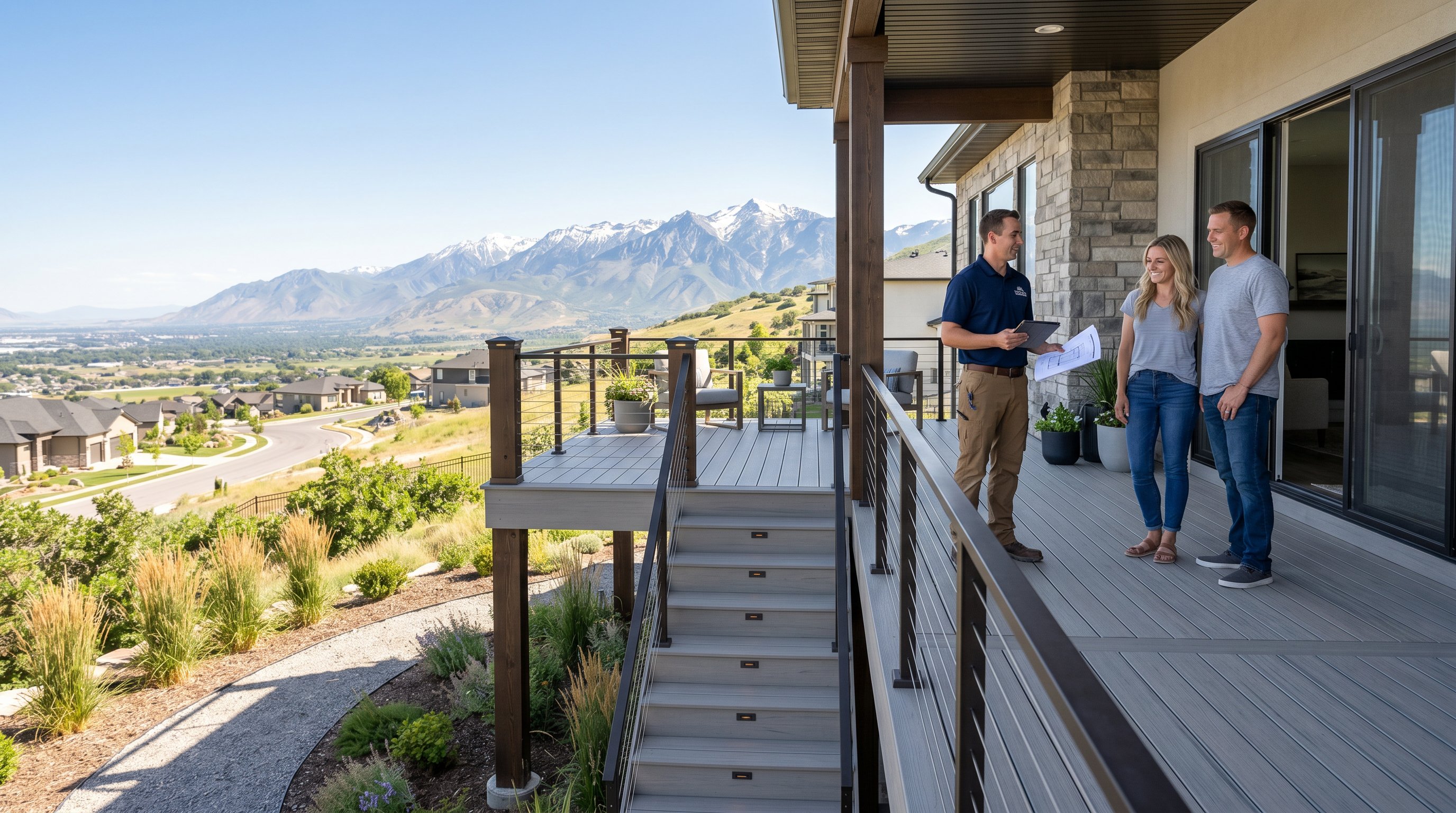
This is why local expertise matters. At 3sixty Industries, we build for Utah's climate and code realities from day one, not as an afterthought. We also provide in-home estimates and 3D mockups so homeowners can see exactly what they're paying for before construction starts.
This is where the math gets interesting, especially if you're researching the long term cost of wood deck Provo homeowners often underestimate.
Wood is cheaper at installation. But over 10 years, staining and sealing can quietly erase that savings.
Let's use a 300-square-foot deck as an example.
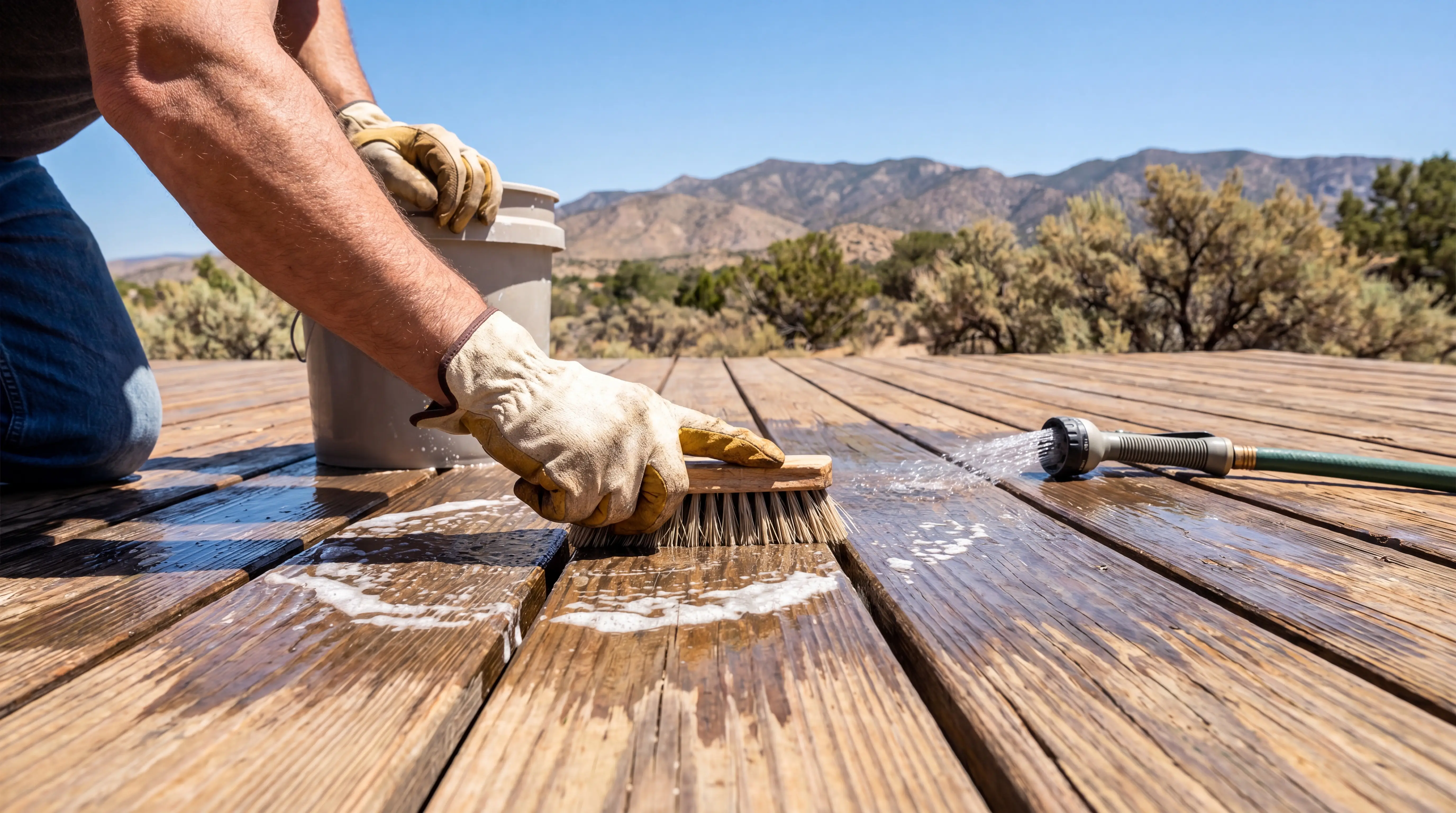
Now the hidden wood costs:
And that's before board replacement, popped fasteners, sanding, warp-related repairs, or stair tread replacement.
By contrast, capped composite usually needs basic washing, not repeated sealing cycles. So while composite starts higher, the ownership curve is flatter. And flatter usually feels better in year six than it does on day one.
Utah is tough on exterior materials. Summer UV is brutal. Winters bring snow, ice, and freeze-thaw movement. That combination is exactly why maintenance matters.
Natural wood can look fantastic at first. We get the appeal. But in this climate, it's more vulnerable to:
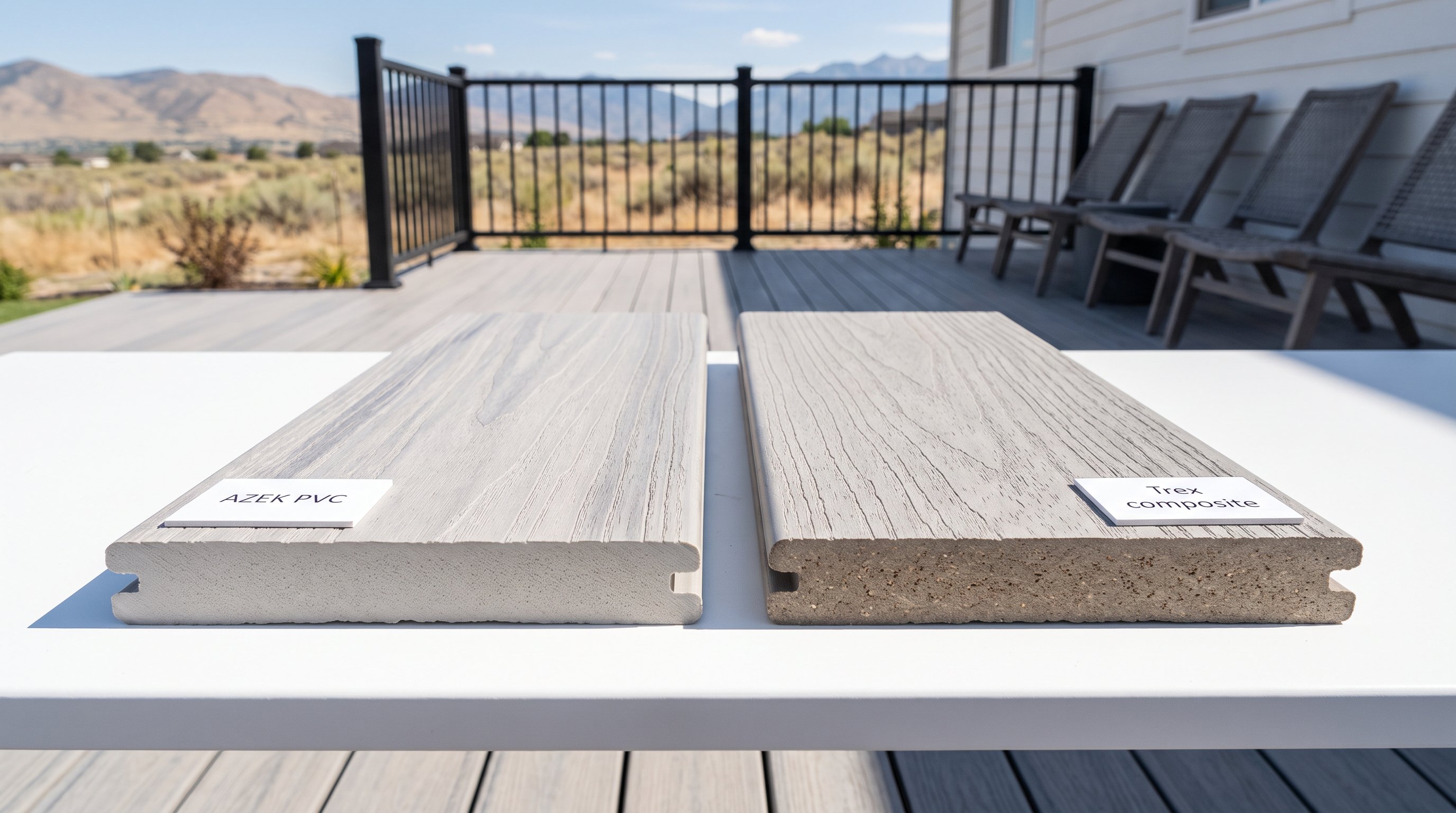
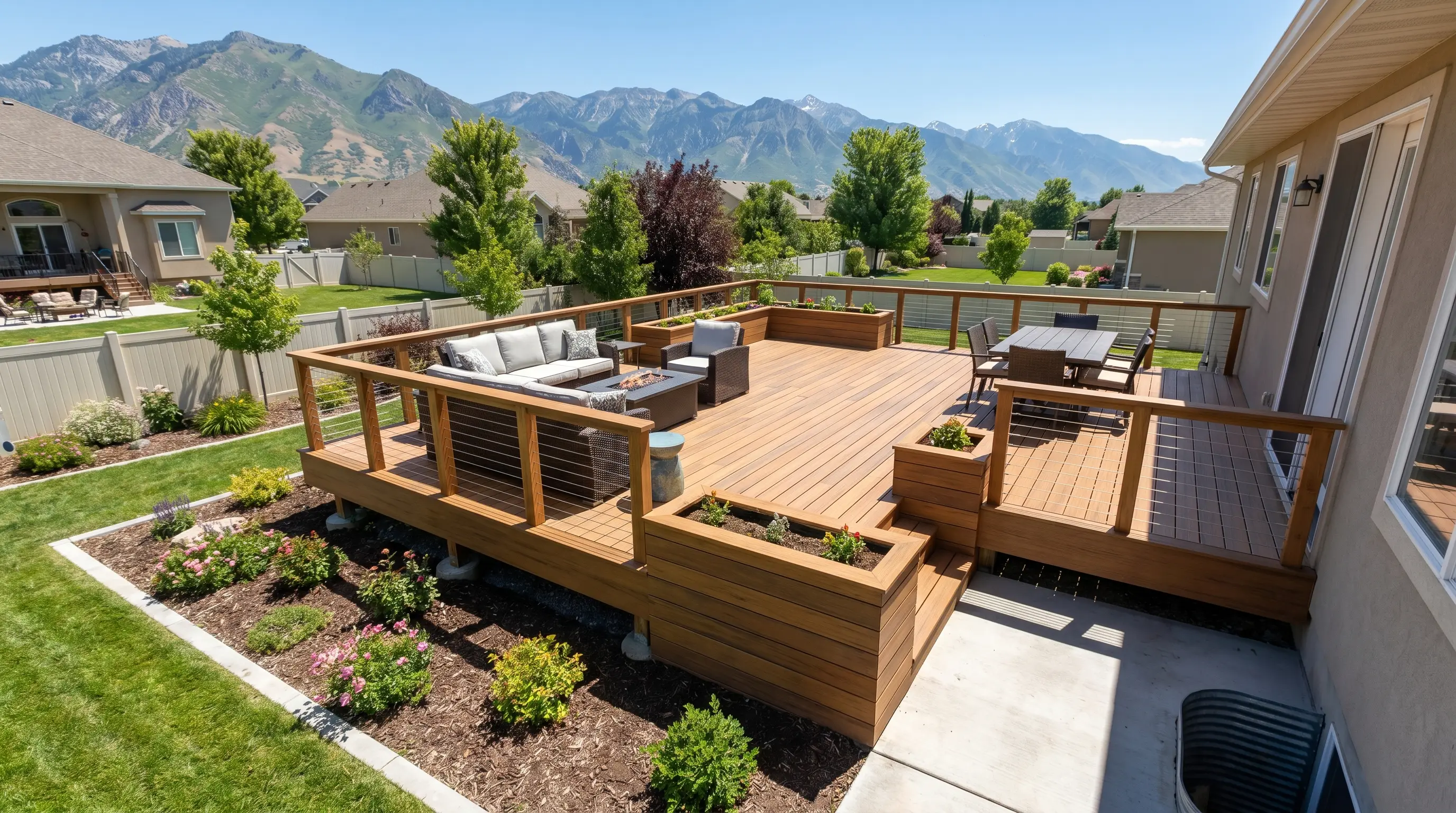
Composite, especially capped composite from brands like Trex or TimberTech, holds up better in these conditions. It won't need routine staining or sealing, and it's less likely to splinter or twist as seasons swing.
Color affects comfort too: darker boards absorb more heat under Utah's intense summer sun, so a lighter composite tone often feels noticeably cooler underfoot during peak afternoon hours, especially on a deck with west-facing exposure and little shade.
Lifespan depends on design, framing, drainage, and installation quality, but generally speaking, composite offers a longer low-maintenance runway. That's a big reason we recommend it so often for Utah homeowners who want to enjoy the deck instead of spending weekends maintaining it.
Not everyone minds maintenance. But most people mind it by the third summer.
When homeowners ask about popular decking materials Utah builders install most often, the shortlist is pretty consistent.
Best for low maintenance, long-term value, and weather resistance. It costs more upfront, but it performs well in UV-heavy, dry climates and handles snow melt better than natural wood.
A classic choice with a warm, natural look and lower initial cost than composite. But it needs regular upkeep, and in Utah that upkeep isn't optional for long.
Less common because of price and availability, but still chosen for appearance. It performs similarly to other natural wood options in the sense that maintenance is ongoing.
This is one of the most practical combinations: structural framing where appropriate, finished with durable composite decking on top.
PVC decking is lightweight and highly resistant to moisture, rot, and insects, though color and direct sun exposure still shape how hot it feels underfoot. Stone or porcelain pavers can look striking, but pale colors reflect more sunlight than dark stone, which can become extremely hot in direct sun and needs its own drainage and structural planning. Aluminum is durable, fire-resistant, and won't rot, which makes it worth a look for specialized applications, though most Utah homeowners still prefer composite's warmer look and feel.
Homes near open space and dry hillsides, in places like Draper, benefit from an added layer of planning. Aluminum and steel decking are noncombustible, and some capped composite, PVC, and fused bamboo products carry documented fire testing or Class A ratings. Whichever material you choose, consistent board spacing, sound framing, and keeping debris and firewood away from the structure matter as much as the decking itself.
Material choice should match how you live. If you want a deck that feels like a weekend project forever, wood can work. If you want a deck that mostly asks to be enjoyed, composite usually makes more sense.
In many cases, yes, does a deck add value to a home in Utah? Usually it does, especially when it's well-designed, permitted, and built to match the house.
A deck adds value in a few ways:
In Utah, outdoor living carries real weight because homeowners want to maximize spring, summer, and fall use. Features like shade structures, integrated lighting, dry under-deck systems, and modern railings can make that value more obvious.
That said, buyers also notice condition. A worn wood deck with peeling stain may not create the same positive impression as a clean, modern composite build. So value isn't just about having a deck. It's about having one that still looks good years later.
That's another place where long-term maintenance affects return.
If you're weighing composite vs wood deck cost in Utah, wood is usually cheaper to build, but often more expensive to live with. The 10-year hidden costs of staining, sealing, and repairs can narrow or erase the initial savings fast. For many Salt Lake and Utah County homeowners, capped composite is the smarter long-term investment. At 3sixty Industries, we help homeowners price decks honestly, design them clearly, and build them for Utah's climate, not just for move-in day.

.avif)
.avif)







.webp)