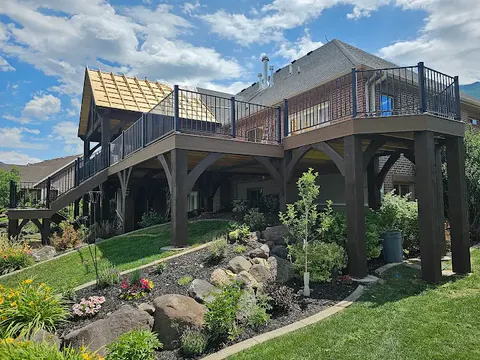
A deck usually doesn't fail all at once out of nowhere. In most cases, it gives off warning signs first, small movements, soft spots, rusted connections, or wood damage that homeowners brush off for one more season. That's risky in Utah, where heavy snow loads, dry summers, and freeze-thaw cycles put outdoor structures under real stress. In this guide, we'll walk through the most important signs of deck collapse, what they actually mean, and when it's time to call for a professional inspection. If you're in Riverton or nearby Utah neighborhoods, our deck building services are available to help evaluate, repair, or rebuild unsafe decks.
Many homeowners assume a deck is safe if it still "looks fine." That's the trap. Structural failure often starts in places you can't easily see: the ledger board against the house, corroded hardware, undersized framing, or footings that have shifted below grade.
A lot of older Utah decks were built under outdated standards or by installers who didn't account for local snow loads and frost depth. Add years of moisture intrusion, UV exposure, and deferred maintenance, and the structure can weaken quietly. Even a deck that feels usable during a summer barbecue may be much closer to failure than it appears.
We've seen this especially across the Wasatch Front, where weather swings are hard on outdoor framing. If you live in Riverton, our deck building services are available throughout the area and surrounding Utah neighborhoods to inspect aging decks and identify whether repair or full replacement makes more sense.
One of the clearest signs of deck collapse is movement that wasn't there before. If part of your deck feels springy underfoot, dips in the middle, or seems slightly out of level, pay attention. Decks should feel solid and stable, not like a diving board.
Sagging can point to overstressed joists, failing beams, weak posts, or footings that have settled unevenly. In Utah, shallow footings are a common culprit because freeze-thaw cycles can heave and shift the structure over time. Snow load can also exaggerate existing weakness.
Look for clues such as:
Even minor bounce matters. Structural movement rarely fixes itself: it usually gets worse. If you notice this in Riverton, it's smart to schedule a professional assessment before the next storm or family gathering puts more load on the frame.
Surface wear is one thing. Damage in structural members is another. When we inspect decks, we're far more concerned about rot or splitting in joists, beams, posts, stair stringers, and ledger areas than in the top boards alone.
Wood rot often starts where moisture gets trapped, around fasteners, at post bases, near stairs, or where flashing failed. You might notice discoloration, fungal growth, spongy texture, or sections that crumble when pressed with a screwdriver. Cracks and checks in wood aren't always catastrophic, but deep splitting in load-bearing members can seriously reduce strength.
Utah's climate makes this tricky. Dry air can shrink and crack wood, then snowmelt and spring moisture seep into those openings. That cycle accelerates deterioration.
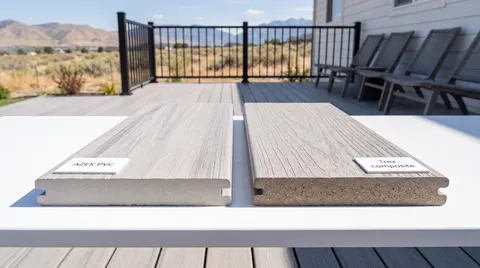
If your deck has older natural wood framing, this is one reason we often recommend capped composite materials for resurfacing or rebuilding. They hold up far better in our climate. And if you're in Riverton, our deck building services are available to inspect damaged framing and recommend a code-compliant fix.
A loose railing may seem like a small annoyance. It isn't. Railings, stairs, and visible hardware often act like the canary in the coal mine, they reveal movement and decay happening deeper in the deck structure.
If rail posts wiggle when you lean on them, the connection may be failing at the framing level. If stairs wobble, pull away, or squeak more than usual, the stringers or their attachment points may be compromised. Rusted screws, popped nails, missing bolts, and corroded joist hangers are all red flags.
Modern deck safety depends heavily on hardware. Connections matter as much as lumber. A deck can have decent-looking boards and still be dangerous because the metal components are rusting out or were never installed correctly to begin with.
This is one reason professional installation matters so much. We build decks to current code with proper connectors, hardware, and railing systems designed for real use, not just appearance. Our deck building services are available in Riverton and nearby Utah communities for inspections, repairs, railing upgrades, and full rebuilds when hidden damage goes beyond a quick patch.
If there's one area homeowners should take seriously, it's the ledger board, the piece that anchors the deck to the house. Ledger failure is one of the most common causes of sudden deck collapse because it affects the entire structure at its most critical connection point.
Warning signs include:
When the ledger pulls away, the deck can drop fast, often with little warning. This is especially dangerous on elevated decks and second-story structures.
We frequently find older decks attached through siding or without proper waterproofing. That's a recipe for hidden decay. Near Riverton, especially in neighborhoods exposed to wind and winter moisture, these failures show up more often than people expect. If you live near local features like the trails and open vistas around Utah Lake, you already know how quickly weather conditions can turn: your deck feels that too.
Utah is rough on decks. That's not hype: it's just reality. We get intense UV exposure, long dry stretches, sudden moisture events, snow accumulation, and repeated freeze-thaw cycles. Each one stresses deck materials differently.
UV rays dry out and degrade wood fibers. Dry air contributes to shrinking, cracking, and splitting. Snow loads add substantial weight to framing, especially on older decks that weren't engineered for current expectations. Then freeze-thaw cycles attack footings and connections as trapped water expands and contracts.
That's why proper footing depth matters so much here. In many cases, footings need to extend 30+ inches below the local frost line to prevent heaving and shifting. It's also why we prefer capped composite decking for many Utah homes, it resists splintering, warping, and fading far better than standard wood.
If your deck is aging in Riverton or surrounding Utah neighborhoods, climate alone is a good reason to have it evaluated before visible damage becomes structural failure.
First, limit use immediately. If you suspect structural trouble, don't keep hosting on it and hope for the best. Keep people off the deck, especially if it's elevated, and avoid adding heavy loads like grills, planters, or snow buildup.
Next, do a basic visual check from a safe distance. Look for obvious sagging, loose railings, split posts, rusted connectors, or separation from the home. Take photos. That helps track changes and gives a contractor a clearer picture.
Then schedule a professional inspection. In many cases, the safest path is either a targeted structural repair or a rebuild to current code. We don't recommend cosmetic fixes when the framing or attachment system is compromised.
For homeowners in Riverton, our deck building services are available for honest inspections, code-compliant repairs, deck resurfacing when the frame is still solid, and full custom rebuilds when it isn't. A safe deck should feel rock solid in every season. If yours doesn't, it's time to act, not next summer.
The short version: movement, rot, loose connections, and ledger issues are never minor. They're the classic signs of deck collapse, and they deserve immediate attention. When in doubt, have it inspected by a licensed local expert who understands Utah weather, codes, and structural demands.

.avif)
.avif)