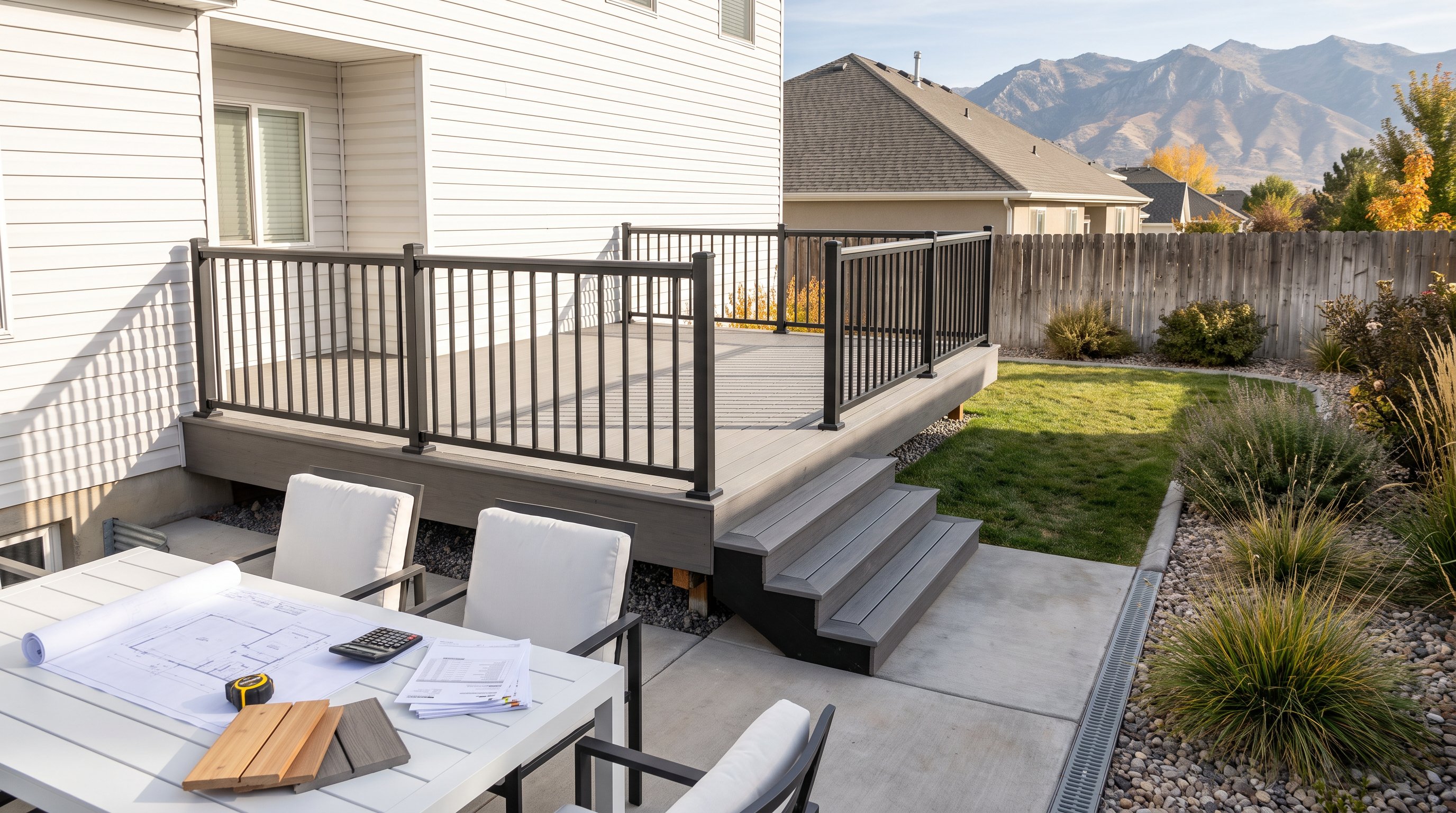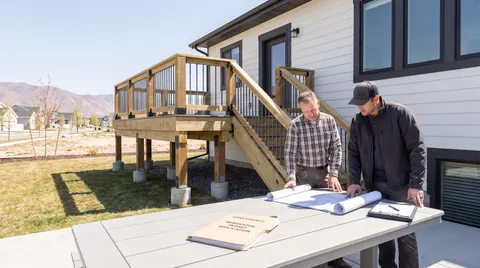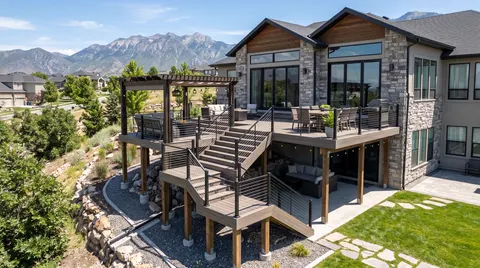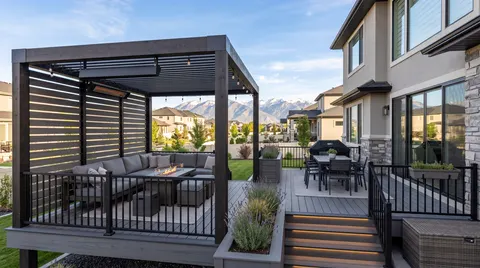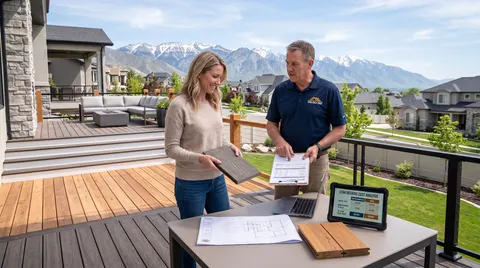
The biggest pergola decision isn't the roof style or the wood species — it's whether the structure stands alone or attaches to your house. A freestanding pergola gives you flexibility in where it goes and how it's engineered. An attached pergola can save on materials but puts real demands on your home's existing structure. Here's how to tell which one fits your yard, your budget, and Utah's wind and snow loads.
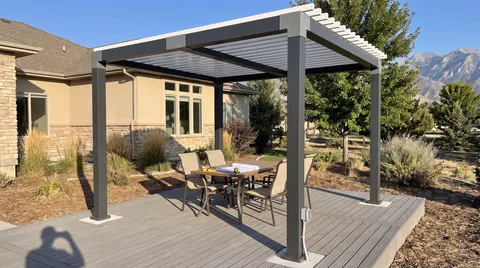
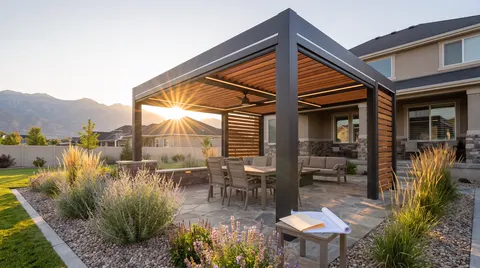
A freestanding pergola stands on its own posts and footings, independent of any building. It can go anywhere in the yard — over a fire pit, a hot tub, or open lawn — because it doesn't need a wall to lean on.
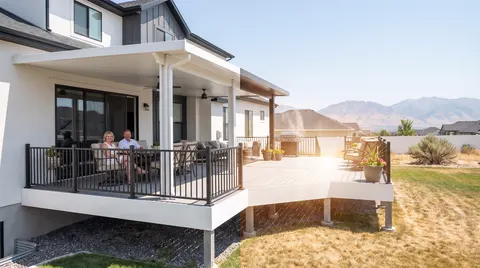
An attached pergola ties into your house, garage, or an existing patio structure on one side, with posts carrying the other side. It usually needs fewer posts and less material, but the connection point becomes the most important part of the build.
Attached pergolas are often slightly cheaper, since one side's load transfers into the house instead of new footings. But that's not guaranteed: the connection has to be engineered correctly, with proper flashing and ledger attachment, and that work can offset the savings on a complicated wall. For either style, expect the same overall range we cover in how much a pergola costs in Utah — size, material, and roof style move the number more than attached vs. freestanding does.
Freestanding pergolas carry their full structural load on their own posts and footings, so we size those footings for local snow load and wind exposure without relying on anything else. That makes a freestanding design more predictable — the posts just need to be built right for your elevation.
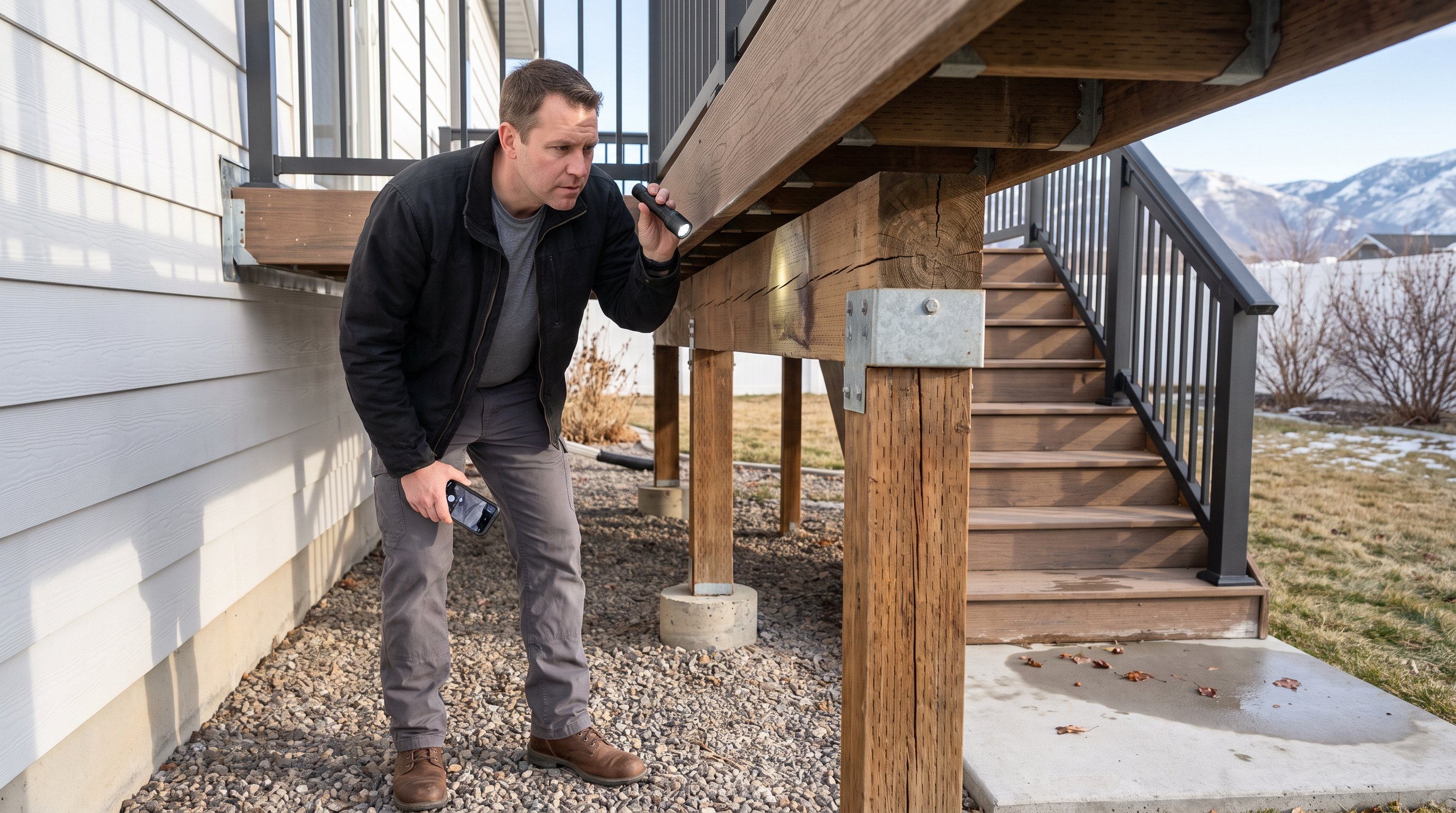
Attached pergolas depend on what they're attached to. Before we connect one to your house, we check the existing framing, the siding or stucco condition, and whether the wall can carry the added snow and wind load an attached roof adds. A connection that isn't engineered for Utah's loads is the most common failure point we see on attached structures built elsewhere.
Freestanding pergolas work well with a simple open-lattice roof, a louvered roof you can adjust by hand, or a fully motorized louvered system — since the structure stands on its own, any roof style is available. Attached pergolas can carry the same roof options, but a motorized louvered roof adds weight and wiring that has to route cleanly into or along the house, which is worth planning with your contractor from the start rather than adding after the fact.
Choose freestanding if:
Choose attached if:
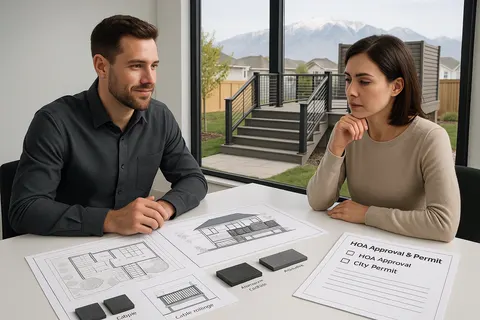
Both styles can require a permit depending on size, height, and your city — we confirm this before quoting rather than assuming either style is exempt. Attached pergolas are somewhat more likely to trigger a permit requirement because they modify the structure of the house. HOAs may have their own rules on both styles regardless of what the city requires.
Neither style is inherently stronger — strength comes from correct engineering for your site's wind and snow load, not from whether it's attached. A freestanding pergola built with undersized footings performs worse than a well-attached one, and vice versa.
Usually not without rebuilding the roof framing. It's worth deciding upfront rather than planning to convert.
It can, depending on your home's roofing and siding warranty terms. We recommend checking with your home's manufacturer or builder before attaching anything to an exterior wall.
Either can, if well-built. See Do Pergolas Add Appraisal Value in Utah? for what appraisers actually look at.
Not sure which fits your yard? Request a free quote and we'll walk the space with you, or call 435-660-1944. See how we build both styles on our pergola builds page.