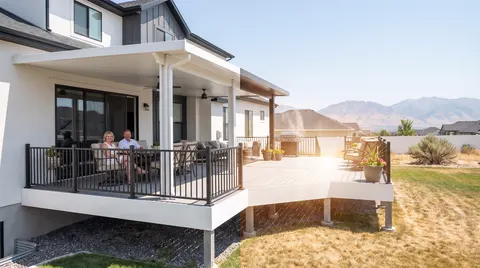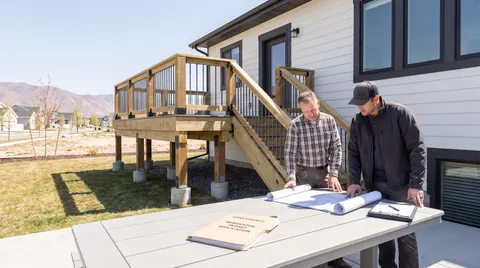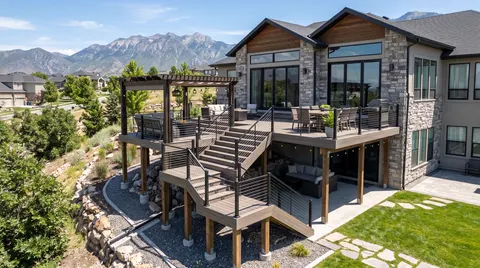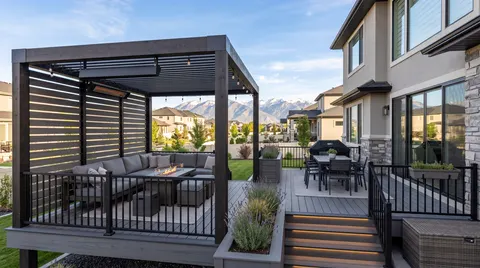
A deck inspection should start with the connections and framing, not just the boards you walk on. After a Utah winter, snowmelt can expose drainage problems, while freeze-thaw movement can leave stairs or supports out of position. We recommend a yearly visual review before regular spring use, plus another look after severe weather or any noticeable movement. This guide explains what homeowners can safely observe, which warning signs mean the deck should stay closed, and when a professional needs to assess the structure before repairs or another season of use.
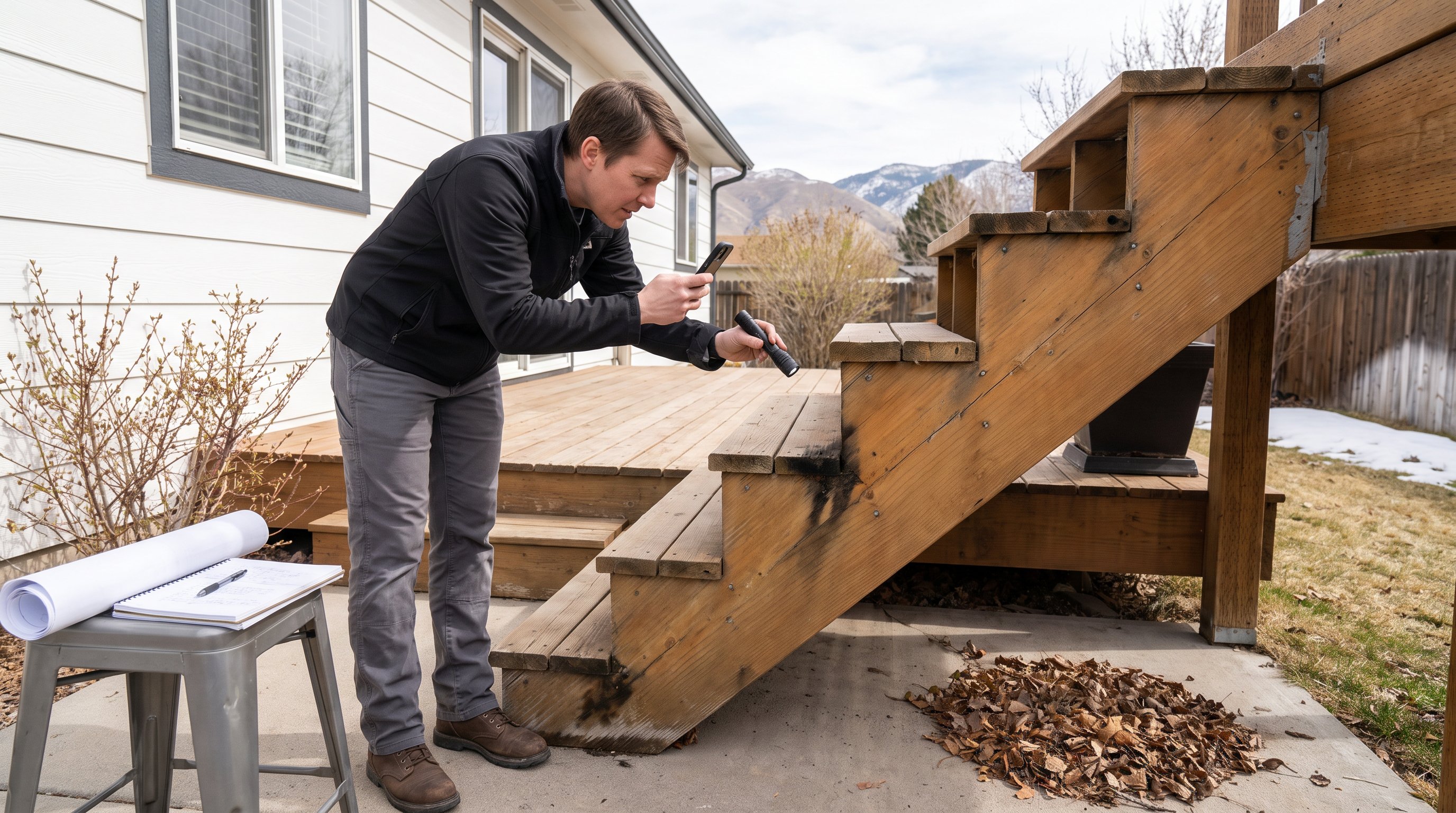
Inspect your deck each spring after snow and ice clear, when you can see the boards, stairs, and accessible framing. We also recommend a review before hosting a large gathering or adding heavy equipment, especially if you don't know the deck's construction history.
Utah's dry summer weather doesn't rule out hidden rot. Snowmelt can collect against the house or between joined wood members, keeping those areas damp long after exposed boards dry.
Gather a flashlight, phone camera, and any available construction plans or inspection records. Photograph concerns from a safe position and record their locations: "outer stair stringer near the landing" gives a professional more useful information than "stairs look bad."
Prepare the area without putting yourself at risk:
Don't bounce on the deck, lean hard against railings, or load it to test its strength. If it sags, shifts, or pulls away from the house, stop using it and keep people out from underneath.
A homeowner's visual review identifies warning signs: it doesn't certify structural safety. Our guide to deck repair versus replacement addresses the next decision when an inspection reveals damage.
Check the load-bearing structure first, followed by the walking surface and fall protection. New-looking boards can hide deteriorated framing, so surface condition alone doesn't tell us whether a deck is safe.
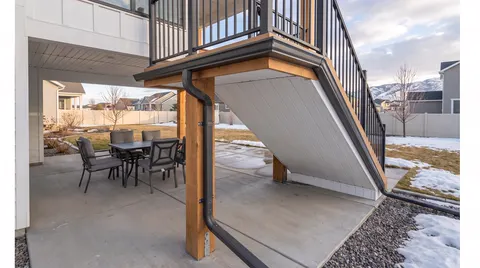
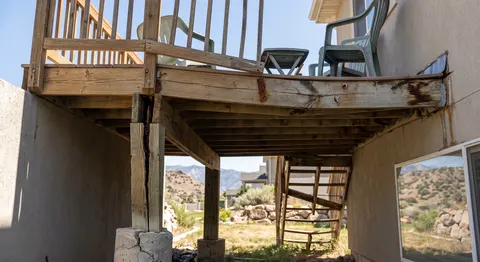
On an attached deck, the ledger is the board that connects the deck framing to the house. Look for separation, water staining, damaged flashing, or missing hardware where that connection is visible: freestanding decks use a different support arrangement.
Flashing directs water away from the house connection. A persistent wet streak below the ledger deserves attention because water can damage both deck framing and concealed house framing.
From a safe position, look for these problems:
A connector's presence doesn't prove that it was installed correctly. A professional needs to verify the fastener type, placement, and compatibility with the hardware and treated lumber.
Look closely at post bottoms, beam joints, stair stringers, and areas that trap leaves. Soft-looking, crumbling, or separating wood is more concerning than simple discoloration, though rot can also remain concealed.
Some wood develops surface checks as it dries. A split through a connection, a growing crack, or deterioration in a supporting member needs professional assessment rather than cosmetic filler.
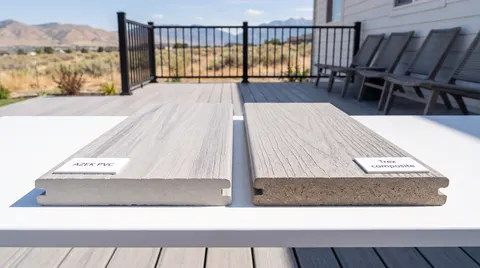
Composite decking doesn't make the frame rot-proof. Many composite decks still rely on wood framing, which needs the same attention to drainage and connection condition.
Identify loose boards, raised fasteners, broken edges, and gaps that could catch a foot. Note areas that feel unusually springy during ordinary use, but don't repeatedly step on them to investigate.
Inspect composite boards for cracks and movement around fasteners. Board spacing and support requirements depend on the product, so a professional should compare the installation with its manufacturer's instructions.
Treat a loose guardrail as a fall hazard, not a minor maintenance item. Look at the post connections below the decking where visible: screws through a surface board alone don't establish a sound guard connection.
Stairs need secure treads, sound stringers, the sloped members supporting the steps, and stable landings. Uneven riser heights or movement at the bottom can create a trip hazard, particularly when shadows or winter ice make footing harder to judge.
A broad rail cap isn't necessarily a graspable handrail. Have a professional assess handrail shape, guard openings, and attachment details against applicable requirements rather than assuming an older installation remains acceptable.
Finally, confirm that stair lighting works and that cords don't cross walking routes. Lighting helps people recognize a step edge: it doesn't compensate for a loose tread.
Call a qualified professional whenever you find movement, deteriorated supporting wood, a loose guard, or a questionable house connection. We also recommend professional evaluation when construction records are missing or before adding a hot tub, roof, or other substantial load.
An older deck deserves closer review, but age alone doesn't determine safety. Installation quality, moisture exposure, and maintenance can matter more than the number of years since construction.
Ask whether the deck safety inspection includes accessible framing, ledger connections, supports, stairs, and guards. Request written findings with photographs, urgent restrictions, recommended repairs, and a clear statement of anything the inspector couldn't access.
A contractor can assess repair options: a structural engineer may be needed for uncertain load capacity or unusual framing. A municipal inspection serves a different purpose: it checks permitted work at required stages rather than providing ongoing maintenance oversight.
Inspection fees depend on access, deck size, reporting scope, and whether engineering is necessary. We don't have a verified current local inspection price to publish, so request a written fee before scheduling instead of relying on a national estimate.
A construction estimate isn't the same as an independent structural inspection. At 3Sixty Industries, we build custom decks and resurface decks only when the existing framing is suitable: our free in-home estimate helps homeowners plan that construction work.
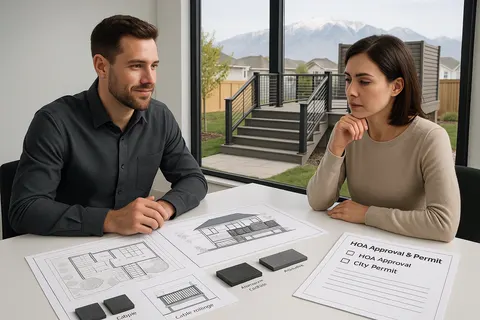
For a property in Eagle Mountain, confirm current permit requirements and inspection stages with the city's building department before structural repairs or replacement. Rules change, and the scope of work affects what approval is needed.
Ask specifically about footing inspection before concrete placement and framing inspection before connections become concealed. Snow-load criteria and footing requirements must suit the project location: don't apply a single statewide depth or load assumption to every Utah deck.
Address structural hazards before cleaning, staining, or replacing visible boards. Keep an unsafe deck closed until a qualified professional evaluates it and necessary repairs are completed.
We recommend saving inspection photos, clearing moisture-trapping debris, and scheduling spring and fall reminders to review drainage and visible connections. After repairs, retain the documentation so future changes are easier to spot.
If repairs point toward a rebuild or resurfacing project, call 435-660-1944 for a free quote.
The ideal time for a deck inspection is each spring after snow and ice clear, plus after severe weather or before hosting large gatherings to ensure safety and identify any damage early.
Focus on structural connections, ledger board, flashing, joists, supports, stair stringers, boards, railings, and guardrails for signs of rot, loose fasteners, corrosion, or movement.
Schedule a professional inspection annually if your deck is 10 years or older, or anytime if you notice movement, rot, or loose guardrails to maintain structural safety and code compliance.
Homeowners can perform visual checks for warning signs, but if you find deterioration, shifts, or suspect unsafe conditions, a qualified professional should assess and recommend repairs or replacement.
Inspection fees vary by deck size, access, and reporting detail; costs range from $25 to $200. Inspections usually include checking framing, ledger, footings, stairs, and guardrails with written findings.
The ledger connects your deck to the house. Issues like separation, water staining, or damaged flashing can cause structural damage to both the deck and house framing, making this a crucial inspection point.