
Sandy climbs from around 4,500 feet near the valley floor toward the mouths of Big Cottonwood and Little Cottonwood Canyons, where lots sit noticeably higher and closer to canyon wind exposure. The higher up the bench your lot sits, the more that changes post size, footing depth, and how we anchor the frame.
Utah's ground snow load rises with elevation, and a lot closer to the canyon mouths can carry meaningfully more snow load than a lot near the valley floor a few miles away. We calculate the design load for your specific site rather than using one number for the whole city.
Many Sandy neighborhoods were built decades ago, and an older deck's railing, guardrails, and fastener spacing often fall short of current code even if the structure still looks fine. If you're replacing an existing deck's railing or resurfacing an old frame, we check the framing underneath before assuming it's sound.
Ground that freezes and thaws can heave shallow footings and push deck posts out of level. We place footings below Utah's frost line, typically 30 inches or more, and confirm the exact depth Sandy requires before we dig.
Sourced from Utah's residential building code and general elevation data for Sandy. Confirm current permit requirements with Sandy City before building.
Cost depends on size, material, railings, stairs and how the deck attaches to your home, so we price each one after we see your yard. Utah requires a permit for any deck attached to the house, or a freestanding deck over 30 inches above grade, and a guardrail once it crosses that height. Rules change, so confirm with Sandy City before you build. Your free quote covers the design, the price and the schedule.
Serving Sandy and the surrounding valley
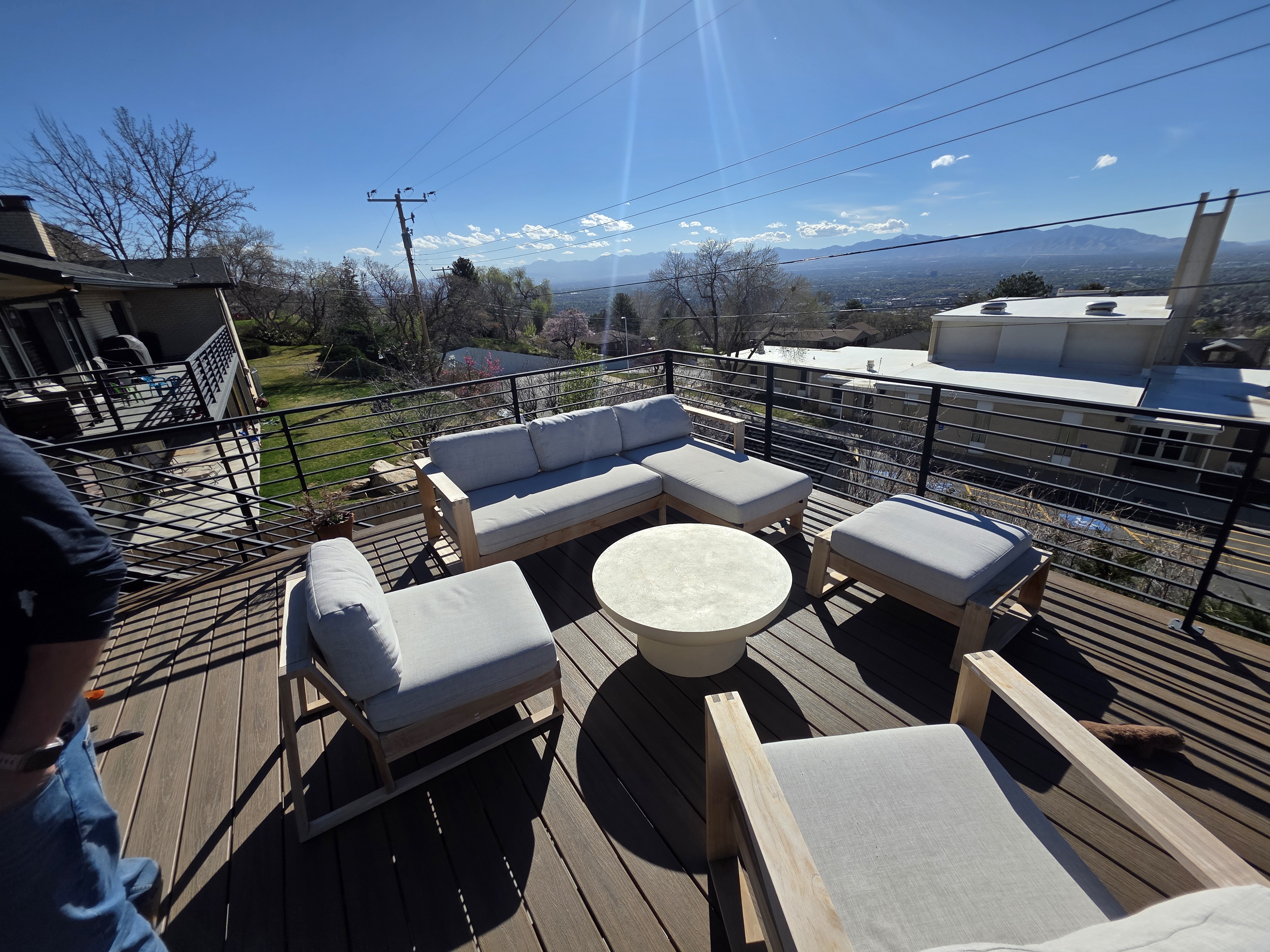
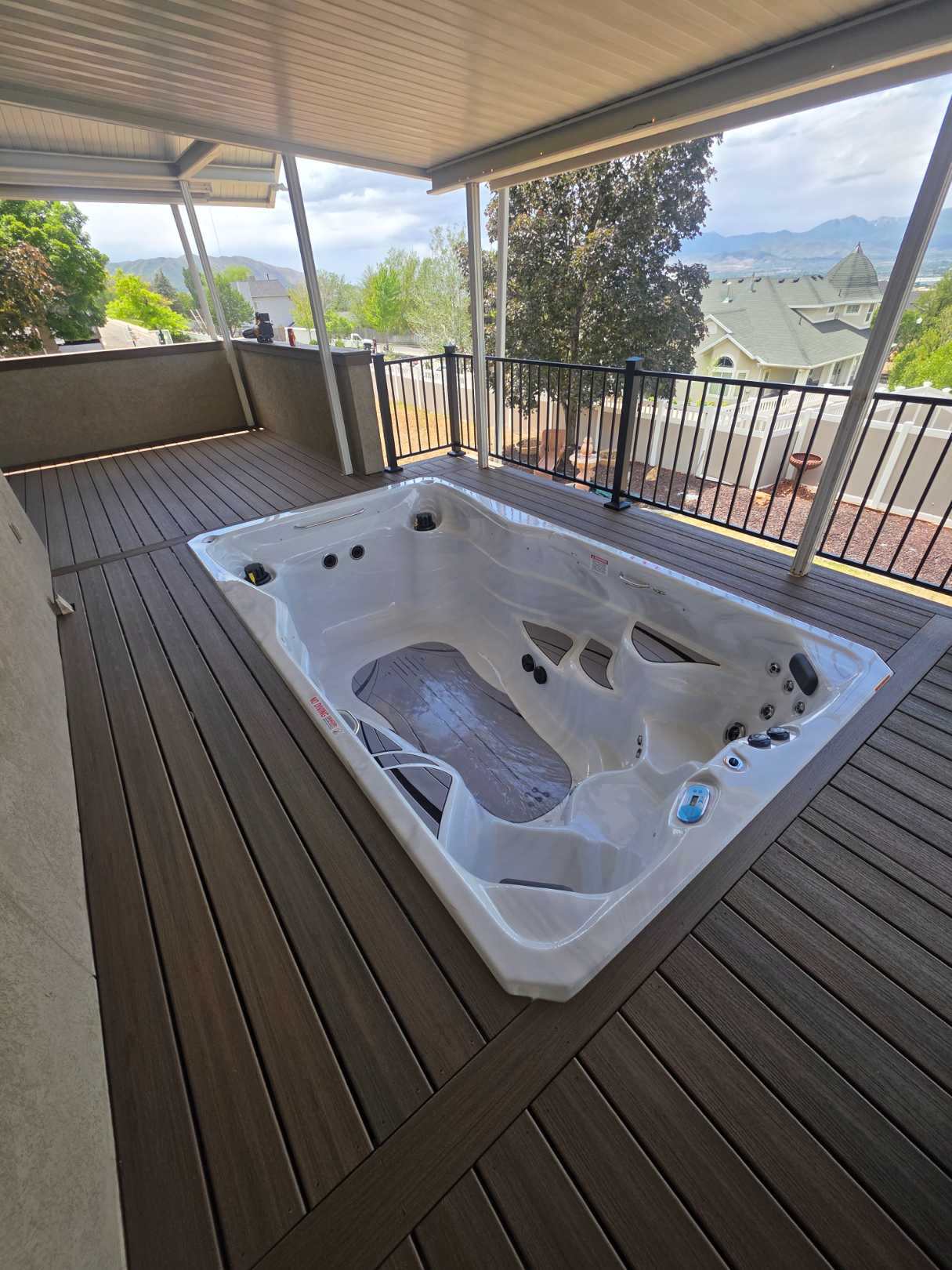
A deck we built for a Utah homeowner. We're adding more Sandy-area photos as new projects finish there — see our full project gallery in the meantime.

Tell us about your yard and what you want to build. We will send a free quote, and you can call 435-660-1944 with any questions.
Start My Project
Working with Joey and his team at 3sixtyindustries was a great experience. They were honest, fair, and extremely easy to work with throughout the entire process. They did such a great job. I have no complaints about anything. We love our new deck—highly recommend!
Crus and Joey built a beautiful deck for us! We were tired of our small, wood steps that attracted wasps. We contacted them and they were able to expand our space to be a place for us to enjoy time with our dogs and enjoy being outside! I am so happy with the work they’ve done! Communication was great and they were very respectful of our space and other belongings. I highly recommend them if you need a deck!
Our deck is amazing! They were wonderful and patient guys to work with. Totally recommend!
I was nervous at first to redo my deck but it looks amazing thank you so so much!!
They completed a framing job for me on an addition to our home. Their pricing was very competitive and they offered great service. They were honest and got the job done that was needed. Very happy with their work and timelines. Would recommend
Amazing product and amazing service. They made sure my yard was 100% cleaned everyday best affordable product around.
These guys are awesome! Repaired my old water damaged deck, and gave it a fresh new look with trex and a new composite railing. Very happy with the end result, would absolutely hire them again.


Most deck projects take two to six weeks from footing excavation to the final walkthrough, depending on size, permitting and weather.
Utah requires a building permit for any deck attached to your home, or for a freestanding deck more than 30 inches above grade. Once a deck crosses that height, it also needs a guardrail at least 36 inches tall. Rules can vary by exact location in Sandy, so we confirm current requirements with the city before building.
Deck cost depends heavily on size, decking material and features like railings, stairs and lighting, so we price each project after seeing your yard. Visit our deck builds page for what's included, or ask for a free, itemized quote.
Wood costs less upfront but needs regular staining or sealing to handle Utah's sun and snow. As a rough range, new composite decking often runs $65 to $95+ per square foot installed, while natural wood lands closer to $45 to $65, depending on design, stairs and railings. Composite resists fading, warping and moisture damage far better over time.
Yes. Sandy spans a real elevation range, from the valley floor up toward the Cottonwood Canyon mouths, and snow load and wind exposure both increase with elevation. We size footings, posts, and connections for your specific lot rather than a single citywide assumption.
See our deck builds page, browse the Sandy service area, or read about composite vs. wood decking costs.

.avif)
.avif)