
Lehi's building criteria list a 115 mph design wind speed with Exposure C, which means open terrain. Wind creates lateral push and uplift, and the weakest points are usually the connections, where beams meet posts and posts meet brackets, so we use multiple fasteners, gussets, throughbolts and structural brackets at those points rather than relying on the weight of the structure.
Lehi's building criteria list a ground snow load of 43 psf and a roof snow load of 30 psf. A pergola with a louvered or solid roof collects that snow, and load combinations can require it to resist wind uplift while snow pushes down at the same time. We treat combined loading as a design question from the start, not an afterthought.
The anchor is only as good as what it's set into. Lehi's criteria list a minimum 30-inch frost line, so new footings go below that with embedded post anchors. A thin patio slab can crack under uplift, and pavers over sand or gravel don't hold anchors reliably, so we reach a real foundation before anchoring. On soft or uncertain soil we look at engineered helical piles instead of shallow piers.
The common code exemption for small accessory structures (under 200 square feet, no utilities) may cover a small freestanding pergola, but attaching it to your home, a larger footprint or added electrical can change the answer. Lehi's development code also sets setbacks for accessory structures, so placement matters. We confirm with Lehi City's Building and Inspections department before we build rather than assume a pergola is exempt.
Snow, wind and frost figures are from Lehi City's Building and Inspections design criteria. Confirm exact figures and permit requirements with the city or an engineer before building.
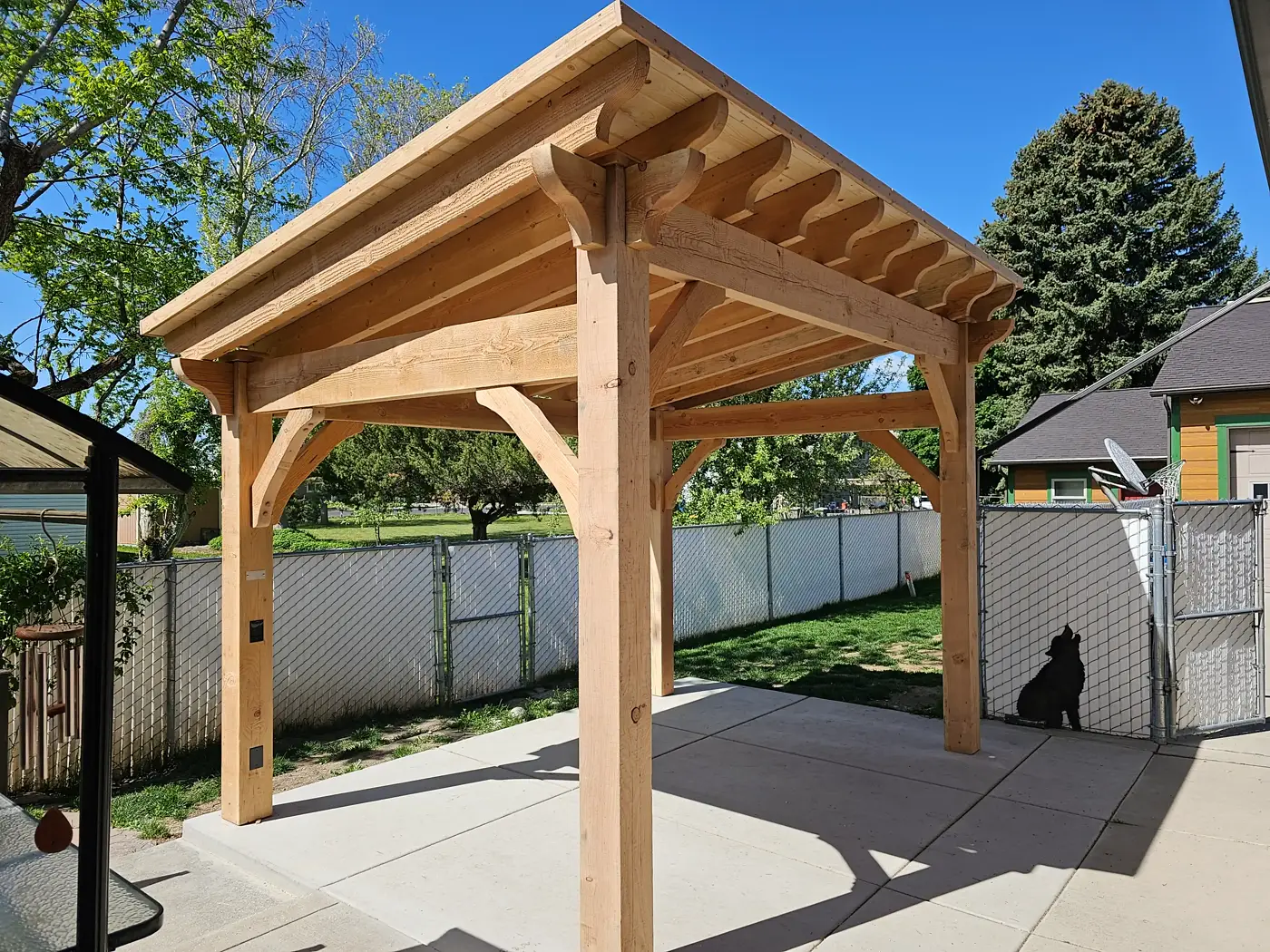
Every pergola is priced after we see your yard — size, material, roof style and how it connects to your home all move the number. Before we build, we check Lehi City's current permit and zoning requirements rather than assume a pergola is exempt, especially on a sloped or elevated lot where an engineer's review may be worth it. Ask for a free quote and we'll walk you through the design, the price and the timeline.
Built along the Wasatch Front
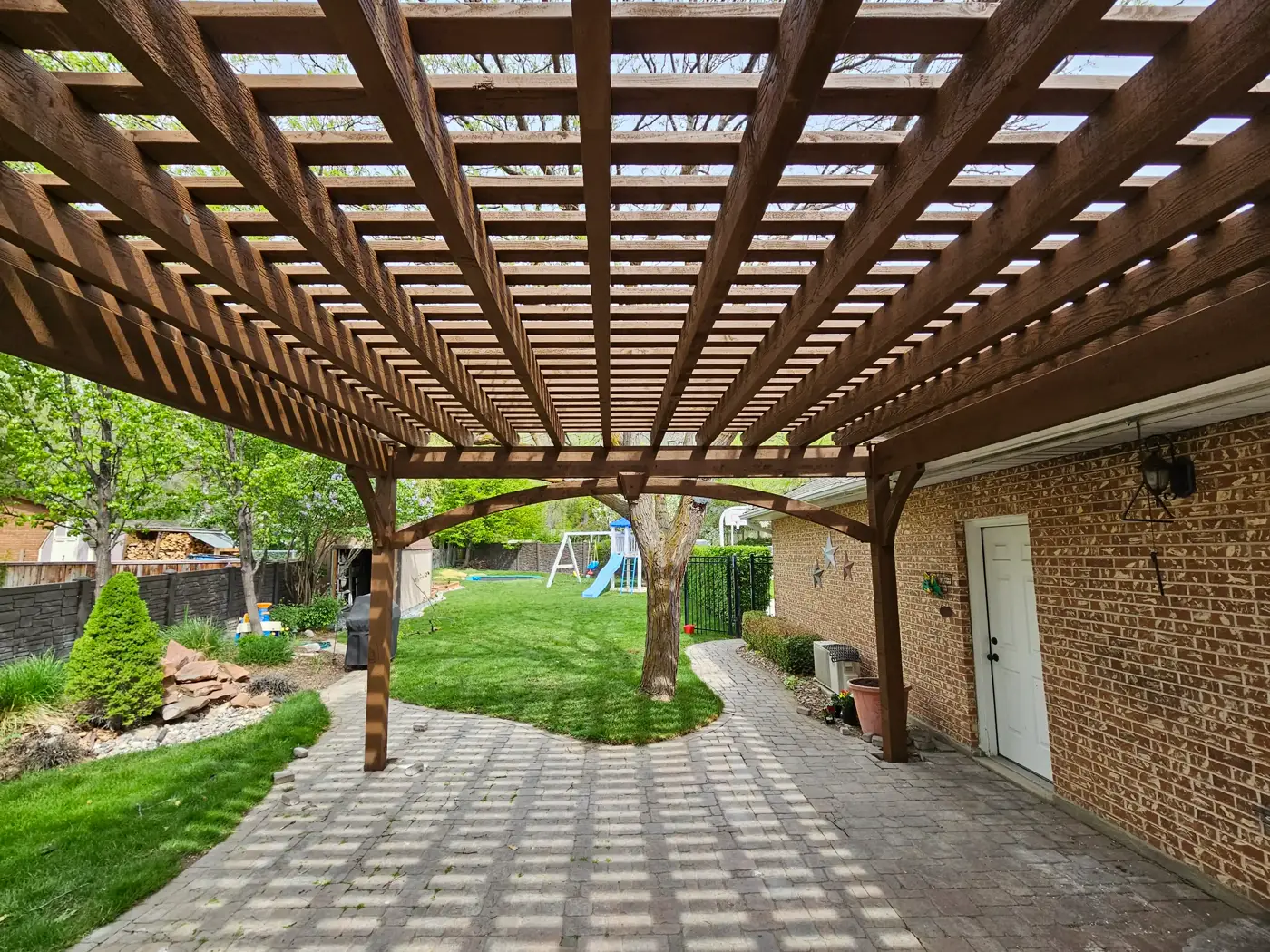
A pergola we built. See our full project gallery for more of our work.

Tell us about your yard and what you're picturing. We'll send a free quote, and you can reach us directly at 435-660-1944.
Start My Project
Working with Joey and his team at 3sixtyindustries was a great experience. They were honest, fair, and extremely easy to work with throughout the entire process. They did such a great job. I have no complaints about anything. We love our new deck—highly recommend!
Crus and Joey built a beautiful deck for us! We were tired of our small, wood steps that attracted wasps. We contacted them and they were able to expand our space to be a place for us to enjoy time with our dogs and enjoy being outside! I am so happy with the work they’ve done! Communication was great and they were very respectful of our space and other belongings. I highly recommend them if you need a deck!
Our deck is amazing! They were wonderful and patient guys to work with. Totally recommend!
I was nervous at first to redo my deck but it looks amazing thank you so so much!!
They completed a framing job for me on an addition to our home. Their pricing was very competitive and they offered great service. They were honest and got the job done that was needed. Very happy with their work and timelines. Would recommend
Amazing product and amazing service. They made sure my yard was 100% cleaned everyday best affordable product around.
These guys are awesome! Repaired my old water damaged deck, and gave it a fresh new look with trex and a new composite railing. Very happy with the end result, would absolutely hire them again.


Lehi's building criteria list a 115 mph design wind speed (Exposure C) and a 43 psf ground snow load. Wind pushes sideways and lifts, so the connections, not the posts themselves, are usually the first thing to fail without proper anchoring.
Not reliably. Pavers usually sit over sand or gravel with no real load-bearing capacity, so we remove or reinforce them to reach a genuine foundation before anchoring.
It depends on the size and how it's built. The common exemption for small accessory structures (under 200 square feet, no utilities) may cover a small freestanding pergola, but attaching it to your home, a larger footprint or added electrical can change the answer, and setbacks apply either way. We confirm with Lehi City's Building and Inspections department before building.
Yes. With a 43 psf ground snow load in Lehi's criteria, a pergola with a louvered or solid roof has to carry snow as well as wind. An open-slat roof collects less than a solid or louvered one, but we size the frame for the site either way.
At least seasonally, and after any unusually strong wind — checking post bases, bolts, brackets and beam-to-post joints for movement, corrosion or cracked concrete.
Explore our pergola builds page, browse the Lehi service area, or read whether pergolas add appraisal value in Utah.

.avif)
.avif)