
Utah's freeze-thaw cycle works on every deck. Wood and fasteners expand and contract through the seasons, and water that gets into cracks and end grain freezes and widens them. Most deck damage starts at those open grain and fastener points long before a board looks bad from above.
The ledger, the board that ties an attached deck to the house, is where most serious deck failures start. Water behind a poorly flashed ledger rots the rim joist and loosens the fasteners holding the deck up, and it often looks fine from the surface. Stains or gaps where the deck meets the house, or a deck that moves when you walk across it, are reasons to have it inspected before anything else gets repaired.
Posts that sit in wet soil, or on concrete without proper standoffs, rot from the bottom up, and shallow footings can heave when the ground freezes. Bluffdale lists a 30-inch frost depth, measured from the bottom of the footing, so a deck built on shallower footings can shift out of level over a few winters. We check post bases, footing depth where we can see it, and whether the frame is still worth saving.
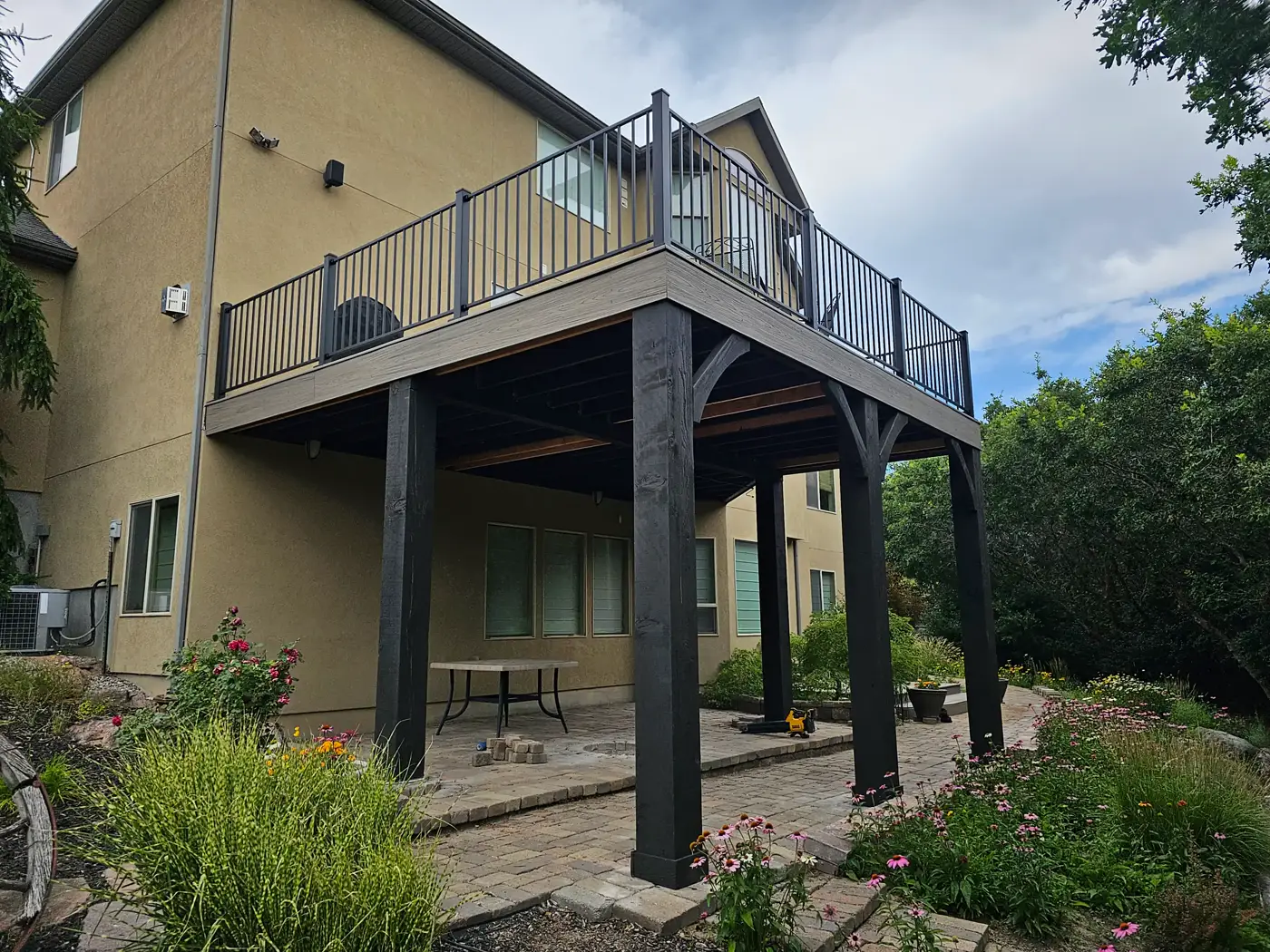
Decks more than 30 inches above grade need a guardrail, commonly at least 36 inches tall, and the railing has to hold when someone leans on it. A wobbly rail, soft stair stringers or loose treads are safety repairs rather than cosmetic ones, so they come first. We repair or replace them so they hold, rather than just tightening what's loose.
Frost depth, snow and wind figures are from Bluffdale City's published building design criteria; permit wording is from the city's adopted building code. Confirm your specific repair with the city.
We price a repair after we inspect the deck, because decks that look alike can need very different work. Damaged boards, a loose railing or a resurface are straightforward jobs. A rotted ledger, joists or posts can mean a partial rebuild, and sometimes replacing the whole deck costs less than patching a failing frame. We'll tell you which one it is before you spend anything, and your free quote covers the work, the price and the schedule.
Built along the Wasatch Front
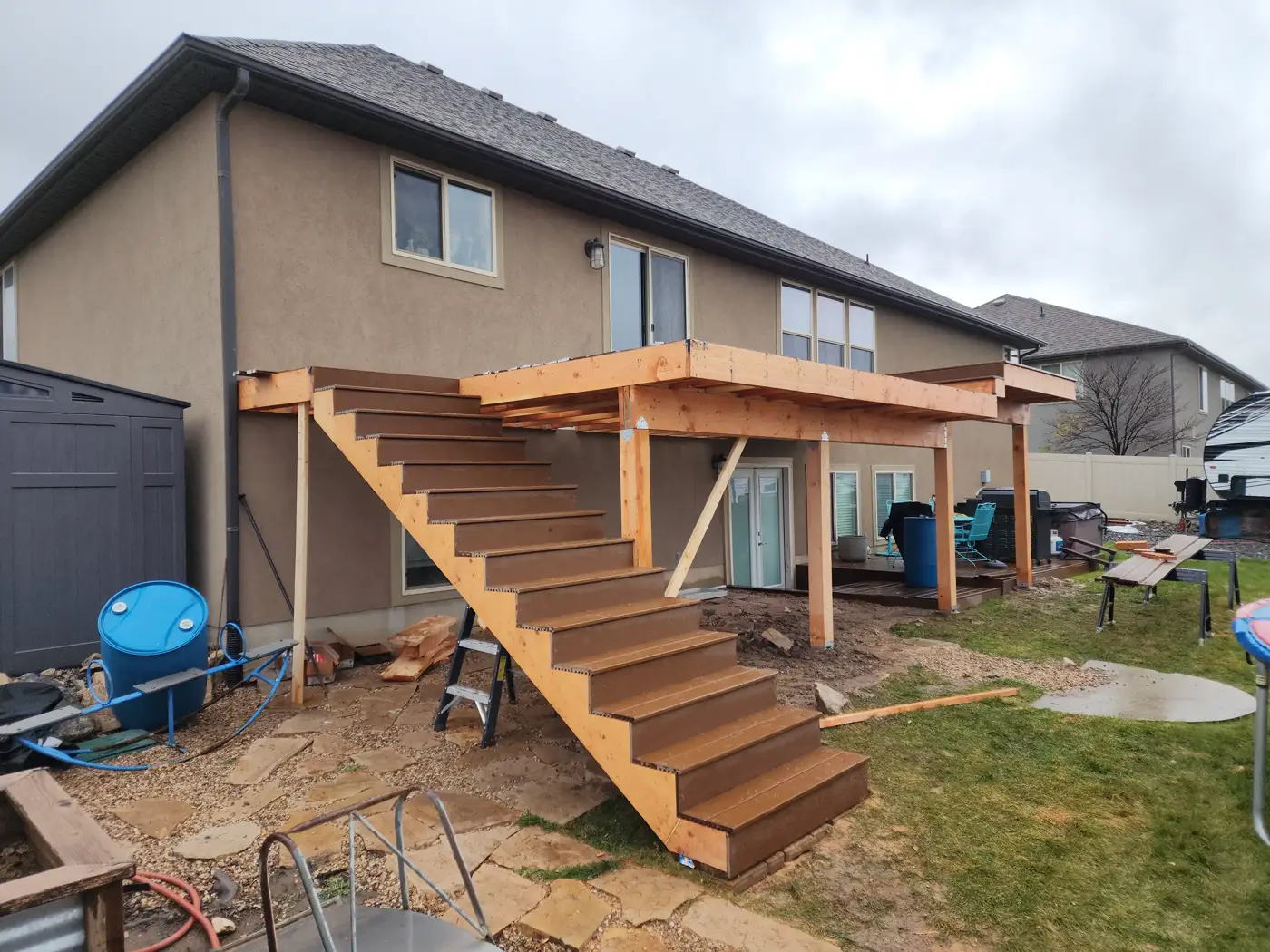
Stairs and framing on a deck we built. See our full project gallery for more of our work.

Tell us what you're seeing: soft boards, a loose railing, a sagging section. We'll inspect it, tell you whether it needs a repair, a resurface or a rebuild, and send a free quote. You can also call 435-660-1944.
Start My Project
Working with Joey and his team at 3sixtyindustries was a great experience. They were honest, fair, and extremely easy to work with throughout the entire process. They did such a great job. I have no complaints about anything. We love our new deck—highly recommend!
Crus and Joey built a beautiful deck for us! We were tired of our small, wood steps that attracted wasps. We contacted them and they were able to expand our space to be a place for us to enjoy time with our dogs and enjoy being outside! I am so happy with the work they’ve done! Communication was great and they were very respectful of our space and other belongings. I highly recommend them if you need a deck!
Our deck is amazing! They were wonderful and patient guys to work with. Totally recommend!
I was nervous at first to redo my deck but it looks amazing thank you so so much!!
They completed a framing job for me on an addition to our home. Their pricing was very competitive and they offered great service. They were honest and got the job done that was needed. Very happy with their work and timelines. Would recommend
Amazing product and amazing service. They made sure my yard was 100% cleaned everyday best affordable product around.
These guys are awesome! Repaired my old water damaged deck, and gave it a fresh new look with trex and a new composite railing. Very happy with the end result, would absolutely hire them again.


Soft or spongy boards, a wobbly railing, rusted or loose fasteners, stains or gaps where the deck meets the house, and sagging or bouncy sections are the common signs. If the posts, joists and ledger are sound, repair or resurfacing is usually the better value. If they're rotted or the ledger is failing, a rebuild is safer.
Bluffdale's adopted building code requires a permit to erect, construct, enlarge, alter or repair a building or structure, with exemptions listed separately. Replacing a few boards is the kind of minor work most cities treat as routine, but structural work such as a ledger, joist or post is not, so we confirm with Bluffdale's building official before we start rather than assume.
Yes, when the frame is sound. We can replace damaged boards, railings and stairs, or resurface the whole deck over a solid frame. When the frame isn't worth saving, we'll say so plainly and quote the rebuild instead.
Treat it as a safety issue now, not something for next season. A railing is what stops a fall, so keep people off that section until it's fixed. It's often a quick repair once someone looks at the posts and connections.
Yes. We inspect the existing framing, ledger and footings first and tell you what's sound and what isn't, whoever built it.
See our deck remodels page, browse the Bluffdale service area, or read about the signs of deck collapse.Planning shade instead? See our Bluffdale patio covers page.

.avif)
.avif)